Requirements for the ideal snack? Stylish and exquisite - that's a given. It can be served for two or ten people. It looks beautiful on the table. It requires no cooking. Preparation takes only a few moments. You can choose all ingredients according to your preferences. It will definitely work. Everyone will love it. Behold, the perfect dish: the cheese board.
It's perfect for a romantic dinner, a girls' night in, a quick supper, or a gathering with friends. Once you realise how simple it is to prepare a cheese board, you'll also gain another excuse to invite friends over more often (though we know you don't really need an excuse at all)! You can read more about how to host a party with wine and snacks here: Carnival plates. The pleasure of shared eating
Enough with the encouragement, it's time for the nitty-gritty. How do you prepare a cheese board, step by step?
A board for serving cheeses
Let's start from the beginning. First, you'll need a serving board. But not just any board; it should be aesthetic, without cracks or discolouration, and large enough to accommodate all the elements of your spread. Wooden, stone, or marble boards are excellent for cheeses. In our offer, you'll even find special cheese boards! Various cheeses will look beautiful on a base with an interesting texture and colour, such as slate. The shape is also important – practicality isn't the main concern here, so you can go wild with irregular forms. For larger gatherings, choose a rotating board so that every guest has easy access to the delicacies on the table. Make sure the cheeses don't dry out – you can get a special cheese dome for your board.
The ideal cheese board




Choosing your cheeses
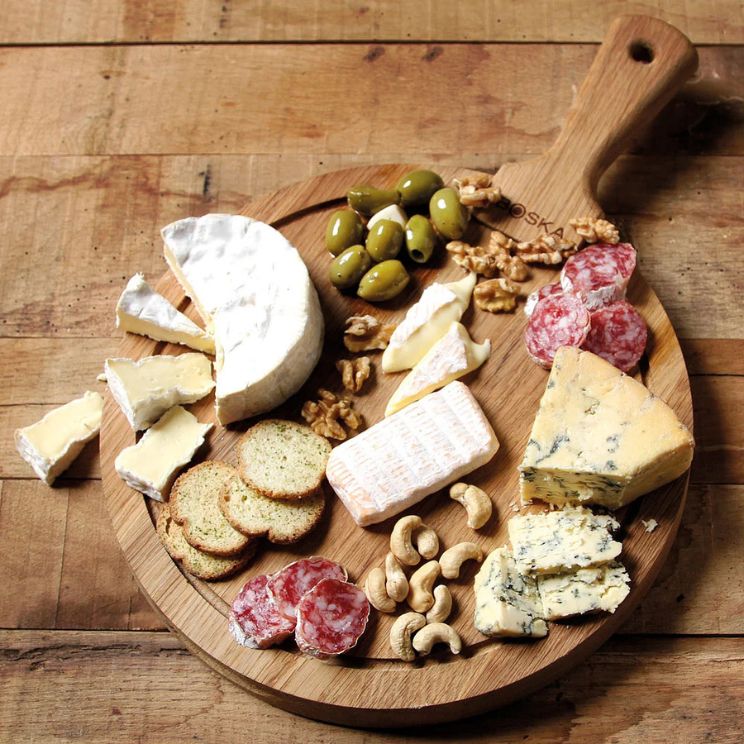
And what should grace your board? The star of the show is, of course, cheese in all its guises. It's worth opting for varieties of different colours and hardness levels; they'll look more appealing on the table and provide a more interesting taste experience. Make sure your board includes smoked and blue cheeses, soft, hard, and semi-hard varieties, from sheep's and cow's milk. What types can you consider?
- Mould-ripened cheeses (Brie and Camembert) and blue cheeses (Gorgonzola, Roquefort, Lazur)
- Cheeses of varying hardness: hard (Parmesan, Rubin, Grana Padano), semi-hard (Cheddar, Gouda), and soft (Livarot, Rokpol)
- Cow's milk and sheep's milk cheeses
- White cheeses
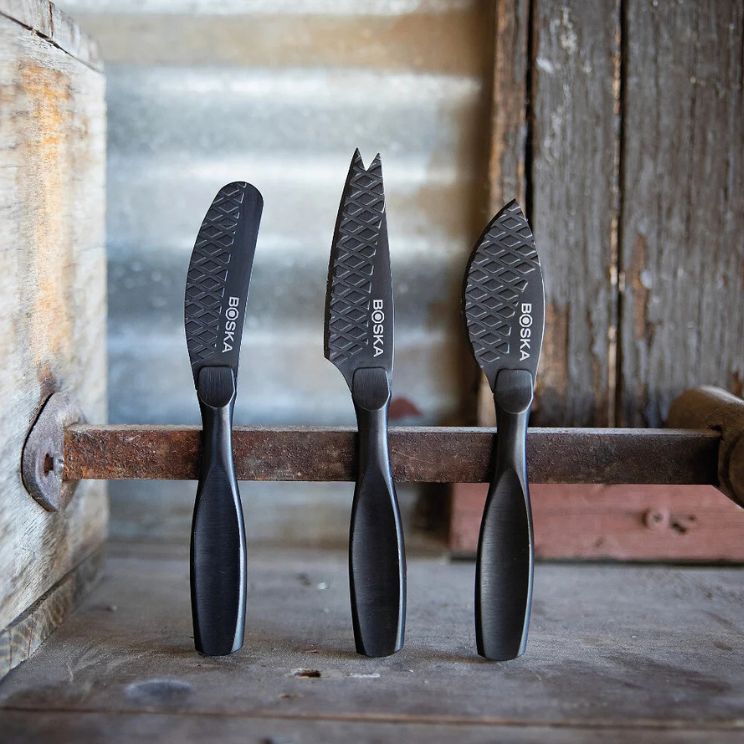
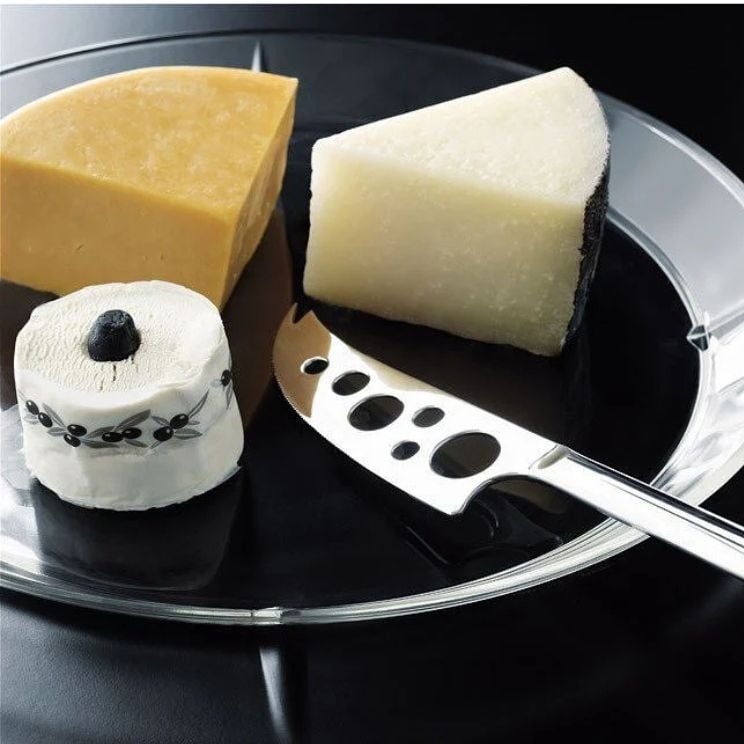
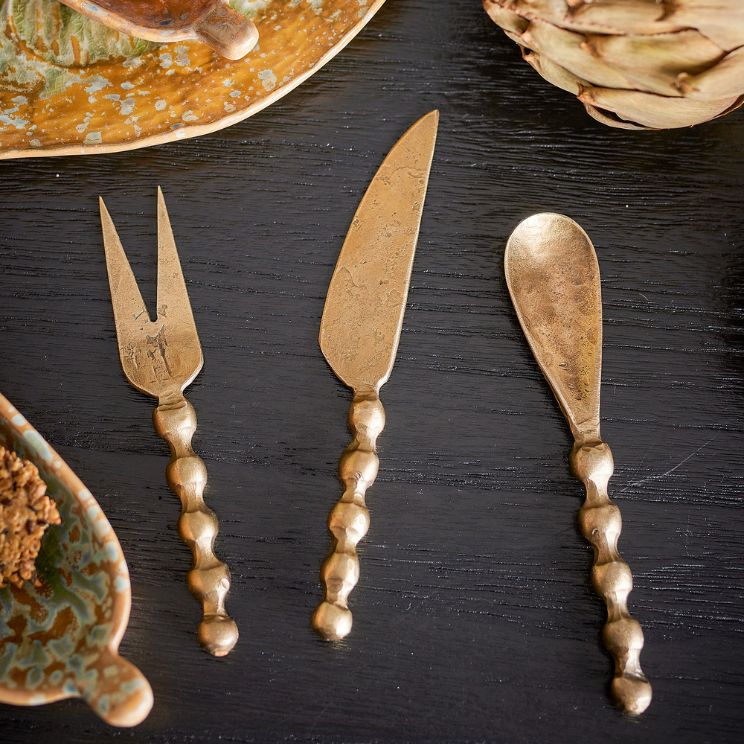
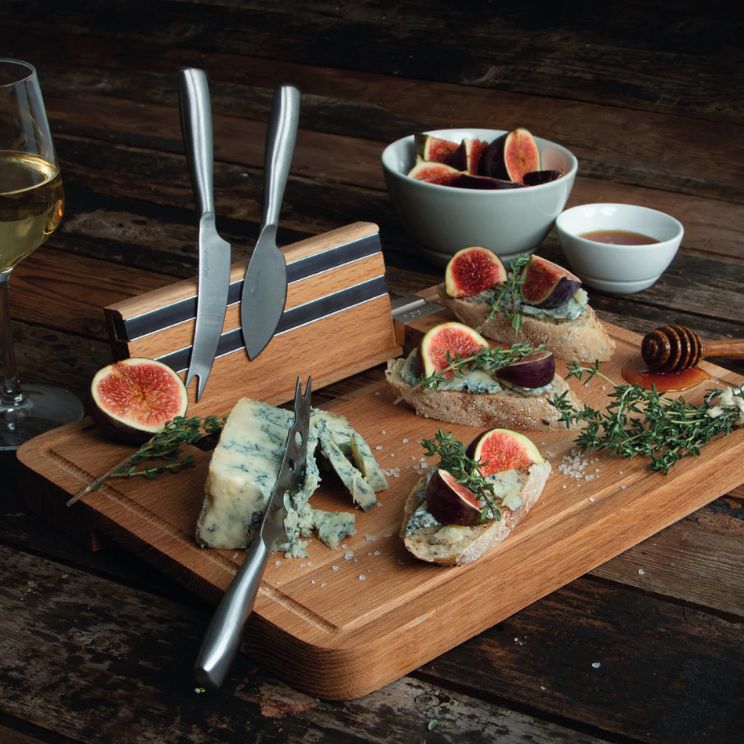
We suggest not cutting them into pieces but keeping them as whole blocks – this way, they won't lose their aroma, and each guest can cut as much as they fancy. Remember to keep the cheeses from touching (to avoid mixing flavours) and to provide a separate knife for each, preferably a special cheese knife, suited to the type of cheese on the board – there are separate knives for hard cheeses (very sharp to easily slice through a tough piece) and for soft cheeses (often with holes in the blade to prevent sticking, or in the form of a spreading knife for very soft cheeses).
Our advice




Accompaniments and arranging your cheese board
Cheeses are the stars of this meal, but let's not forget the supporting roles. What accompaniments pair well with them?
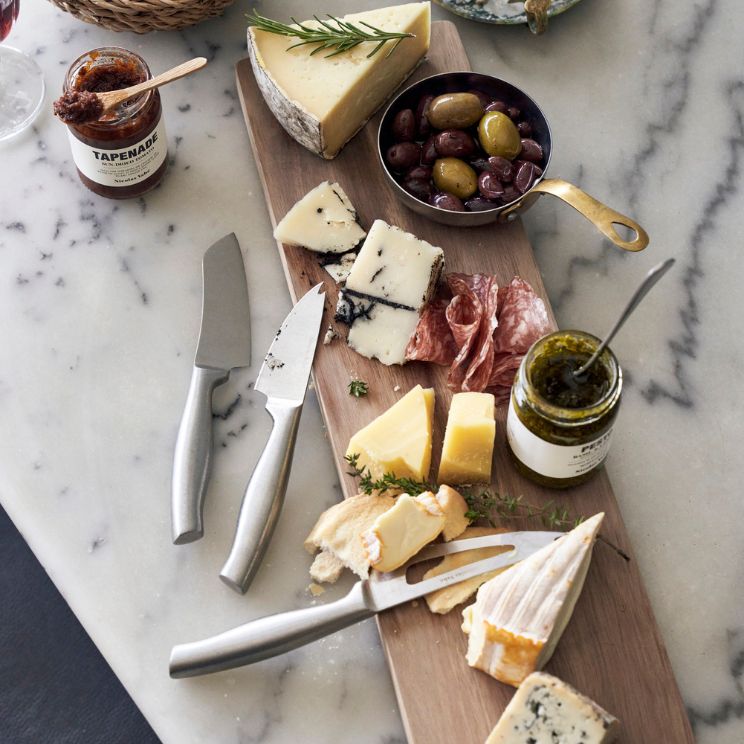
- Cold cuts and sausages - Parma ham, salami, chorizo, and any other cold cut you fancy. Prosciutto is best arranged in impressive rosettes, while other cold cuts can be sliced and folded, perhaps into quarters. If you don't want any uneaten pieces of sausage (should there be any!) to dry out, choose a practical yet aesthetic solution – slice off a few pieces and leave the rest of the sausage whole. This way, guests can cut themselves more if they wish, and if they don't, it will be much easier for you to store the cold cuts.
- Salty snacks - besides a baguette, it's worth preparing crackers or cheese straws. Salty accompaniments complement cheeses well and will make a great snack between portions. Arrange them on the edge of a bowl so they don't come into contact with wetter ingredients – this will prevent them from going soggy.
- Fruits - white and dark grapes, figs, pears, or apples go well with cheeses. Raisins and dried cranberries, as well as nuts, which taste fantastic with cheeses, enhancing their flavour, will also work wonderfully. You can read more about what other dishes can be prepared with nuts in the Magazine: Not such a tough nut to crack. Recipes for dishes with nuts.
- Extras and sauces - olives, rocket, hot peppers, or sun-dried tomatoes are often found alongside cheeses. Place them in separate snack bowls to prevent other elements from soaking up the brine. Don't forget the sauces: you can reach for pesto, French mustard, jams, or chutney, as well as honey, which tastes fantastic with goat cheese. Cold-pressed olive oil – plain or flavoured with hot pepper, rosemary, or garlic – is also a delicious classic. Stock up on dip bowls to help you serve sauces aesthetically! You can learn more about ideal appetizer dishes in our Magazine: A way to snack. Kitchen accessories for appetizers.
Arrangement




Choose the right wine
The best companion for a cheese board is a carefully selected bottle of wine. What types will be best for cheeses? Blue cheeses, such as Camembert, and those with a delicate flavour, like mozzarella, will taste best with light, fruity wines – white and rosé. Blue cheeses, on the other hand, pair well with sweet wines. Cheeses with a more intense aroma, long-aged varieties, reveal their full flavour when combined with dry or semi-dry red wine.
You can read more about how to taste wine in our Magazine: Tasting – the art of reading wine.
Don't forget to choose wine glasses according to the type of wine; this will make you seem like a true connoisseur of the beverage! We advise you on how to do this in the article: White or red? In a carafe or in a bottle? The art of serving wine.
Now you know everything about preparing a cheese board. It's high time to get down to business and impress your friends, family, or other half with a simple yet exquisite meal. Bon appétit!