Kids' Clocks
A colorful children's clock is the perfect way to decorate a child's room and help them learn to tell time. In this category, you'll find safe wall clocks for the little ones, featuring easy-to-read dials, quiet mechanisms, and a fairy-tale design. We offer unique models with animal motifs, geometric shapes, and pastel decorations that will spark your child's imagination. Looking for a functional decoration for your toddler's or older child's corner? Discover original children's clocks and create a cozy space full of inspiration. And if you're looking for something to wake up even the heaviest sleeper, we recommend the children's alarm clocks category.
62 products


Trends, new products and ideas.


Clocks for Kids – Find the Perfect Model for Learning and Play
This guide is for parents, teachers, and caregivers who want to help children master the art of telling time. You'll discover which clocks are best suited for home, preschool, and school, and what to look for when choosing the perfect model.
Clocks for kids are more than just a decorative touch; they are, first and foremost, a powerful tool for learning and development. In this article, we'll walk you through how to pick the best clock for your child and what key features to keep an eye on during your purchase.
A well-chosen clock can be a game-changer for a child, helping them grasp the concept of time passing, practice telling the hour, and organize their daily routine without a hitch. In this category, we'll dive into educational wall clocks, hands-on manipulative models, vibrant room decorations, and playful solutions that make learning a joy.
Choose a product that's perfectly tailored to your child's age, learning stage, and your home's interior style.
Clocks for Kids: A Perfect Fit for Every Need
Whether you're on the hunt for a first educational aid for home or a clear, easy-to-read model for preschool, the right clock can make all the difference in helping children get a handle on the basics of time.
Educational Clocks for Learning to Tell Time
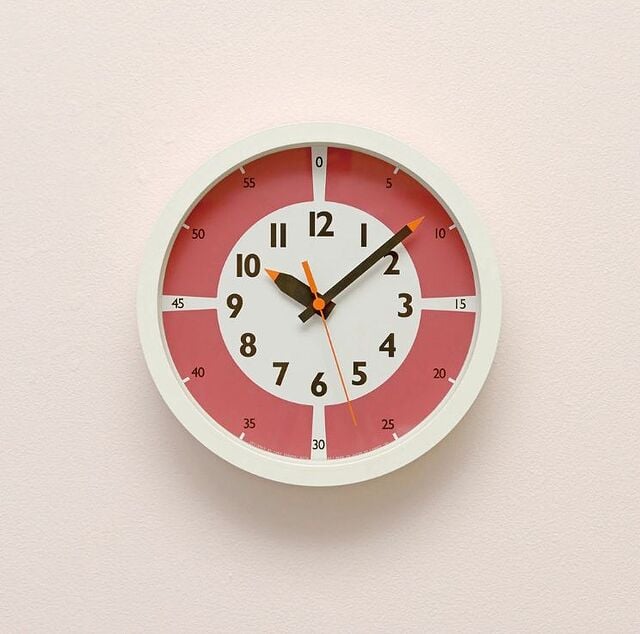
Educational clocks for children should boast a large, clear dial and movable hands, making the journey of learning to tell time much smoother. The best models for teaching kids how to read a clock often feature color-coded sections, clearly marked minutes, and movable, labeled hands. Ideally, the hour hand and hour numbers should be one color, while the minute hand and minutes are another, helping children quickly distinguish their functions.
Educational wall clocks often feature a dial divided into two colorful halves, with hands frequently labeled 'hour' and 'minute'. Many models also display quarter-hour divisions, 'past' and 'to' indicators, and both 12- and 24-hour formats. Clocks from London Clock, for instance, have distinctly color-differentiated hands. And here's a pro tip: in quality learning clocks, moving the minute hand should automatically and proportionally advance the hour hand – it's a small detail that makes a big difference in learning.
Decorative Wall Clocks for Kids
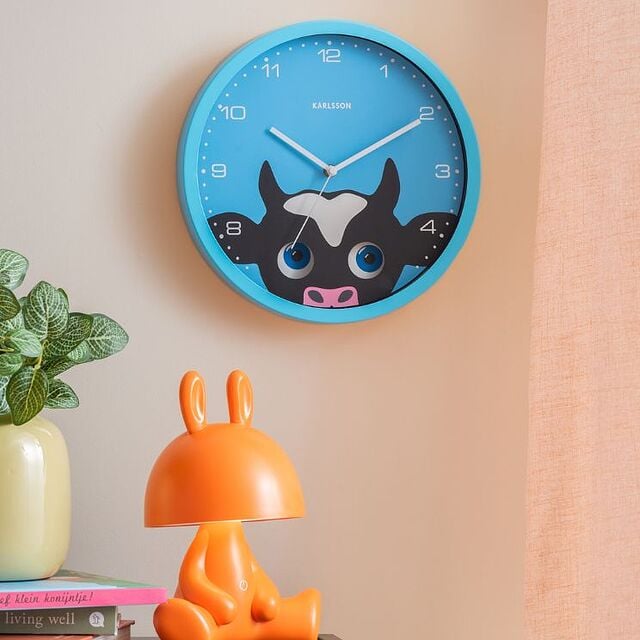
A wall clock can truly be a two-for-one deal: both a practical tool and a charming decoration. Kids' clocks from Bloomingville or NeXtime often come with delightful themes like animals, cars, or trains, making them incredibly appealing to children and a perfect fit for any child's room. You'll also find colorful models featuring clouds, footballs, fairy tale figures, or serene patterns for more subtly styled interiors.
With decorative models, it's not just about looks; readability is key. The best educational clocks for children seamlessly blend a clear dial layout with interactive elements or an aesthetically pleasing design. Another intriguing option are pendulum clocks, like those shaped like cuckoo houses, which offer a unique mechanism that sidesteps the inaccuracies often found in traditional pendulum clocks.
Specialized Therapeutic Clocks
Specialized clocks are a fantastic solution for teachers, therapists, and parents who prefer a step-by-step approach to working with a child. XXL models, with their large dials, prominent numbers, and minimal decorations, help children zero in on reading hours, minutes, and understanding the relationship between the hands.
These products don't just teach clock-reading; they also foster an understanding of days of the week, seasons, dates, and daily routines. For children who thrive at a gentler pace, manipulative clocks, sets of picture cards, or printable dials are particularly useful for individual and group exercises.
Choosing the Right Clock for Your Child's Age
The ideal clock should always align with your child's developmental stage. A preschooler will need a different model than a school-aged child who's just starting to manage their own time.
For Preschoolers (3-5 years old)
Children aged 5-6 begin to grasp time-related concepts like 'morning,' 'evening,' 'soon,' and 'later.' This is precisely why their first clocks should be simple, colorful, and feature large elements. Dials that mark times of day, prominent numbers, and contrasting hands work wonderfully.
Learning to read a clock should ideally involve physical manipulation, which makes it easier for children to understand the passage of time. Wooden manipulative clocks are perfect for preschoolers, as they allow children to move the hands themselves, helping them grasp the relationship between them.
For School-Aged Children (6-9 years old)
By school age, children are getting a better handle on full hours, quarter-hours, and the difference between 'past' and 'to.' Educational clocks often include these additional 'past' and 'to' markings, which really help children learn to tell time with precision. Models with clear minute and hour divisions allow them to practice reading without having to guess.
An analog clock is superior for developing a child's spatial representation of time, as it visualizes the passage of time as a circular movement. Learning to tell time on an analog clock is more effective because it helps children understand cyclicity. Wristwatches with an educational dial offer continuous learning opportunities throughout the day.
For Older Children (10+ years old)
Older children often look for a clock that's more discreet, modern, and seamlessly blends with their room's decor. At this age, you can opt for models with calmer color palettes and a more 'grown-up' design, but still featuring a clear dial and a precise mechanism.
Clocks that marry functionality with aesthetics are an excellent choice, whether they're wall-mounted, desk clocks, or wristwatches. They can be invaluable for planning studies, workouts, free time, and household chores. Of course, it's always wise to strike a balance between style and practicality – a dial that's too decorative might make telling time a bit of a challenge, no matter how stunning it looks.


Safe Materials and High Quality
A clock for a child's room should be durable, stable, and safe for everyday use. Pay close attention to the material, casing, mounting method, and the mechanism's operation.
Acrylic Glass and Plastic
Children's clocks should ideally be made from shatterproof materials, such as acrylic glass, which significantly boosts safety in case of a tumble. Clocks for kids can also be crafted from various plastics, making them lighter and even safer to handle.
In practical terms, this means a lower risk of cuts, easier cleaning, and greater resilience to daily play. Smooth edges, secure wall mounting, and the absence of small, detachable parts are also crucial. Parents often keep a keen eye on whether the product has a durable casing and if the prints are legible without being too small or fiddly.
Silent Quartz Mechanism
A silent clock mechanism is absolutely crucial to ensure your child's sleep isn't disturbed, which is a vital safety aspect in any kids' room. When choosing a wall clock for a bedroom or a quiet corner, it's always best to opt for smooth hand movement and no loud ticking.
Children's clocks should feature a closed casing to prevent access to the mechanism, safeguarding children from potential injuries. A precise mechanism also aids in learning – it helps a child see that time changes consistently and that the hands move according to the rules.
Eco-Friendly Wooden Models
Wooden clocks are highly valued for their natural aesthetic, durability, and pleasant tactile feel. They're a wonderful fit for a child's room, preschool, or therapy room, especially when they feature rounded edges, child-safe paints, and clear graphics.
They're also a great choice for parents seeking a calmer alternative to brightly lit or musical models. While brand, material, and craftsmanship certainly matter, the most important thing remains: does the clock genuinely support learning, or is it merely a decorative piece?
How to Use Clocks in Child Education: Mastering the Art of Telling Time
A clock can easily become an everyday educational aid. Just a few simple exercises can make learning to tell time natural, regular, and, most importantly, fun!
Learning at Home
At home, you can kick things off with a simple schedule: wake-up, breakfast, playtime, learning, dinner, and bedtime. Together, set the hands to specific hours, ask your child how many minutes are left before heading out, and show them the difference between a full hour, a half-hour, and a quarter-hour.
Another excellent exercise is comparing an analog clock with a digital one, but only once your child has a firm grasp of how the hands move. This ensures that learning isn't just about memorizing numbers, but leads to a genuine understanding of time itself.
Application in Preschool and School
In preschool and school, clocks are incredibly helpful during math lessons, daily routine activities, and group work. Teachers benefit from large demonstration dials, models with labeled hands, and exercise sets where children set times, compare durations, and learn terms like 'earlier,' 'later,' 'past,' and 'to.'
Clocks can also serve a decorative purpose, brightening up a room without overwhelming it with too many stimuli. The best solution is one that marries safety, readability, and educational value – that's when children naturally engage with the clock, not just during formal lessons.
Discover the Ideal Clock for Your Child
Browse our selection of children's clocks and pick a model that perfectly suits your child's age, room, and learning style. Keep an eye out for a clear dial, colorful markings, safe materials, a silent mechanism, and the opportunity for hands-on learning through play.
The ideal clock for a child is one that teaches, helps organize their day, and looks great in their everyday surroundings.