Wine, when perfectly paired with a dish, can work wonders – it can complete its flavour, creating a harmonious whole that opens up a world of true culinary delights. The established rules aren't random; they've been honed and perfected over generations. In this short guide, we've gathered the most important principles in the world of wine.
Wine and Food Pairings
When mulling over the vast assortment of wines flexing in bottles on the shop shelf, one must ask – what dish is this alcohol intended to accompany? There are a few easy-to-remember rules that will help you make an optimal choice.
The simplest rule dictates pairing the wine's strength with the fat content of the dish. Light wines will complement fruits and desserts, while higher-alcohol wines are best suited for fried, fatty dishes. Animal fats, found in meat, pair wonderfully with the tannins in wine, which is why a very dry wine will enhance their flavour. The taste of vegetable fats, which are soluble in an acidic environment, will be brought out by acidic wines. Similarly, various types of vegetables will pair better with acidic wines.
White or red?
It's important to know which dishes are better suited for red wine and which for white. Roast lamb or beef demands a robust, velvety red wine, like a classic Bordeaux. Game, on the other hand, will delight your palate when served with wines featuring earthy, slightly peppery aromas – though red wines are generally better, some whites can also work a treat.
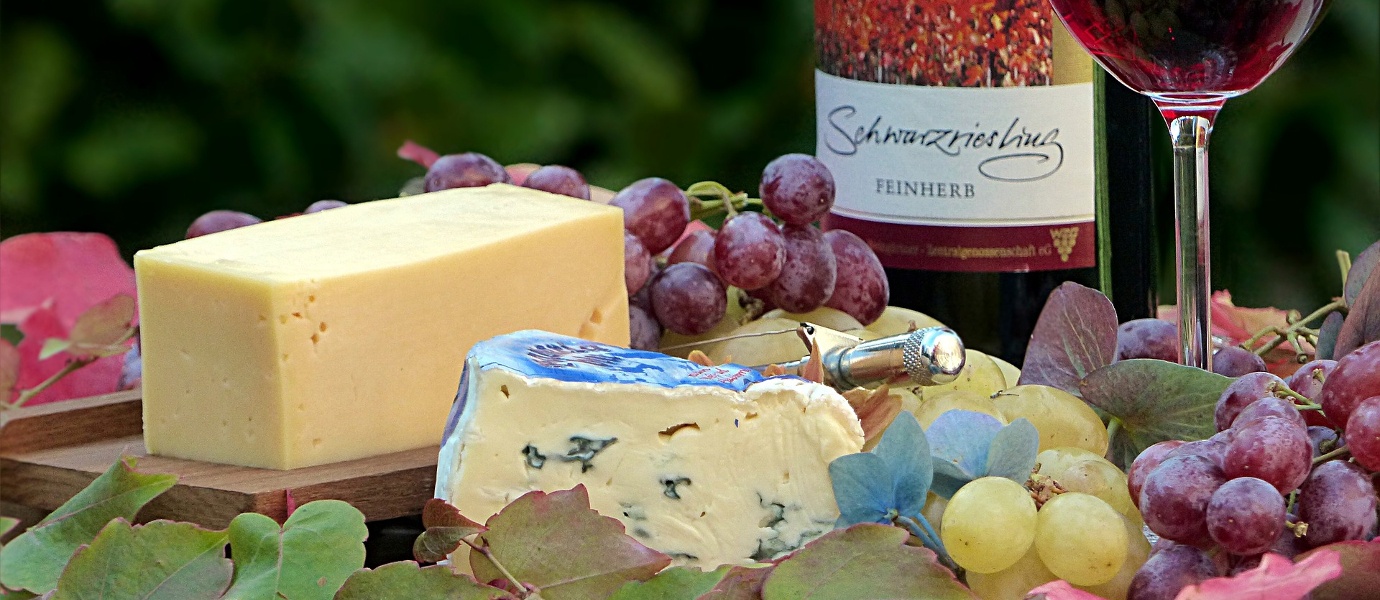
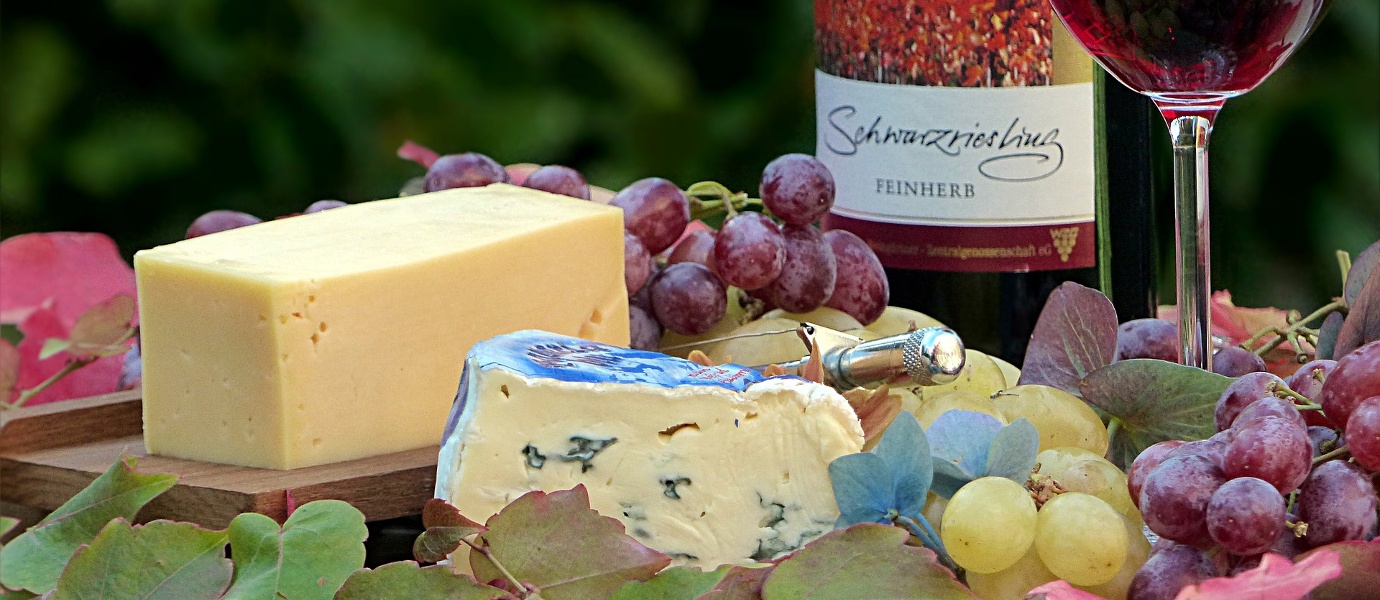
Wine often goes hand in hand with cheese – here too, a few rules are worth knowing. Hard cheeses taste much better with a stronger, red tipple, while soft and delicate cheeses harmonise with a mild white. Camembert and Brie will melt in your mouth when accompanied by a rich, acidic Riesling. Desserts, meanwhile, should be complemented by a sweet and delicate wine, usually white.
Only white wine with fish? Not always!
Poultry and fish should most often be served with white wine, though there are exceptions; everything depends on the accompaniments. Chicken with Parmesan will pair better with a light red wine. For duck, a deep-flavoured white Burgundy is ideal. Fish and seafood require a dry white wine to highlight their flavours, but a fatty salmon will taste better with a red Pinot Noir.
Nothing ventured, nothing gained... or no wine tasted

Decanter or bottle?
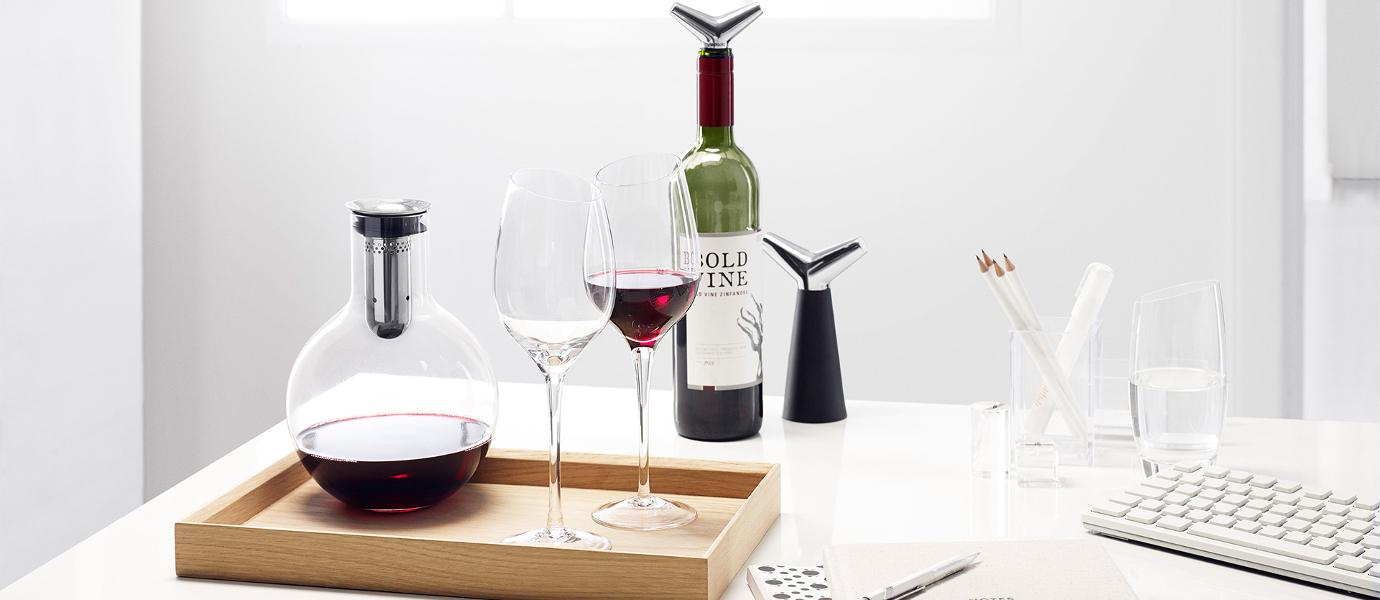
Wine can be served at the table in its bottle, but a much better solution, both for the eyes and the taste buds, is to pour it into an elegant decanter. Using a special decanting set, wine can be poured into a traditional vessel, such as a crystal decanter. For a traditional pouring process, a professional decanter will work perfectly. Beyond its visual appeal, such a vessel has properties that contribute to optimal wine oxygenation. While red wine generally requires a greater supply of oxygen, too much can actually harm white wine. For this reason, decanters for white wines should be equipped with a stopper.


Keep white wine sealed!
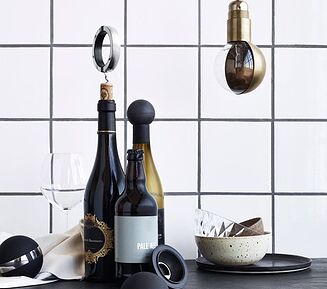
For some types of wine, decanting isn't necessary, and for some older vintages, it's even ill-advised! Such wines should be placed on the table in their bottles, ideally using special table wine racks that hold them at a slight incline. A bottle of white wine will feel most at home in a wine cooler or bucket, ensuring a consistent temperature. It's also crucial not to leave an opened bottle for too long – this is particularly true for white wines, where excessive oxygen exposure can diminish their flavour and aroma. That's why airtight wine stoppers, found in the wine accessories section, are a must-have for every wine lover.


Which glass for which wine?
Choosing the right wine glass for the type of wine being served is a true art. Nowadays, some manufacturers, like the famous Riedel in Austria, offer glasses tailored to every grape varietal and wine region. Thankfully, you can leave that knowledge to the professional sommeliers. A wine connoisseur will get by just fine with a few types of glasses. If you want to make a splash, opt for crystal glasses!
To avoid a faux pas...
Red wine glasses should be larger than those for white, with a wider and shallower bowl. It's a bonus if the rim of the glass is narrower than its middle – this helps to collect and fully appreciate the aromas of the noble drink. White wine glasses, smaller and less bulbous, can take on a tulip shape. True wine connoisseurs should also stock up on glasses for full-bodied red Burgundy, which are quite large, with significant width and a tall stem. This allows the wine to release its full bouquet of aromas. Special champagne flutes are also essential, with a sleek and narrow bowl that helps to preserve the sparkling bubbles for longer. It's worth choosing a cohesive set of glasses that will look stunning on your table.
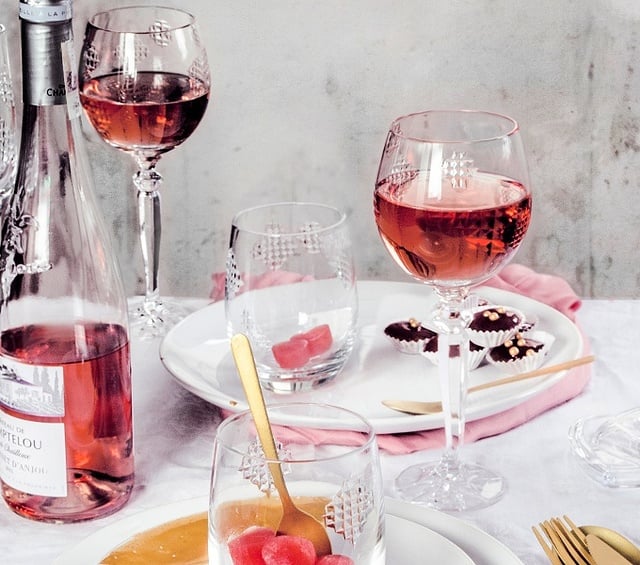

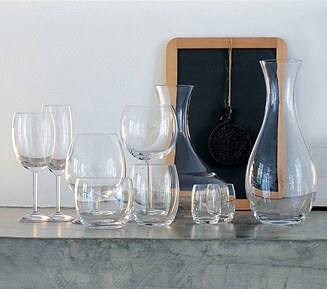
While the shape and size of wine glasses aren't strictly governed by rules, the way wine is served in them is subject to certain guidelines:
- Glasses should be rinsed with water without detergents, so that dust and chemical residues don't affect the taste of the wine.
- If different types of wine are to be served, the appropriate glasses for each should be arranged at a 45° angle, in the order of consumption from right to left.
- They should only be filled to about 1/3 of their height to allow guests to 'swirl the wine'. This will release the full bouquet of the drink and allow its qualities to be fully appreciated.
- When enjoying the drink, hold the glass by the stem, not the bowl, to avoid unnecessarily warming its contents.
By following these few basic rules, we'll have the chance to savour all the delights of noble wine, without flouting common etiquette.

Further reading for the keen
Wine Temperature
The fuller the wine's flavour, the higher the serving temperature must be!
It is incredibly important to serve wine at the correct temperature, as specific wine components are only released at certain temperatures. Young wines, both white and red, typically contain floral and fruity aromas, which achieve their best qualities at lower temperatures.
White Wines
These should be served at approximately 8-13°C. The degree of chilling depends on the type of wine: light and fruity wines should be served at a lower temperature than full-bodied and dry ones. Sweet wines should be chilled to a temperature corresponding to their alcohol percentage, but no higher than 12°C. However, full-bodied white Burgundies, aged in barrels, can be served at higher temperatures, even 14-16°C.
Red Wines
These reveal their full flavour at slightly higher temperatures, around 14-19°C, which is related to the presence of tannins, which can give a harsh taste if excessively chilled. Here too, the rule applies: the fuller the wine, the higher the serving temperature. So, light red wines with fruity aromas require about 12-14°C, those with a higher tannin content around 15-17°C, while well-developed, tannic wines will taste best at about 18-19°C.


Wine should reach its optimal temperature before the bottle is opened and served. This is where a problem arises – how do you know if it's been sufficiently chilled? For a long time, this was only possible after opening the bottle, but now wine thermometers have appeared on the market, allowing you to measure the drink's temperature without opening it. They clip onto the bottle, and a digital display shows you the precise temperature of the wine. One cannot help but appreciate the beauty of this designer gadget, which can become a true ornament for your bottle!



Opening Wine and Decantation
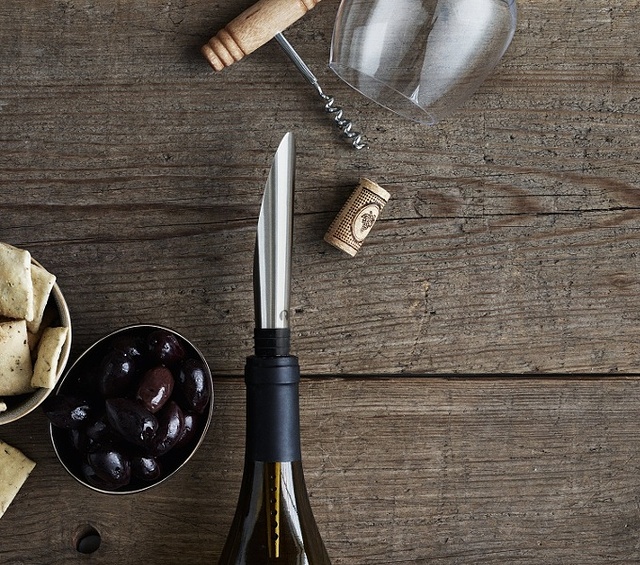
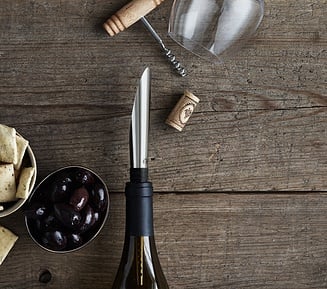
Once the bottle of exquisite wine has reached the correct temperature, you can proceed to open it. Before you can get to the cork, however, you must deal with the aluminium foil on the neck. It is important to remove it completely – any leftover remnants that might inadvertently come into contact with the wine during pouring will very negatively affect its taste, and when decanting, they hinder the observation of sediment. Special cutters and foil removers are used to get rid of the foil, which can be bought separately or are built into a corkscrew. A good corkscrew is a very important tool, because opening a bottle of wine must be done with extreme delicacy, so that the sediment at the bottom is not disturbed and the cork is removed in one piece.


Attention, red!
Small particles found at the bottom of a wine bottle should under no circumstances end up in the glass, as they will spoil not only the taste but also the clarity of the drink. To professionally decant wine, the bottle should be removed from its rack a few hours beforehand and placed upright, allowing the sediment to settle at the bottom. Then, after gently removing the foil and cork, its contents must be poured into a special decanter in such a way that all the sediment remains in the bottle. This requires a steady hand and great concentration, which is why many consider decanting an unmasterable art! A special wine decanting set will help even complete novices to wine deal with this task.
When pouring wine into a decanter, there might be a problem related to tilting the bottle to avoid the proverbial 'gush'. Therefore, it is convenient to attach a special wine pourer to its neck.

An art born of passion