Cuckoo Clocks
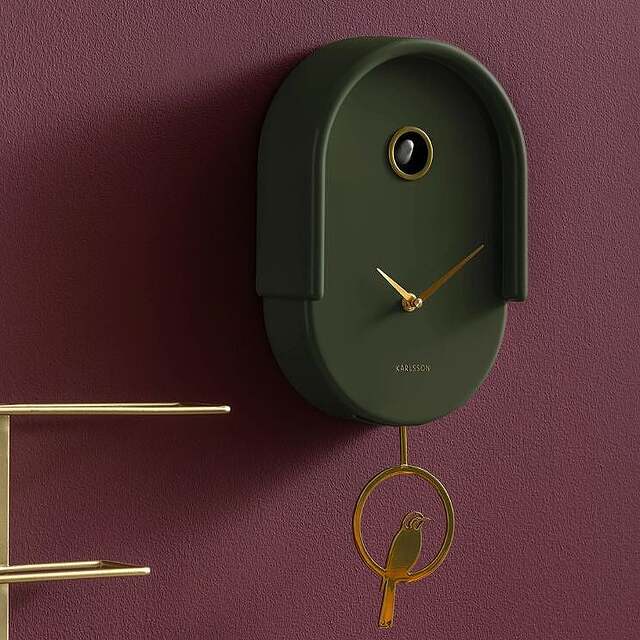
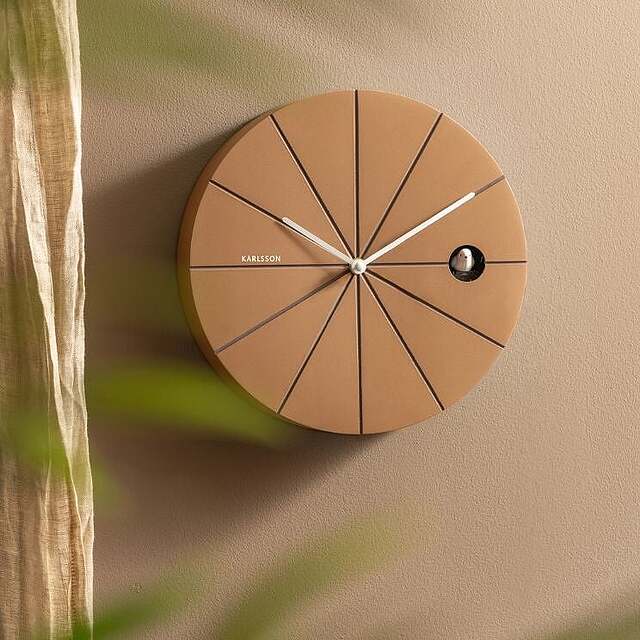
A cuckoo clock is an incredibly charming touch in any interior. Thanks to the cuckoo (which doesn't necessarily have to be in the form of that particular bird!), the passing hours are completely under our control. In this category, you'll find modern wall cuckoo clocks that offer a minimalist interpretation of the classic Black Forest motif. These are unique wall decorations with a silent mechanism and an automatic night shut-off, perfect for the living room, dining room, or hallway. Cuckoo clocks also bring back wonderful memories of youth – our grandparents adored these types of timepieces. Therefore, for most of us, the joyful cuckoo's call will undoubtedly evoke the carefree atmosphere of childhood years. And if you're a fan of retro vibes, you'll surely be interested in our selection of pendulum clocks.
32 products


The Cuckoo Clock – Tradition, Design, and Modern Features in One
The cuckoo clock is a classic that's experiencing a true renaissance. If you're wondering if such a timepiece is for you, you'll find the answer quicker than you can say 'cuckoo' – just take a look around your own home and ask yourself one question: is there something missing that blends function with character? You can also check out our ranking of the top 5 cuckoo clocks and pick a model that truly calls to you.
Today's cuckoo clock isn't just a classic wall clock hanging above the fireplace in the living room. The range also includes modern alarm clocks and table clocks with a cuckoo or other sounds – including a playful dog bark instead of the traditional 'cuckooing'. Cuckoo clocks chime 'cuckoo' on the hour, but that's just one of the many things that make them truly special. Cuckoo clocks often feature moving figurines – woodcutters, dancers, millers – that spring to life with each chime, bringing an element of fun and nostalgia into your home.
Introduction: Why Choose a Cuckoo Clock?
The greatest strength of these clocks lies in their ability to seamlessly blend practical function – keeping track of time – with decorative flair. Such an analog clock can become a striking focal point in both a retro-style setting and a minimalist interior straight out of a Scandinavian catalog. The models on offer vary in size, color, material, movement type (quartz or traditional weight-driven), and the volume of the cuckoo's call.
In this article, I'll walk you through everything you need to know before making a purchase: from mechanisms and types, through styles and practical features, right down to handy tips for installation and arrangement.
How Does a Cuckoo Clock Work? Mechanisms and Power Sources
In the world of cuckoo clocks, you'll find two fundamentally different approaches to timekeeping: traditional weight-driven mechanisms and modern quartz movements. Each type has its pros and cons – your choice will depend on your expectations regarding accuracy, convenience, and aesthetics.
Classic Pendulum Movement
Cuckoo clocks hail from Germany's Black Forest, where artisans have been perfecting this craft since the mid-18th century. The classic mechanism is based on a simple yet ingenious principle: cuckoo clocks feature pendulum movements powered by weights, typically cast in the shape of pinecones. Weights suspended on chains provide the energy, while the pendulum sets the rhythm for the entire device. Two bellows-driven pipes pump air to produce the characteristic sound – reminiscent of a real cuckoo's call.
Cuckoo clocks are divided into models with 1-day and 8-day movements. The former requires daily winding of the weights, while the latter needs it only once a week. Cuckoo clocks require regular winding depending on the model, which for some is a delightful ritual, and for others, a minor inconvenience.
Quartz Movement
Quartz clocks are popular for their precision. A quartz movement uses a high-frequency quartz oscillator to keep time, and battery power eliminates the need to remember winding. The deviation in quartz clocks is only a few seconds a day – that's a whole different ball game compared to older mechanical models, where temperature and humidity changes could cause deviations of minutes.
It's worth knowing that quartz movements come in two types: stepping and sweeping. In the stepping version, the second hand jumps every second with a characteristic tick. In the sweeping version, it moves smoothly, practically silently. Modern cuckoo clocks may not have the traditional ticking sound, making them an ideal choice for bedrooms or children's rooms, where silence is a prerequisite for a good night's sleep.
Radio Synchronization
Some modern models offer a radio module synchronized with atomic clocks. Atomic clocks are the most accurate in the world – an atomic clock loses only one second every 138 million years. Atomic clocks have been in use since 1949, and today their signal forms the basis of official time in many countries. Thanks to synchronization with a radio time server, your cuckoo clock displays the exact time without manual adjustment, even when switching between daylight saving and standard time.
Types of Cuckoo Clocks: Wall, Table, and Alarm Clocks
A cuckoo clock doesn't have to be just a large wall clock taking up half the dining room wall. On the market, you'll find a full spectrum of forms – from monumental wall-mounted models to compact clocks for a dresser, and even small bedside alarm clocks. Here's a breakdown of the most important types.
Wall Clocks
The classic wall clock with a cuckoo is by far the most popular type. Traditional models – with carved casings, leaf motifs, and figurines – are designed to become the centerpiece of any living room, kitchen, or dining room arrangement. The height of the body (without weights and pendulum) typically ranges from 30 to 50 cm, but significantly larger specimens can be found. When choosing, it's worth considering the wall size: a 40 cm wide model on a small studio apartment wall will feel overwhelming, whereas large clocks over 60 cm are perfect for spacious living rooms.
Table Clocks
Tabletop or mantelpiece versions have smaller dimensions and don't require drilling into the wall. This is an ideal solution for a rented apartment, in a city where delicate drywall might not support a heavy clock, or simply wherever you value mobility. A table clock with a cuckoo looks fantastic on a desk, console, or shelf – the proximity of the sound makes the 'cuckooing' more intimate and less intrusive.
Cuckoo Alarm Clocks
Among alarm clocks, you'll find models that wake you up with a cuckoo call instead of a standard alarm, or sometimes with alternative sounds – a dog's bark, birdsong, or a gentle melody. Most feature a snooze option, volume control, and the ability to silence it at night. This is a fantastic innovation for those who love the cuckoo's charm but don't have the space or need for a large wall clock.
When to Choose Which Type?
The rule of thumb is simple: if you have a large room and want the clock to be the main decoration, opt for a prominent wall-mounted model with a distinctive form. In smaller interiors, a home office, or a child's room, a compact table clock or alarm clock will do the trick – it won't dominate the space but still brings that characteristic element of surprise.
Style and Design: From Retro to Minimalist Cuckoos
Cuckoo clocks have undergone a remarkable evolution – from richly carved, dark retro-style models to simple, geometric forms that effortlessly fit into Scandinavian, industrial, or minimalist interiors.
Retro Classic
Traditional models are the essence of craftsmanship inspired by the Black Forest style. The casing of such cuckoo clocks is usually richly carved – motifs of oak leaves, deer, birds, and alpine chalets adorn dark linden or pine wood. High-quality cuckoo clocks are handcrafted from wood, and the most prized specimens come with a certificate of authenticity. Original German cuckoo clocks are certified by the Black Forest Clock Association (VdS), guaranteeing that every component originated in this region.
Modern Minimalism
Modern models combine traditional mechanisms with minimalist design. Simple forms – cubes, clean-lined houses – in bold colors: white, black, yellow, or navy. No unnecessary embellishments, clear hands, legible dial. Brands like the Japanese brand Lemnos offer modern cuckoo clocks that look right at home in minimalist interiors – alongside simple furniture and neutral walls, they appear as objects of functional art.
Intermediate Styles
Between retro and minimalism lies a whole world of intermediate styles. Scandinavian clocks are characterized by bright colors and simplicity – light wood, matte finishes, muted pastels. For a boho style, warm tones and natural materials will hit the mark. Industrial-style clocks utilize raw materials – metal, graphite, matte black. And glamour-style clocks feature mirrored surfaces and shiny details, though this type is a rarity among cuckoo clocks.
How to Choose the Style?
The casing color should harmonize with the wall and furniture colors. A dark, carved clock on a light wall creates a dramatic contrast. A white, minimalist cuckoo on a dark wall – a gallery effect. If you already have other wall clocks at home, ensure a consistent color palette, even if the styles differ.
Practical Features: Volume, Night Mode, and Time Readability
Modern cuckoo clocks are more than just decoration – they're timepieces packed with practical features that make daily life with a 'cuckoo' comfortable, not irritating.
Volume Control
Depending on the model, you can expect stepless volume control, several preset levels (quiet/medium/loud), or the option to turn off the chime entirely. Some mechanical models feature a silencing slider, while quartz versions often offer electronic control – especially in models with an integrated sound control system.
Night Mode
This is a feature worth paying special attention to if the clock is destined for a bedroom, child's room, or an open-plan apartment. Automatic cuckoo silencing works via a light sensor – the clock automatically mutes the sound after dark. In other models, night mode is set manually, specifying quiet hours (e.g., from 10:00 PM to 6:00 AM). Regardless of the setting, the cuckoo springs back to life in full swing in the morning.
Dial Legibility
Legibility is an aspect many buyers tend to overlook. Clocks with Roman numerals add elegance and a classic touch, but they aren't always easy to read at a glance – especially from across the room or in the kitchen when your hands are full. Arabic numerals work better in a child's room (making it easier to learn to tell time) and in the kitchen. Ultra-minimalist dials – without numerals – look striking but require a moment more attention. Contrasting hands on a light background, on the other hand, are a universal indicator that works well in any room.
Time Precision
The accuracy of a standard quartz cuckoo clock is a deviation of a few seconds per day – practically unnoticeable. Radio-controlled models, utilizing atomic clock-based time zones, offer an even higher level of precision. This solution is particularly useful for those for whom precise time is crucial – for example, in the context of remote work across different time zones. Cuckoo clocks can also feature electronic date and temperature displays, which is becoming an increasingly common option due to growing interest in multifunctional devices – this trend is particularly noticeable from early 2025 through June 2026.
How to Choose a New Cuckoo Clock for a Specific Room?
Before you settle on a new cuckoo clock, take a moment to ask yourself a few questions. Where will the clock hang or stand? How significant a decorative role should it play? Will silence be more important, or the acoustic effect of the cuckoo's call, which will set the rhythm of your day?
Living Room
In the living room, a cuckoo clock should act as a main decorative accent. A larger casing and a distinctive form are suggested – a model that catches the eye and replaces a classic wall clock as the focal point on the wall. Size is key here – a small clock on a large, empty wall will look timid and lost.
Kitchen and Dining Room
In the kitchen, resistance to temperature changes and humidity is paramount – neglecting this criterion will lead to faster wear and tear on the mechanism and casing. Choose a model with an easy-to-clean surface (lacquered wood, painted elements) and a legible dial that you can read at a glance while standing at the counter. The cuckoo's volume in the kitchen should be moderate – you don't want it to throw you off your cooking game every hour.
Children's Room
For a child, a children's cuckoo clock is not just a timepiece but a learning tool – clear Arabic numerals help them learn to tell time. A quiet quartz movement with a sweeping second hand, safe materials (well-finished wood, no sharp details), and the option to silence the cuckoo at night are absolute must-haves. It's also worth considering models with a fun sound instead of the traditional 'cuckooing' – a little dog instead of a bird might just become their favorite room feature.
Pre-Purchase Checklist
Before visiting a store (or browsing online), it's worth keeping a few things in mind: what's the size of the wall or placement area, what interior style predominates, what volume is acceptable, which type of mechanism you prefer (quartz or traditional), and whether the clock is purely decorative or needed as a reliable daily time reference. Depending on these answers, your choice will narrow down significantly.
Care and Installation: How to Keep Your Cuckoo Clock Ticking for Years
Proper installation and regular maintenance are the factors that determine whether your clock will run like clockwork for years, or start giving you trouble after just a few months. The reliability of the mechanism and the cuckoo's sound largely depends on you.
Wall Mounting
A wall clock with a weight-driven mechanism needs a sturdy hook or anchor capable of bearing its weight. The mounting height should allow for free movement of the pendulum and weights, while also enabling easy reading of the dial without standing on tiptoes. Avoid locations exposed to strong vibrations (e.g., near entrance doors) and direct sunlight, which can cause the casing to fade.
Casing Care
Clean the wooden casing – both natural and lacquered – with a soft, dry cloth. Do not use harsh chemical cleaners or wet cloths, which could penetrate the wood. Avoid excessive humidity and areas near radiators – fluctuations in temperature and humidity are the arch-nemesis of any wooden clock, regardless of whether it's made of linden, pine, or oak.
Battery Replacement in Quartz Models
In clocks with a quartz movement, batteries typically last for 1–2 years. Symptoms of a depleted battery: the clock starts running late (the displayed time doesn't match the date and time on your phone), the cuckoo's sound becomes quieter or uneven, and moving parts slow down. Regular replacement is a small price to pay for continuous accuracy and smooth operation.
Servicing Traditional Mechanisms
More complex, traditional mechanisms require oiling every 2–3 years and a full overhaul by a specialized clockmaker every 5–10 years. In older models with pendulums and bellows – especially those from market events decades ago – it's worth checking the condition of the gears, chains, and sound tubes. Don't put off servicing, as a lack of maintenance can lead to costly repairs.
Inspirations and Ideas for Arrangements with a Cuckoo Clock
A cuckoo clock deserves to be treated as a central decoration or a surprising accent – don't hide it away in a dark corner.
Retro arrangement in the living room. A large, carved retro-style clock hung above a dresser, surrounded by black-and-white photographs in simple frames. The dark wood of the casing contrasts with light walls, and the division of space into decorative and functional zones looks natural and well-thought-out. In this context, the clock has become not just an accessory, but the heart of the entire composition.
Minimalism on a dark wall. A white, geometric cuckoo clock on a smooth, anthracite wall, next to simple bookshelves and a neutral sofa. No unnecessary embellishments – the clock's form itself and a discreet little bird are enough to catch the eye. In such an interior, the contrast between the simplicity of form and the surprising sound of the cuckoo is striking.
Office and home study. A compact cuckoo table clock placed on a shelf next to plants and office accessories. It serves as a subtle yet distinctive accent – throughout the day, it reminds you of the passing hours, and the gentle 'cuckooing' marks a natural division between work and breaks.
Time wall. Combine various wall clocks – digital, classic, cuckoo – into a cohesive composition. The key is a single color palette and a variety of forms. Such a 'time gallery' in a hallway or living room makes a lasting impression on guests, and even in a big city where we check the time more often on our phones than on the wall, such a composition brings warmth and character to the interior that no screen can replace.
A cuckoo clock is more than just a timepiece – it's an element that gives an interior character, rhythm, and personality. Whether you choose a richly carved retro model, a minimalist novelty with clean lines, a compact alarm clock with a dog's bark, or an elegant table clock for your desk – the price you 'pay' for a touch of magic in your daily timekeeping is surprisingly low compared to the sheer joy each 'cuckoo' brings.
Browse the offerings, compare types and styles, and most importantly – allow yourself a little fun in the selection process. Because a cuckoo clock is one of the few things in a home that can simultaneously tell you the time minute by minute and bring a smile to your face.