Eating fish and shellfish can often be a bit of a pickle, especially at formal gatherings. That's why we've put together a short guide, offering tips on how to enjoy seafood while adhering to proper etiquette.
The Tricky Art of Eating Fish and Shellfish
Seafood is a category of dishes that often presents a bit of a challenge when it comes to eating. This is because they are often served whole – fish with heads, spines, and skin, and shellfish with their entire shells – making it far from easy to extract the meat. What's more, according to the rules of savoir-vivre, the way we eat fish and some shellfish depends on how they are served, as well as the formality of the occasion. That's why we've put together a handful of tips to ensure that eating fish and seafood will never be a problem for you again.


What cutlery for fish?
Depending on how it's served, fish can be eaten with a classic knife and fork or with special fish cutlery, consisting of a wide, blunt, and angled knife, and a wide, three-tined fork. It's worth noting that a fish knife isn't for cutting the dish, but for separating the flesh or skin from the bones.
How to arrange fish cutlery on the table? The fish knife is placed to the right of the plate, between the dinner knife and the soup spoon, while the fish fork is placed to the right, between the main course fork and the appetizer fork.

$105.69
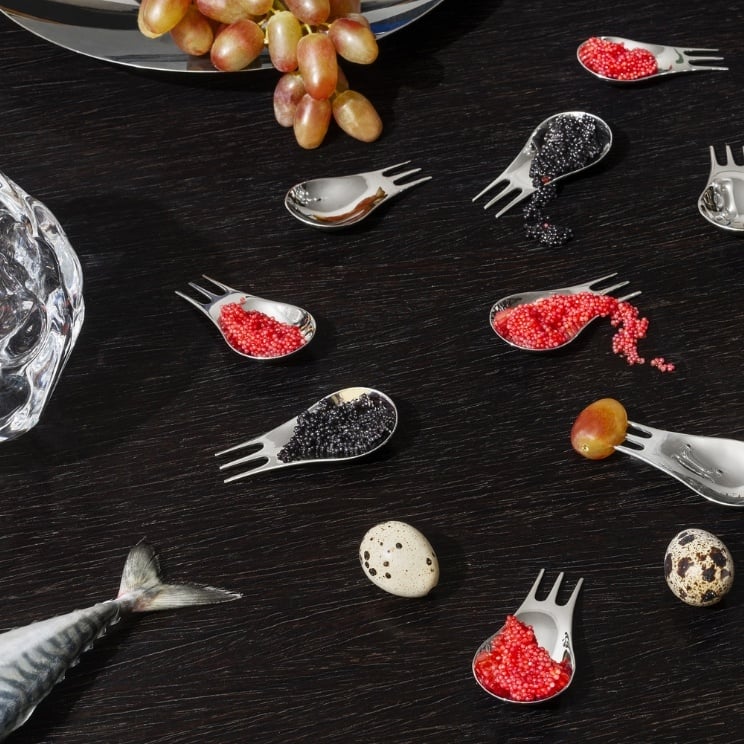
The Essentials Oyster and Caviar Accessory Set in Gift Box, 11-piece
Printworks
Dispatch within 4 working days


Find out more!
How to eat fish according to savoir-vivre rules?
As we've already mentioned, the way you eat fish depends on the type of dish served. If the fish is filleted, meaning it's been deboned before cooking and serving, you can eat it with a classic fork and knife, which can be helpful for scooping pieces of fish onto the fork. Remember that you should only divide the flesh with a fork. Never cut fish with a knife.
A much more challenging dish, requiring knowledge of certain rules, is eating fish in steaks or whole cooked, fried, or baked fish, served with skin and bones. Such dishes require the use of special fish cutlery. Start by removing the fish's fins. Then, with the tip of a fish knife or a traditional knife, cut the fish lengthwise along its body, roughly in the middle, starting from the gills and ending at the tail. Next, slide the knife flat under the flesh, parallel to the bones. To separate the flesh from the skeleton, use the fish knife and fork. Repeat the same process on the other side of the spine, then turn the fish over and do likewise. Bone tweezers can also be a helpful tool; thanks to their pincer-like design, they allow you to remove bones quickly, neatly, and hygienically.


The skin, once separated from the fish, can also be eaten, depending on your preference. In this case, it should be wound onto the knife and held with the fork. During fish consumption, the skeleton, head, tail, and uneaten skin should be transferred to a side plate, which should have been prepared in advance by the host. If you feel a bone while eating, you should use your tongue to place it onto your fork, then set it aside on the edge of your plate. If a bone gets stuck between your teeth, you should excuse yourself from the table and remove it privately.
On the other hand, fish served as a starter, such as smoked salmon or eel, as well as marinated and salted herrings, can be eaten with a regular dinner fork or a starter/dessert fork, if one has been provided.


How to eat prawns?
Our guide to eating seafood begins with prawns, the consumption of which depends on how they are served. Prawns served as a starter are eaten with your fingers, whereas those served as a main course are eaten with a traditional knife and fork. When eating a prawn with your hands, you should hold it by the head and body, then twist to break open the shell. That's all it takes to extract the delicious meat of the crustacean. Sometimes you might be served peeled prawns, with just the tail shell remaining. In such a case, you simply hold the shell and eat the meat. As for seafood served in a prawn cocktail, these are usually small and peeled, so they can be eaten in one bite, or larger pieces can be cut with a fork.
How to eat mussels?
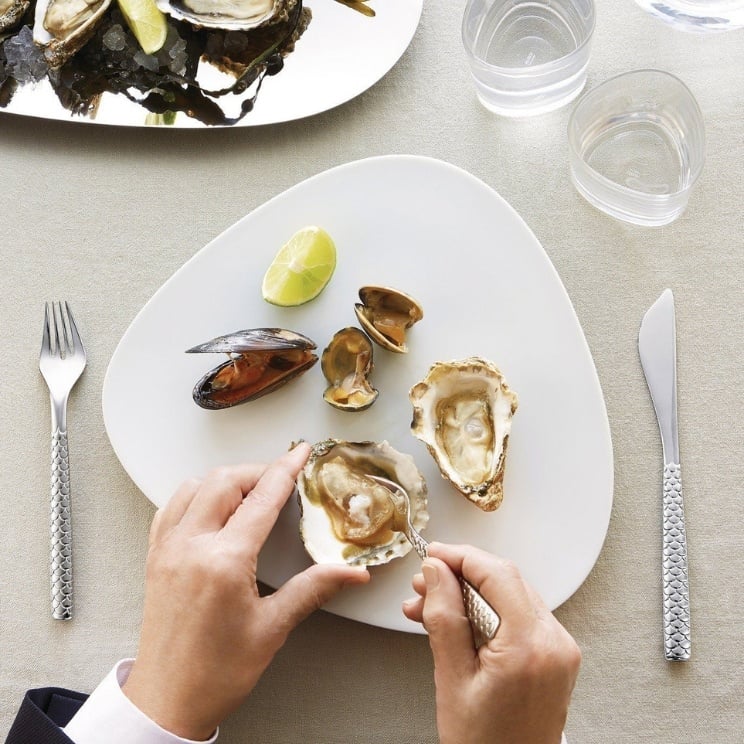
Wondering how to eat mussels? These seafood delicacies can be enjoyed in two ways – an easier one and a slightly more complicated one. The first method involves extracting the meat from inside the shell with a fork. The second method, however, is a continuation of the first and involves eating the meat from the first shell with a fork, and then using the empty shell as a pair of tongs, meaning you use the empty shell to remove the meat from subsequent mussels.


How to eat lobster?
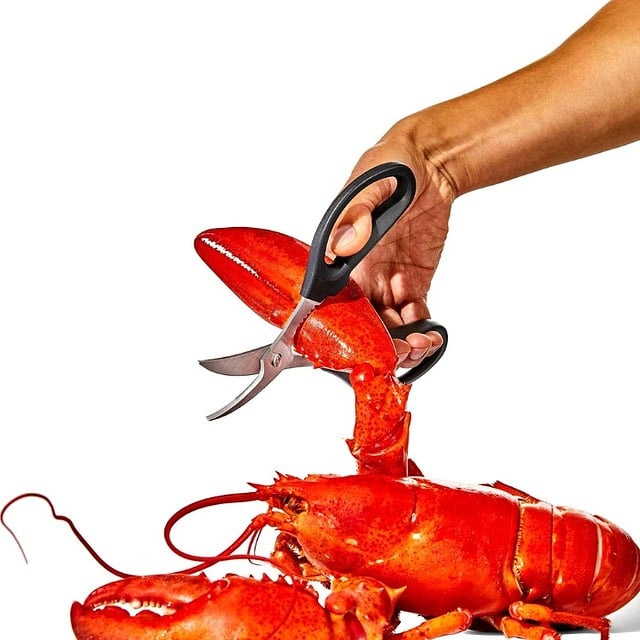
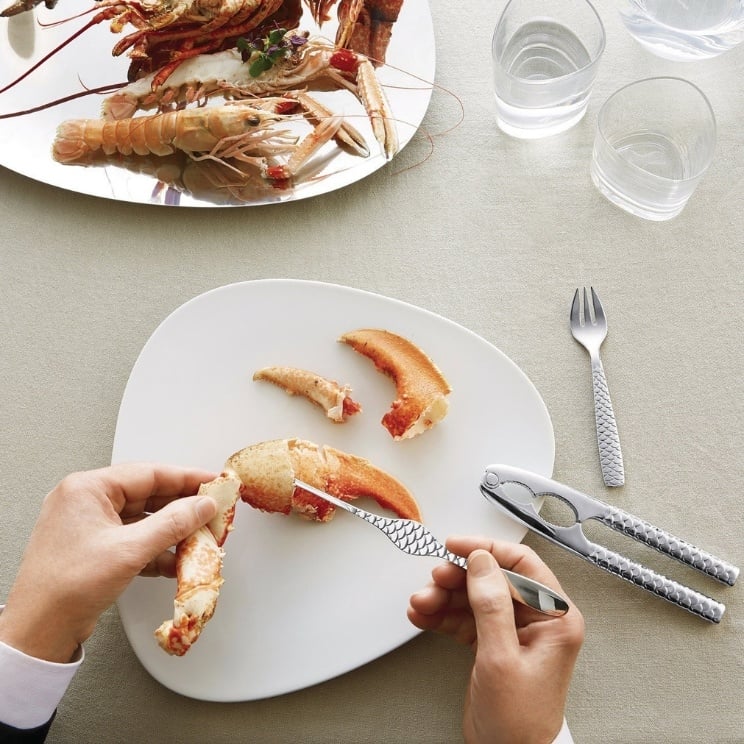
Eating this crustacean is not the easiest task, as it is usually served whole, including the shell. First, you should break off the lobster's claws, holding it with one hand and twisting the claws with the other. Separate the tail from the body in the same way. Next, take the tail in your hands and squeeze it to separate the meat from the shell. The meat is extracted with a long fork. Similar steps are performed for the claws. You can use seafood scissors or your hands to separate the claws from the joints by breaking them, then remove the shell and extract the meat. The lobster's body can be easily opened if you have a special shellfish opener from the Colombina Fish cutlery collection. It's best to perform all these actions calmly and slowly to minimise the risk of splashing.
Oysters – how to eat them correctly?
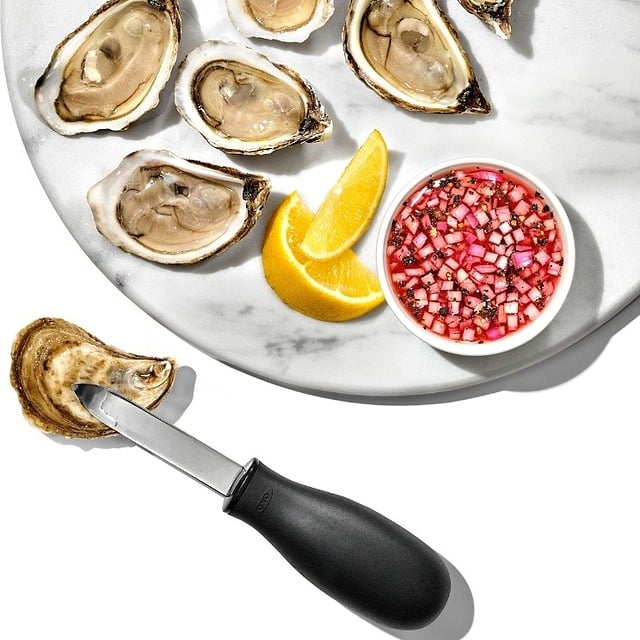
Oysters, often served raw with a squeeze of lemon, can also present quite a challenge. So, how do you eat oysters? First, the oyster needs to be opened. This can be done with a short knife, by prying open the oyster shell where it's rounded and joined. Then, draw the knife right through the middle and cut off the upper part of the oyster attached to the top shell. Once opened, it's a good idea to season the oysters with a pinch of salt and pepper, and a squeeze of lemon juice. Next, drink the contents from the shell as you would from a spoon, tilting it so the oyster and its juices slide directly into your mouth.




How to eat crab?
Let's move on to another crustacean: the crab. First, you need to cut it in half, then use crackers to detach the claws. The meat from the claws is the tastiest. You can extract it in two ways. All the meat can be removed with a fish fork, or some of the meat can be sucked out, and the rest eaten with a fork. Next, you separate the legs from the body, which need to be crushed with crackers to get to the meat. Finally, using a sharp knife, cut the crab's body in half. With a fork or spatula, scrape out the meat, separating it from the plates, gills, and cartilage.
How to eat clams?
And finally, we offer tips for eating clams, the consumption of which depends on how they are prepared, as well as the formality of the occasion at which they are served. When eating steamed clams, you should pry open the shell and open the clam. A special clam fork is used to remove the clam from its shell, but at a less formal gathering, you can use your fingers. For eating raw clams, no forks are needed – they are eaten with your fingers. The open shell should be brought to your mouth, and the clam sucked out from the shell.


Read more!
We hope that with our tips, you'll no longer have any trouble eating a whole fish, or enjoying oysters, crab, or lobster.