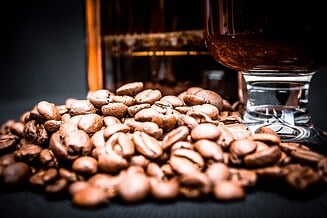
Today, coffee is present in almost every moment of our lives. It accompanies us in the morning, but it is also a good companion at meetings and business negotiations. It is the black queen, to be treated with all the honours due to a member of a distinguished family. It starts at the coffee bean roasting stage.
Bringing out the aroma - roasting and grinding coffee
Beans straight from the fire...
The origins of the coffee roasting process lived up to its legend.
One of the many versions of the legend tells of a forest fire in Ethiopia, during which the tribal people smelled the roasted beans and thus discovered the benefits of coffee roasting. Other legends mention that Ethiopian monks, having received coffee beans from a shepherd, threw them into a fire as the work of Satan. Having smelt the beautiful aroma, they immediately pulled them from the embers and made an infusion from them. The fact is, however, that it was not until the 14th century that it became common to roast coffee beans - first in ordinary pans, then in special roasters.
Roasting brings out the aroma
Grinding coffee
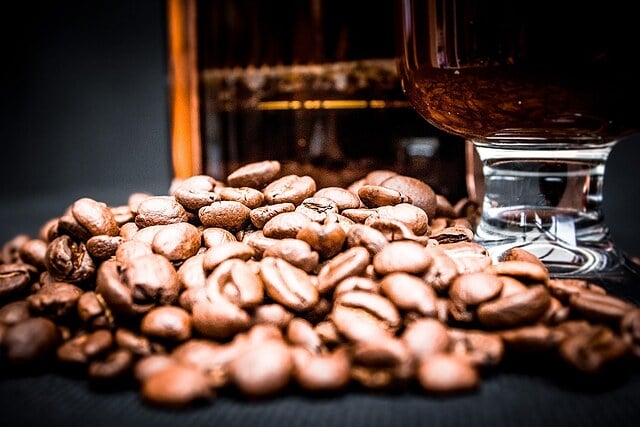
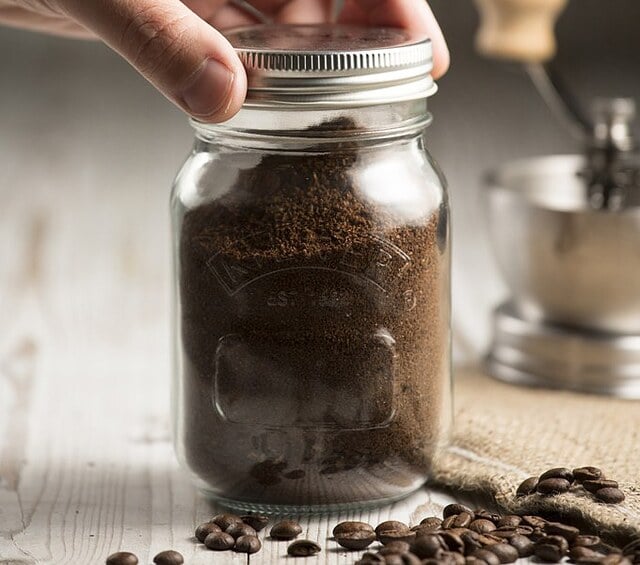
For a long time, ordinary mortars were used to crush coffee beans. It was not until the 15th century, mainly in the Arab countries, that dedicated hand grinders similar to those used for spices began to appear. However, the invention of the electric grinder, first used in 1883 in New York, revolutionised coffee grinding and made it trivial. Also in the 19th century, grinders with adjustable grinding thickness were available. Today, we can choose from dozens of types of coffee grinders - we can control the coarseness of the grind, and the number of portions, and we can create our own blends of coffee beans. This is why experts advise against buying pre-ground coffee in favour of grinding it ourselves just before consumption. Only then will we have the chance to fully appreciate the taste and aroma of the coffee!
So equip yourself with an elegant manual or electric coffee grinder and a practical coffee measure to measure the right amount of beans.
A fleeting pleasure


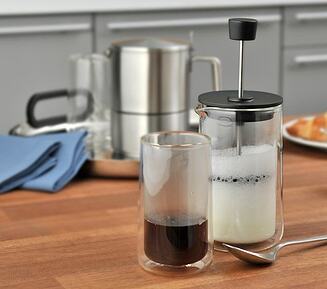
A brief history of brewing
The coarseness of the ground beans should depend on how the coffee is brewed.
The oldest way, which requires a very fine grind, is Turkish-style brewing. Contrary to what you might think, Turkish-style coffee has nothing to do with the boiling water coffee that is commonly referred to here. The brewing process takes place in a pot - the oldest ones, dating back to the 15th century, were made of copper. The ground coffee is poured over cold water and heated several times until an adequately strong brew is achieved - it is very important not to let it boil. This is quite labour-intensive and rarely used today, but it allows for a deep flavour and aroma.
French Press brewers
One of the simplest ways to make coffee is to brew it in a pot fitted with a filter. As early as 1763, the French tinsmith Donmartin designed the first coffee pot with a flannel filter inside, allowing the coffee infusion to be brewed quickly and easily. To this day, this type of coffee pot has gone through a long road of modifications and upgrades - thus the Stelton coffee pot designed by Arne Jacobsen. Made of state-of-the-art, heat-insulating materials and fitted with a filter, it not only makes it trivially easy to brew coffee but also keeps it warm for a long time.
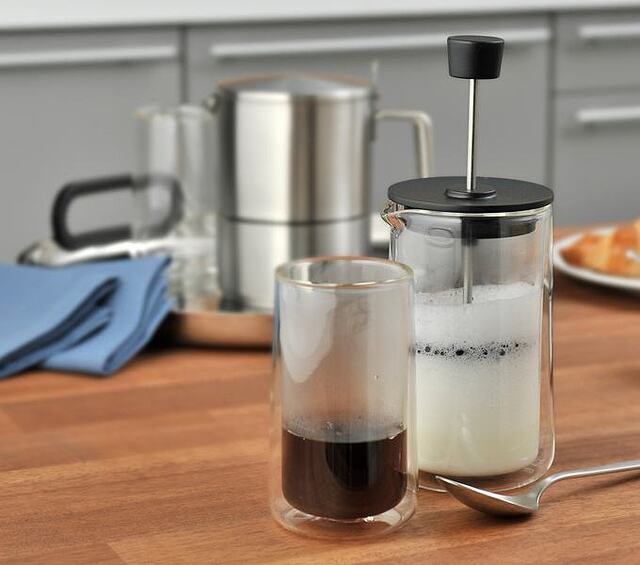
The first piston coffee brewer was developed as early as 1852 by the Frenchmen Mayer and Delforge. However, it only gained great popularity in the 20th century. Why so late? Well, a major problem for the designers was to create a suitably tight piston, that adhered perfectly to the walls of the vessel. It was not until 1930 that the Melior company perfected the design, and since then the market for piston-type French-press coffee brewers has seen a real boom. To this day, it is still the most popular way to brew coffee in France and the Anglo-Saxon countries.


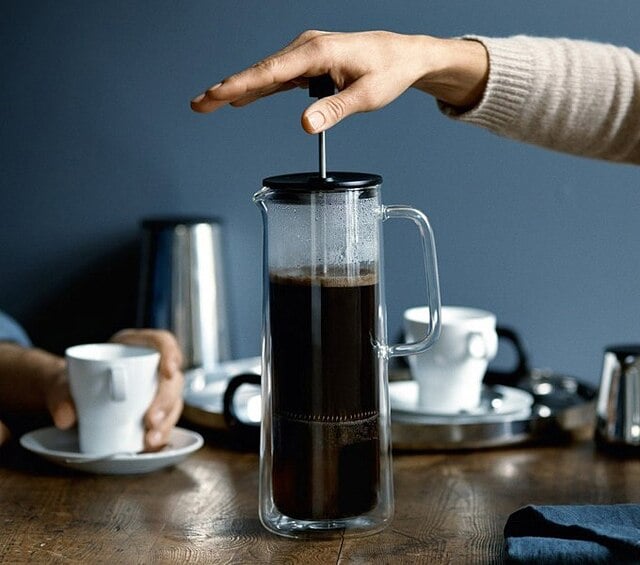
What is the principle of the piston coffee brewer?
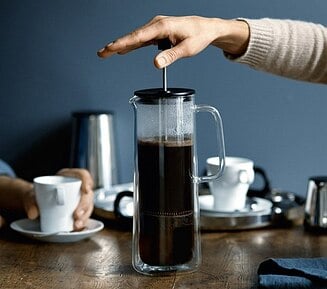
Pour coarsely ground coffee into a glass container, pour in hot water and cover. After four minutes, the plunger in the lid is pressed against the bottom and fitted with a sieve - this separates the grounds and all that remains in the container is an aromatic beverage with fluffy white froth. Coffee from a French press brewer is characterised by its excellent deep flavour and aroma. This is because the aromatic oils are not deposited on the walls of the paper or metal filter, as with other brewers, and have the chance to extract all their richness.
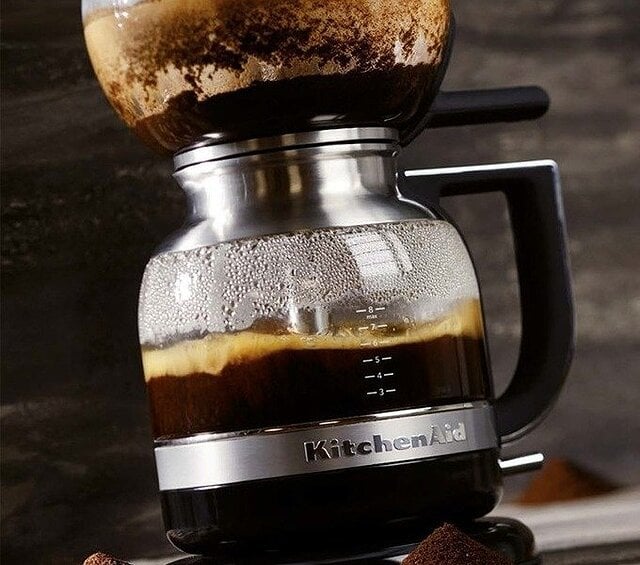
Perhaps surprisingly, the first coffee brewers using differential pressure were already developed in the early 19th century, before piston-type brewers. In 1838, the French optician Lebrun created the first low-pressure brewer, a year later Jeanne Richard patented a vacuum brewer equipped with a safety valve and, from 1901, the production of the first commercial high-pressure coffee machine began in Italy. From these inventions came the current electric pressure espresso machines and Italian-type moka pots for brewing espresso.
It is also possible without a coffee machine...
How does the espresso machine work?
The principle of the espresso machine is that hot water is forced under pressure, usually 9-15 bars, through a sieve with finely ground coffee. The extraction time is very short, approximately 25 seconds so that less harmful substances are released into the brew. Coffee from such a machine, referred to as espresso, is usually very strong and dense, with an otherwise unattainable intense flavour and aroma, covered with a fluffy creamy foam.
The type of coffee, the whipping of the coffee in the strainer, as well as the amount of pressure, determine the taste of the brew.
Good electric coffee machines are quite expensive, bulky and often complicated to operate. Therefore, special pressure brewers, such as the Artisan siphon or pour-over coffee makers, are an excellent alternative to espresso machines.
A particular variety of pressure coffee makers are the classic espresso brewers, or Italian cafetieres, known as moka. They consist of three parts: a lower water container with a safety valve, a strainer where the coffee is poured in, and an upper container for the finished brew. The water, heated on the cooker under the pressure created from the steam, seeps through the whipped coffee and the resulting brew is poured into the upper container. The pressure this creates is quite low (around 3 bar), but the resulting espresso is nevertheless highly flavoursome.
An unquestionable advantage of the coffee machines is their ease of use and small size.
In addition to the typical polygonal Italian coffee machines, there are also more sophisticated designs available on our market. Undoubtedly, the leader in this field is the Italian company Alessi - not surprising given the Italian origin of this type of brewer. A noteworthy example is the 9090 café, designed by the famous Richard Sapper. Made of high-quality stainless steel, it is one of the more recognisable design symbols of the late 1970s and early 1980s. See all our steel cafes.
A small work of art is also the La Conica café, designed for Alessi by Aldo Rossi. Its simple, elegant form and extraordinary workmanship are quintessentially the work of this artist!
Most of our cafes are suitable for induction.
Light as a cloud of foam


How about ... overflow? Slow coffee fashion
Filter coffee pots
For some time now, coffee brewed in a pot called a Chemex, which has its roots in the United States, has become fashionable in Poland. The inventor of this beautiful filter coffee pot was a New York chemist of German origin, Peter Schlumbohm, who patented this "filter device" in the 1940s. A special collar allows a filter to be placed in this unique carafe, which allows the coffee to brew slowly.
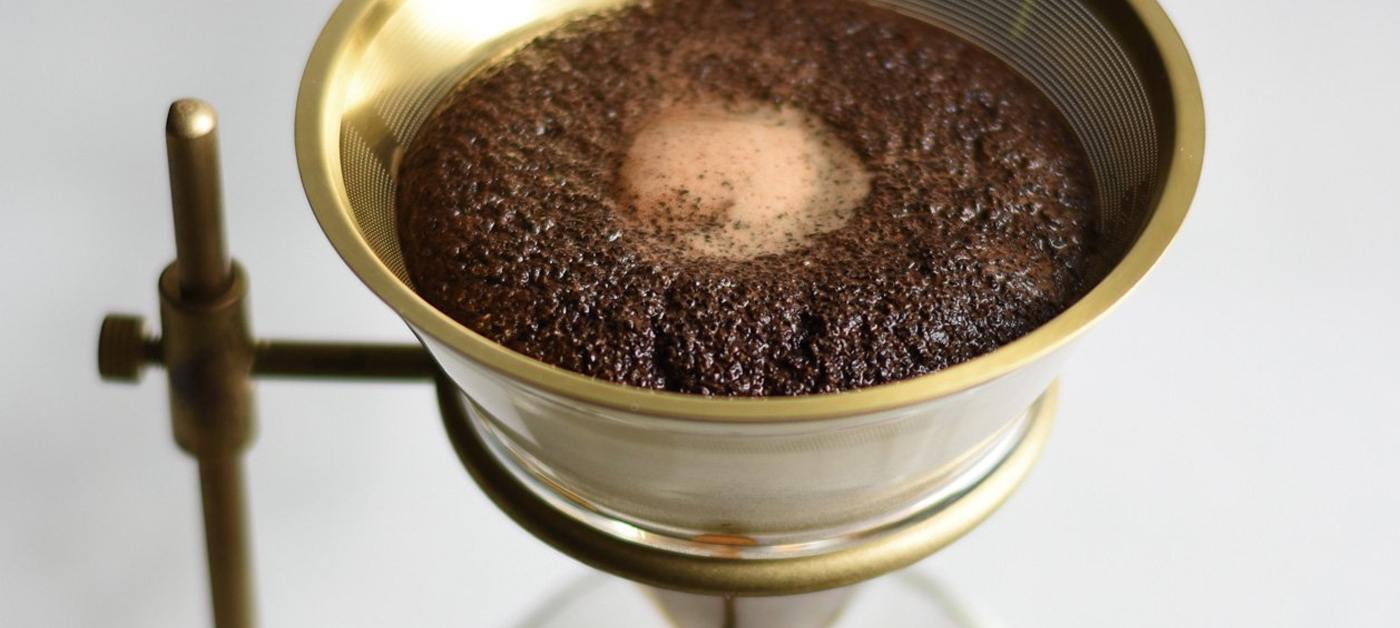
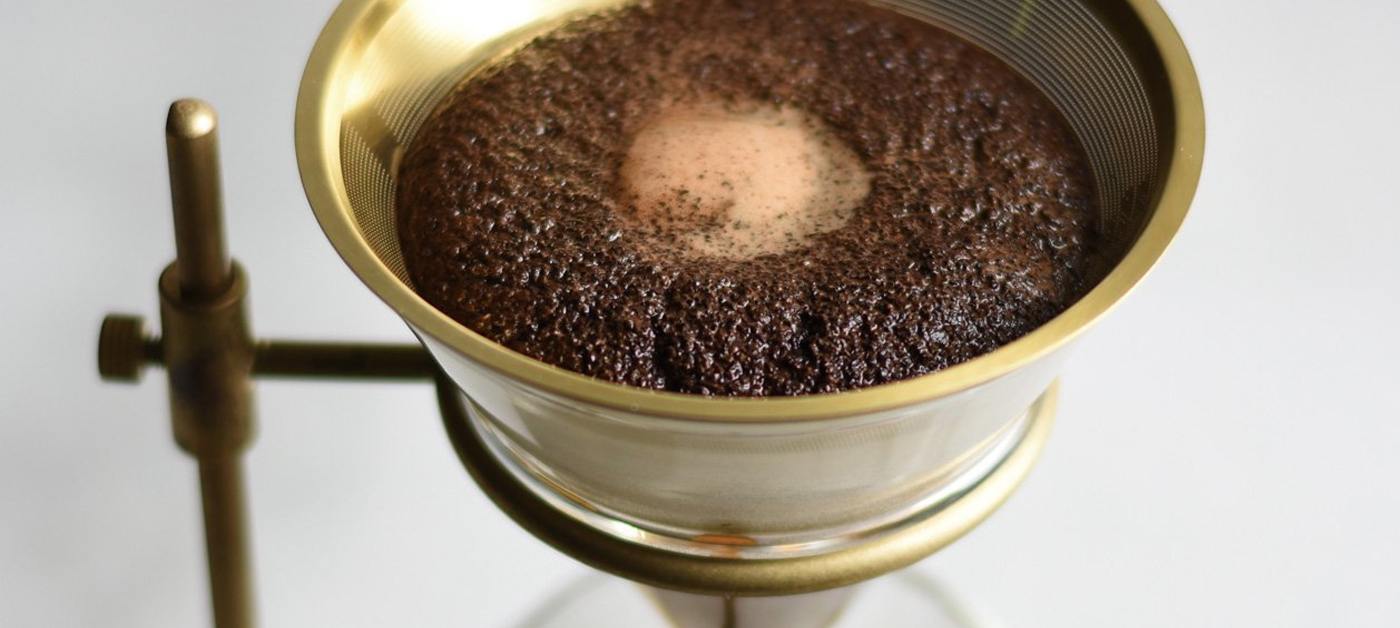
Although not every slow coffee filter pot is a Chemex, the principle is the same - the coffee filters and brews at the same time, while being poured through a narrow trickle of hot water at a temperature of no more than about 90° C. You will also find such wonders at FormAdore!
Dripper
Coffee drippers are also gaining in popularity. How do they work? Slowly, that's for sure :) But it pays to be patient, because drippers bring out the best in your coffee. Drip, drip, drip - drop by drop, the hot water drips into the ground coffee beans, picking up their aroma along the way. The next stage is the filter, which passes on only what is most valuable in the coffee: aroma, flavour, fragrance, colour. The grounds remain!


The most delicious black coffee