Lettuce already wilted and something smells bad from the depths of the fridge? Storing food correctly is a guarantee of good taste and our safety. It also helps to avoid wasting food. But do we really know which kitchen containers to choose for which products?
How has food been stored in the past?
The benefits of having a fridge are usually only noticed when it breaks down. Refrigerators and freezers are nowadays basic equipment in every kitchen, so it is hard to imagine that decades ago no one had ever heard of them. Most people got access to a refrigerator in the 1950's, but not all could afford to buy one. For many, it was an unnecessary luxury, as our parents and grandparents were perfectly capable of doing without it.
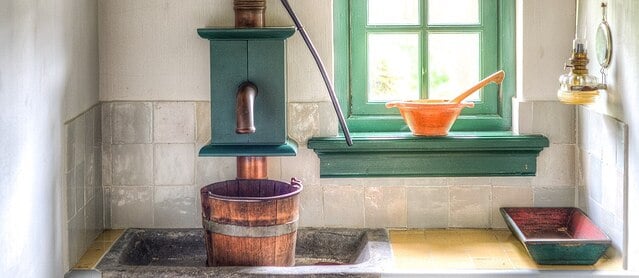
At that time, food was stored in free-standing dugouts, where the temperature remained constant at just a few degrees Celsius. They also built so-called icehouses, where the cold really kicked in, and not just in winter. Another way was to cover food with a thick layer of salt. This was mainly used to preserve meat, fish and dairy products. Legumes, onions and even previously smoked sausage were usually dried. Some products could also be pickled - apart from the cabbage and cucumbers we know today, stocks of carrots and beetroot were also preserved in this way.
Helping the fridge
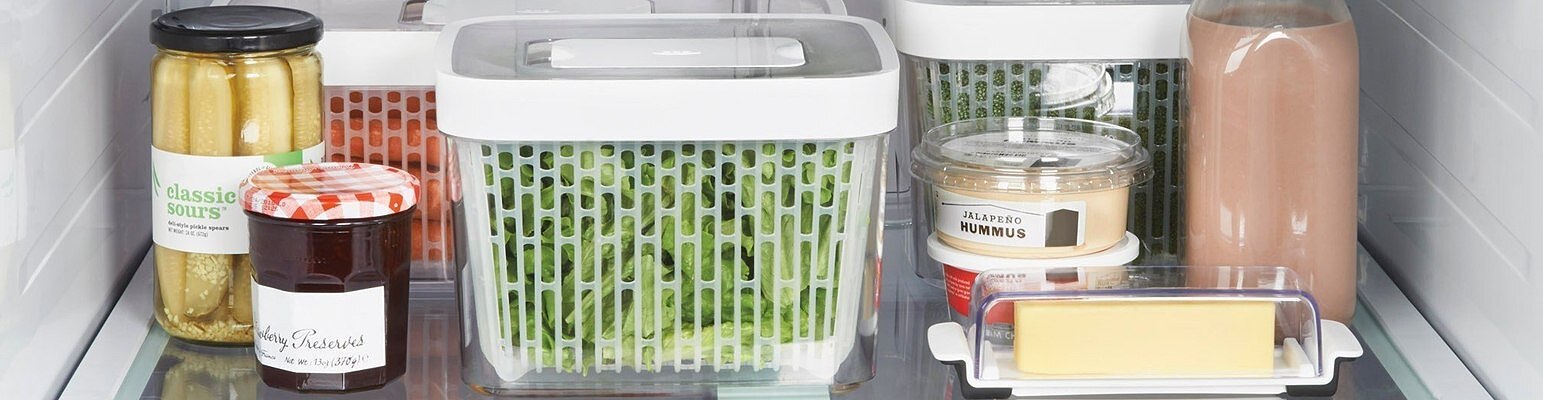
Storing food is a challenge that a fridge alone cannot meet. This is where practical food containers come in handy: Plastic, ceramic, metal or glass. We can also divide them up according to purpose - breadboxes guard bread, spice containers preserve the aroma of ginger, turmeric or basil, glass jars are for preserves, airtight boxes store loose products and so on.... In the fridge itself, there will be space for suitable kitchen containers. Food left in it, without adequate protection, will sooner or later spoil. More often than not, vegetables and fruit end up in the bin and are no longer fit for consumption after just a few days. However, there is a clever way to extend their shelf life considerably. Simply put them in containers with a carbon filter.
Plants produce ethylene - a gas that makes them ripen faster. Activated carbon absorbs it perfectly, so the produce stays fresher for longer. There's no magic to it, it's pure chemistry - useful in this case, and completely safe. We can also reach for bowls that are equipped with special trays. Vegetables and fruit placed on the trays do not come into contact with the bottom of the container and thus the moisture that collects on it. Even extremely delicate produce will retain its flavour and freshness. Fragile kale or lettuce will no longer spoil before you reach for it.

Back to the past - pickling
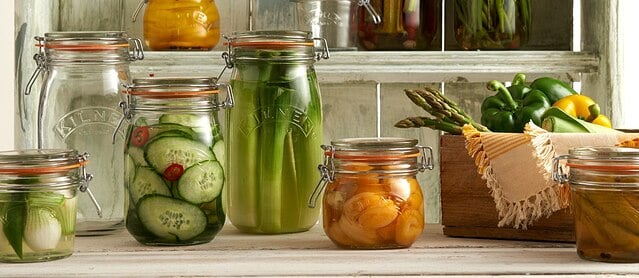
Homemade jam, mushrooms and pickled cucumbers - we all probably remember the taste of preserves which our mother or grandmother used to prepare every year. Thanks to them, the aroma of sunny summers straight from the jar accompanied us even during hard winters. How about filling your own cellar with them this year? Nothing simpler! All you need is a secret recipe handed down from generation to generation, a bit of willpower and a few empty jars. Pickling is also a great way to store soups and lunches. If you prepare too much, instead of throwing it away, preserve it. These emergency portions are great for when you run out of time to cook or are going on a long journey.
You can also use jars as glass kitchen containers. This is a great way to store loose products such as flour, groats or oatmeal. Usually narrow and tall, jars are a compact solution that will work especially well in drawers.
Sugar, flour and pasta - how do you store dry products?
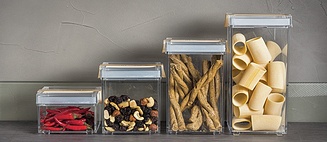
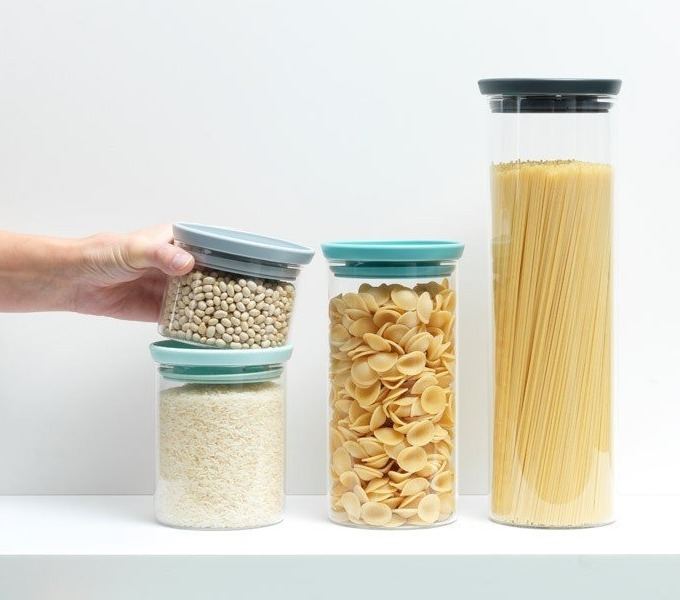
In every home you will find a place full of stocks of flour, pasta or rice. We usually buy them in paper or plastic bags which, once opened, are usually no longer good for anything. Neither put it up nor put it down. As a result, the cupboard gets all sticky with sugar and spilled groats lurk in all the nooks and crannies. It will be much more convenient for us to reach for them if we pour them all into suitable kitchen containers. We can choose a ready-made set or buy them individually. They usually have transparent walls or a window made of plastic, so you can see what's inside at a glance. Brabantia kitchen containers are particularly popular, including these practical metal containers with a window.
The airtight lids keep the stored products fresh for longer. Every coffee lover knows how important this is - for coffee, you can opt for a container with an airtight seal. When it comes to tea, it is generally agreed that the best place for the aromatic leaves is in a tin. Choose a tin that is not only airtight, but also has an attractive design.


Small and large spice containers
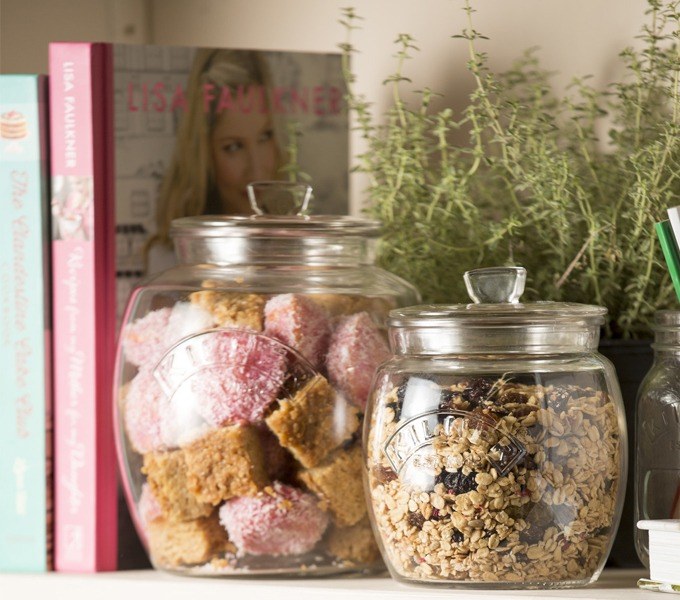
A special category of kitchen containers are spice containers. They most often take the form of small, cute jars. Glass is a good option when it comes to spice containers, not only for visual reasons, but also for practical reasons. Glass spice containers do not affect the aroma of the products stored in them and effectively insulate them from external conditions.
When it comes to spices, the important thing is not only the container itself, but also the place in the kitchen where it will be stored. It is important that the sun does not reach there and that the temperature is not high. Remember to close the spice container tightly after each use - this will prevent the spice from lumping and the aroma from escaping.
For more information on how to properly store delicate spices and herbs, see FA Magazine's separate article on storing them properly.
Practical decoration for every kitchen
Boxes and also containers for storing food protect it from moisture and air and make our work in the kitchen easier. It will certainly not escape anyone's notice that they are also extremely decorative. Choosing the right containers for your kitchen décor is great fun with endless options! Ceramic ones delight with their form and at the same time their classiness, while metal ones will certainly be chosen by lovers of modern design. Glass ones will adorn any shelf - fill them with colourful pasta or coffee beans. Decorative jars full of sweets will be a sweet touch to any kindergarten party! It is impossible not to mention plastic containers, made of high-quality, highly functional plastic. Some of the most popular containers are those from the Brabantia brand .
A perfectly organised kitchen