Spices are the true grey eminences of the kitchen realm. They play side roles, out of sight, but nevertheless have a significant impact on the final result of a culinary adventure. A lot depends on them, which is why they deserve to be stored with care. In FormAdore we suggest what spice containers should be in every kitchen.
Spice containers can often be a neglected topic. We tend to focus on pots, pans, plates or cutlery - yes, they are the basic equipment of every kitchen, but beyond them, there is a whole range of other essential accessories. We tend to forget that the work of achieving the flavour of the dish we dream of starts long before we put the pot on the fire. It reaches where we often commit minor sins, especially in the ways we store food.
One such transgression is storing spices in bags that we have taken from the shop shelf. Unfortunately, this minor omission is later reflected in the taste of the food we prepare. A mouldy curry will add nothing more to a chicken than colour, while a weathered bay leaf thrown into a stew will be of little benefit.
Off to the spice cabinet you go!
So how best to store spices and herbs? Here are some effective solutions with a deep nod to design.
Glass jars for spices - classic and tasteful
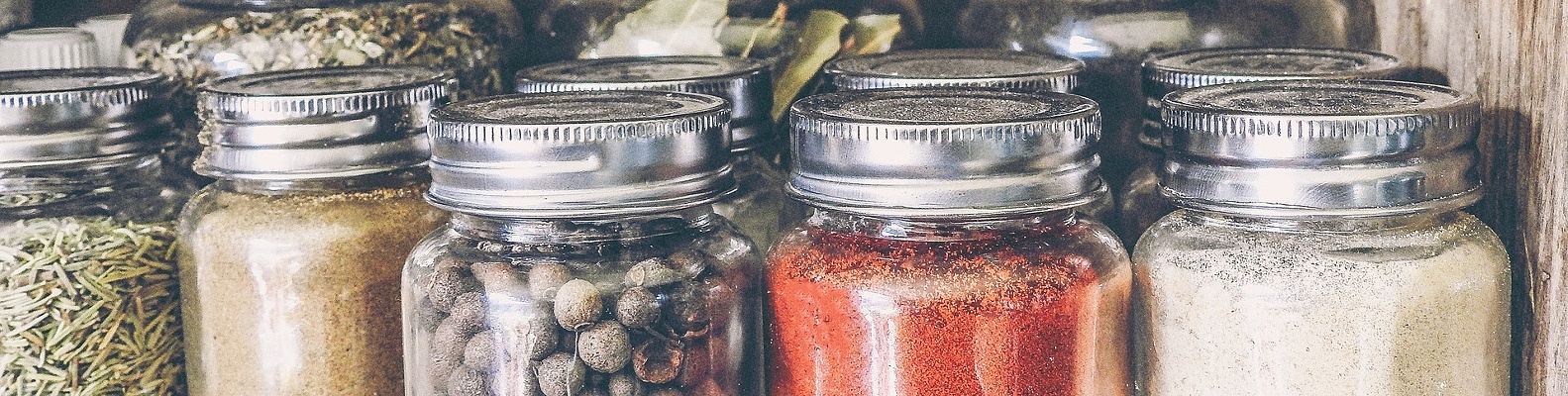
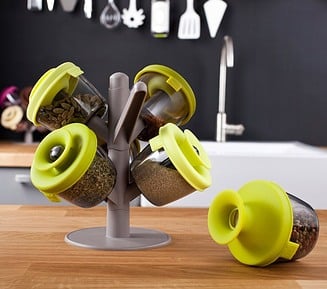
Food storage in glass kitchen containers is the method favoured by culinary traditionalists. Flour and pasta are in large, roomy vases, while spices are in miniature jars.
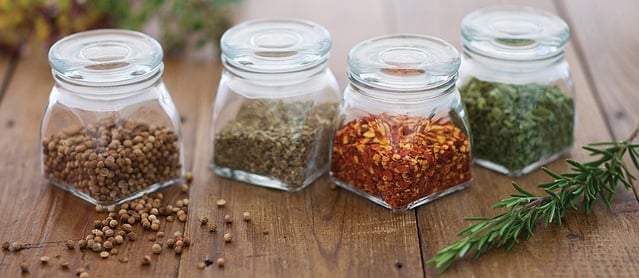
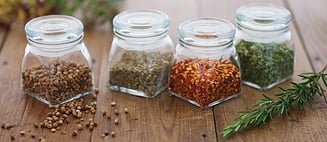
Spice jars offer the same advantages as their larger cousins - they are airtight and impermeable, easy to keep clean and do not affect the taste and aroma of the products stored in them. The choice of glass containers is also a sign of concern for the environment because of the recyclability of glass.
The striking design is an additional advantage enjoyed by most spice jars. Thanks to the properties of glass, such containers can take on decorative forms and shapes that will be a real adornment of the kitchen worktop. Such jars will go to waste hidden away in a drawer or cupboard! Although glass spice containers are characterised by their fragility and are relatively easy to break in the whirlwind of culinary revolutions, they have their loyal followers in kitchens all over the world.


Noir from the inside
Cinematic noir was based on the magic of contrast. We do the same today when we put salt on the table, always accompanied by pepper (or is it pepper always accompanied by salt?). Regardless of which half of this matched pair is more popular - salt or pepper - both must always be on hand at every meal.

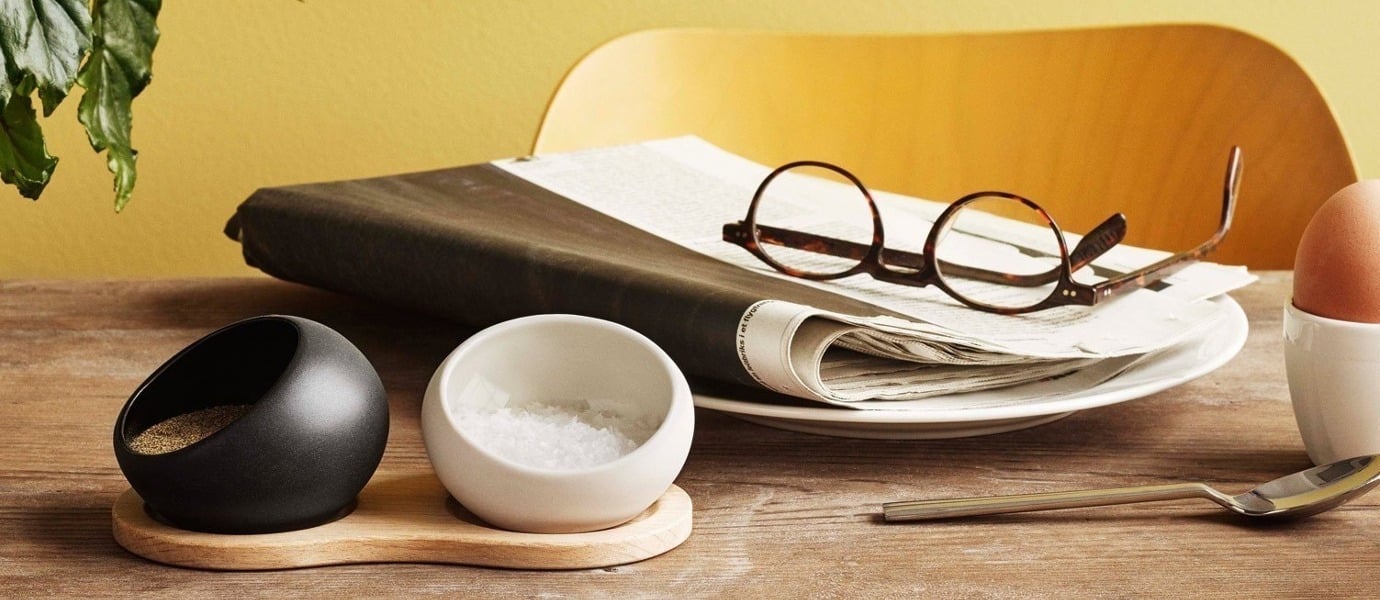
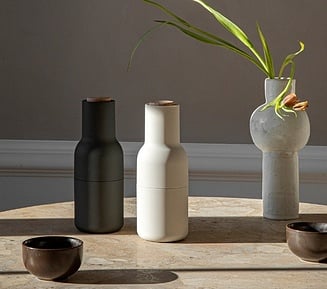
Designer salt and pepper containers often degrade the traditional salt and pepper shaker solution. Due to the frequency of use and showmanship, such containers should stand out for their solid workmanship and original design. The most frequently chosen salt and pepper containers are those made of ceramic, stoneware or porcelain. Visual assets are more important and functional features such as ease of care or compact size are less so. When it comes to salt and pepper pots, it's all about design!
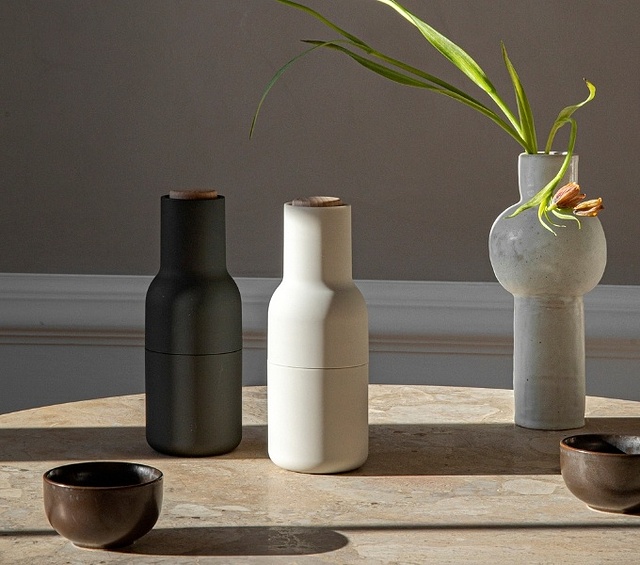
A traditional salt or pepper shaker will always be welcome on the table, but it is only the elegant salt and pepper pots that will give your dinnerware a classy touch worthy of a festive meal. If, on the other hand, a fresh and maximally intense salt or pepper flavour is desired, it is a good idea to choose an elegant salt or pepper mill. salt or pepper mill.


Green me! How to preserve the aroma of herbs?
Just like spices, herbs need the right storage methods. To retain the aroma of herbs for longer, their storage should be as careful as for exotic spices. For dried herbs, traditional seasoners - airtight and compact - will work well.
Fresh herbs require more imaginative storage methods. Airtight containers that hold whole sprigs of herbs are a solution; this type of container is suitable for storage in the fridge or freezer.
Potted herbs
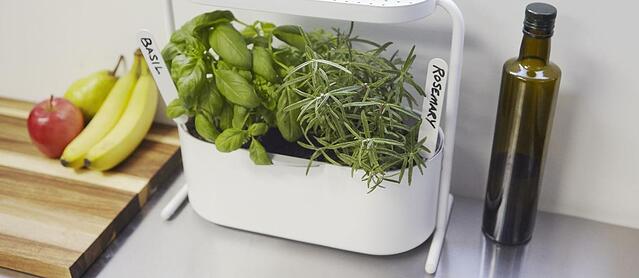
It is well known that the most valuable herbs are those that are fresh, picked literally just now. Rubbed in the fingers, they are incomparably more potent than dried herbs. That is why it is worth playing gardener and, with a minimum of effort, creating a miniature herbarium in the kitchen. Herbs in pots are a great way to have constant access to aromatic basil, mint, coriander or marjoram. Fresh herbs in the kitchen are also an original decoration and a way to warm up an austere interior.


Spice Vertigo
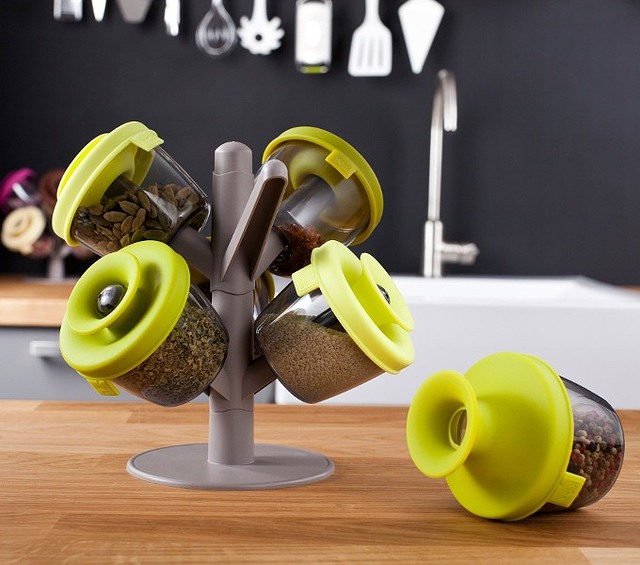
There are thousands of ways to store spices and herbs. The spice holders available will satisfy even the most discriminating tastes; they can boldly stand on top, where they are always to hand while contributing to the design of the kitchen interior.
What do you need to keep in mind?