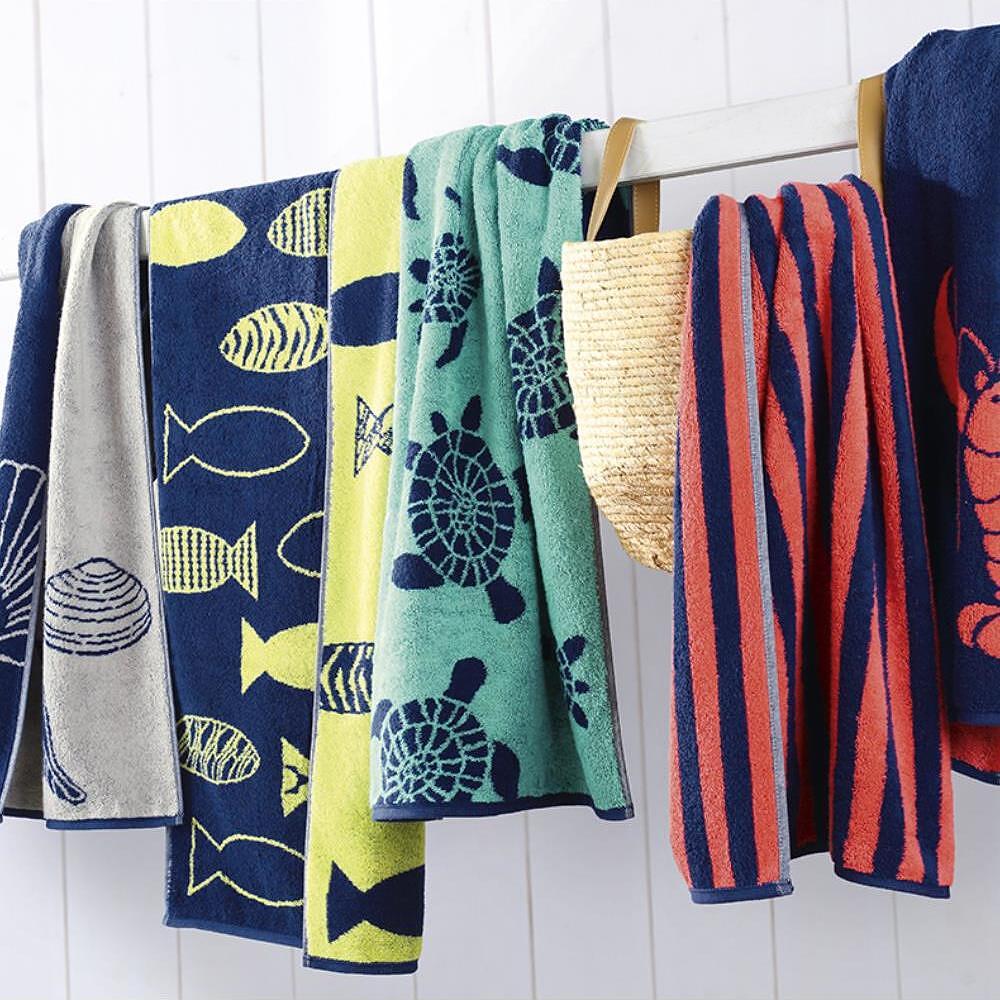
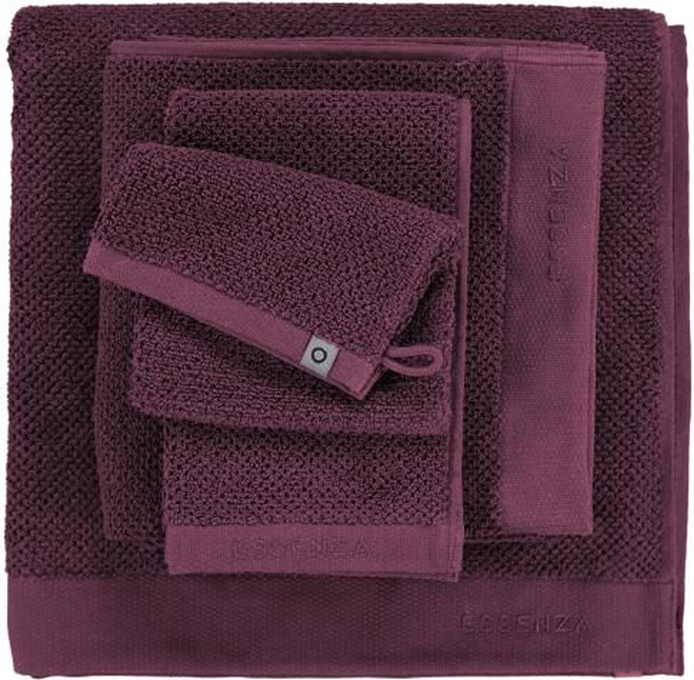
Wrapping yourself in a soft, fluffy, delicate towel right after a bath is a real pleasure. Unfortunately, even high-quality, good towels often lose their softness after washing, and using them is no longer comfortable. That's why it's worth learning how to care for towels so they last a long time and retain their original properties.
How to wash towels?
Washing towels correctly will ensure they always look as good as new and don't lose their original properties, which is why it's so important to know a few rules about washing them.
The first rule to remember applies to new towels, which should be washed immediately after purchase. Why? New towels usually don't absorb moisture and are coated with protective chemicals. The first wash improves their absorbency, makes them more resistant to damage, and also sets their colours.
Before putting towels in the washing machine, you should sort them. To extend their lifespan, it's not recommended to wash towels with other clothes, underwear, bedding, or kitchen cloths. If you neglect this rule, your cotton towels may get damaged. Buckles, clasps, and other clothing elements can cause threads to pull out of the towels. Furthermore, remember to always sort towels by colour. Wash white towels with light colours, black towels with dark colours, and grey towels with coloured ones. This way, the colour of your terry towels will always be fresh and vibrant.


Don't fill the entire drum with towels. Load the washing machine drum to a maximum of half full. This way, your towels will be perfectly clean and well rinsed after washing.
The next step is to set the right temperature. What temperature should you wash towels at? The optimal washing temperature for towels is between 40-60 degrees Celsius. Washing at too low a temperature may not remove all dirt, while too high a temperature can negatively affect the material, causing it to shrink or deform.

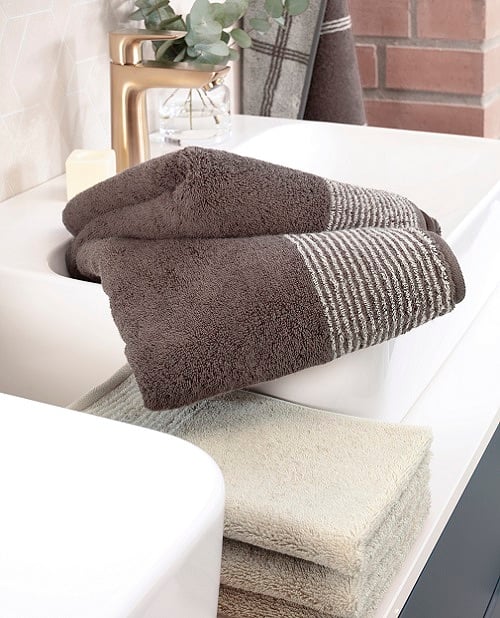


What should you wash towels with?
The choice of laundry detergents is also an important matter. For washing towels, it is recommended to use laundry liquids and gels. Laundry powder rinses out less effectively and can cause your bath towels to lose their softness, absorbency, and fluffiness. Furthermore, it's important to exercise moderation and remember not to use too much detergent.

How often should you wash towels?
The frequency of washing towels is essentially an individual matter. However, it's important to bear in mind that towels, due to their constant dampness, provide an excellent breeding ground for microorganisms. Therefore, bath towels are recommended to be washed every 3 days on average, while hand and face towels should be washed even daily, after 3-4 uses.


How to soften towels?
Towels should not be softened using fabric softeners. Why? These types of products adversely affect the absorbency of towels. They become less durable, less resistant to external factors, and lose their fluffiness. If you want to soften your towels, it's worth reaching for eco-friendly, homemade, natural methods. Washing towels with vinegar and baking soda comes to the rescue. Baking soda and vinegar for washing towels perfectly soften the fibres, thereby restoring softness to the towels and preventing them from becoming static. To neutralise the vinegar smell, it's worth adding a few drops of essential oil to the wash.
How to wash towels to make them soft? A good idea is also to soak the towels, just before putting them in the washing machine, in lemon juice and vinegar, and then washing them in the standard way. Thanks to this, the towels will be soft and fluffy after being removed from the washing machine. Another good method is to add vinegar and ammonia to the wash, which prevents detergents from sticking and perfectly softens fabrics.

Tip
How to dry towels?
The best solution is to dry towels in an automatic dryer, which is designed for quick and thorough drying of various materials. When putting towels in the dryer, you don't have to worry about damaging the fibre structure or unpleasant odours. Towels are recommended to be dried at a temperature below 60 degrees Celsius.
However, if you don't have a tumble dryer at home, it's best to dry towels outdoors, in an airy place, but avoid exposing them to direct sunlight. Additionally, remember to give each towel an energetic shake before hanging it up. This will lift its fibres, and the towels will be softer once dry. Also, make sure to carefully spread the towel on the line so that it dries evenly. Towels should not be dried on a hot radiator, as they may lose their properties. Drying is an extremely important step, as improperly dried towels can become mouldy and smell bad.


How to fold towels?
Folding towels correctly will save space in your wardrobe or drawer, and it also looks neat and aesthetically pleasing. How to quickly and easily fold a towel into a cube and a roll?
Folding a towel into a cube
- Lay the towel on a flat surface and smooth it out.
- Fold 1/3 of the towel lengthwise towards the centre, and fold the other side in the same way. These two parts should perfectly overlap.
- Mark the centre of the towel and fold the top and bottom ends so they meet in the very middle of the towel.
- Now, fold the towel in half again.
Folding a towel into a roll
- Lay the towel flat on a surface and smooth it out.
- Fold 1/3 of the towel lengthwise towards the centre. Fold the other side in the same way. The parts should overlap.
- Starting from one end, roll the towel into a cylinder.


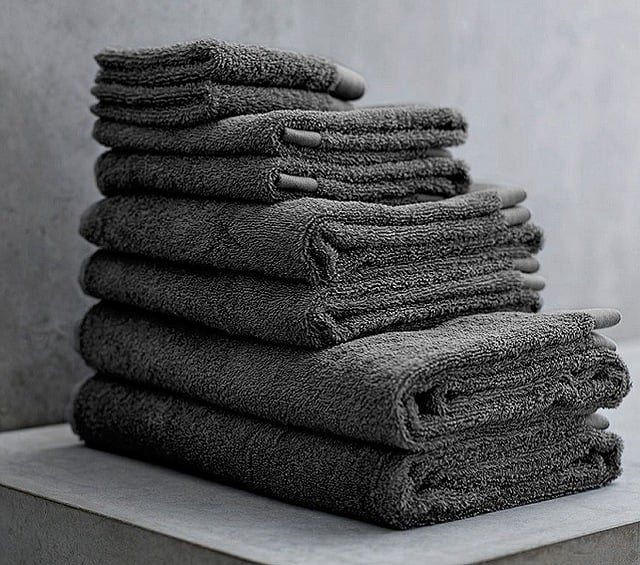


How to store towels in the bathroom?
The size of towels largely dictates how they are stored. Hand and face towels or bath mitts, due to their small size, will certainly fit in the bathroom, while bath towels and beach towels, i.e. large towels, require much more space and it is usually difficult to find room for them in the bathroom. However, regardless of where you store your towels, it is recommended to keep them in cupboards, preferably closed ones equipped with ventilation openings. On the one hand, such a cupboard protects towels from dampness and dust, and on the other hand, it ensures that excess moisture can be wicked away.
As for storing towels that are in current use, the best place for them is towel rails with a long arm, bearing in mind that each towel should hang separately, at a certain distance from the others, so that they do not touch. This will ensure proper air circulation and faster drying.
Important
Can towels be ironed?
Thick towels don't like ironing, as under the influence of the iron they lose their softness, fluffiness, and absorbency. Only elegant towels with decorative elements, so-called borders, can optionally be ironed with a lightly heated iron, not exceeding 150 degrees Celsius. Furthermore, if you want a linen towel to be smooth, you can iron it.



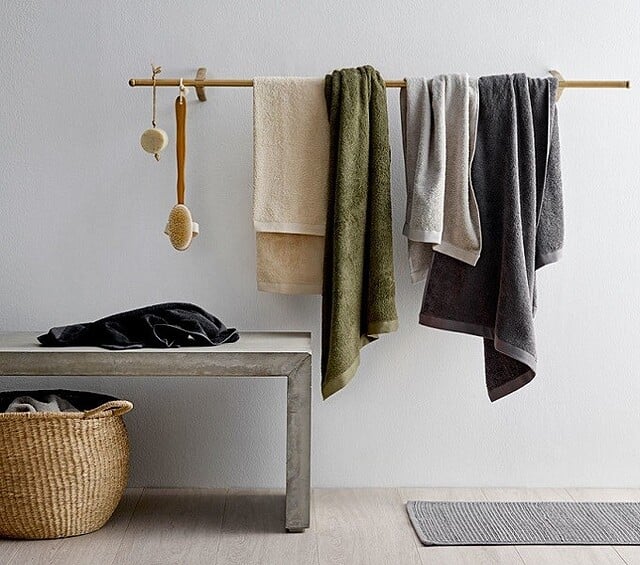


A bath towel, a waffle towel, a gym towel, a sauna towel… No matter what towels you have at home, each of them requires appropriate care. Properly looking after towels isn't difficult, but you need to know the basic rules for washing, drying, folding, and storing them, and stick to them every day so they continue to charm with their softness, fluffiness, excellent absorbency, and aesthetic qualities, even after a long period of use.