Loud Alarm Clocks
A loud alarm clock is a reliable solution for anyone who struggles to get out of bed in the morning and needs an effective wake-up call. In this category, you'll find alarm clocks for your desk and nightstand that combine modern design with an exceptionally loud signal. We offer, among others, alarm clocks with a cascading alarm, retro-style mechanical models, and advanced electronic alarm clocks with crystal-clear sound. Choose a device that perfectly complements your bedroom decor and say goodbye to oversleeping for work or meetings once and for all. A truly effective alarm clock can work wonders!
24 products


Loud Alarm Clocks – How to Pick One That Wakes You Up Without Giving You a Jolt?
Anyone who's ever overslept for an important meeting knows that a standard phone alarm doesn't always cut it. A loud alarm clock is often the last resort for those who need a foolproof way to ensure they're up and at 'em on time. But here's the rub: 'loud' doesn't have to mean 'jarring' or 'heart-stopping' – and that's precisely what we're diving into today.
We'll help you figure out just how many decibels you truly need, which alarm type will be your morning hero, and what crucial factors to consider before you take the plunge and make a purchase.
What Exactly Does 'Loud Alarm Clock' Mean? – The Essentials to Get You Started
A loud alarm clock is a device designed to effectively rouse you from slumber – even from the deepest sleep or REM phase – without, crucially, triggering panic, anxiety, or an unpleasant jolt. This distinction is vital, as many people automatically associate loud noises with discomfort. However, a properly chosen alarm can be both assertive and surprisingly gentle in its wake-up call.
To truly grasp what makes an alarm clock 'loud' in the best sense, let's get down to brass tacks with some basic decibel (dB) values:
Around 40–50 dB is the level of a quiet whisper or a peaceful home at night - far too subtle to pull anyone out of a deep sleep,
Approximately 60–70 dB is comparable to a normal conversation or a vacuum cleaner running. While light sleepers might stir at this level, a truly deep sleeper will likely remain undisturbed,
Around 75–85 dB is the sweet spot for a loud alarm clock, capable of waking the vast majority of people,
Above 90 dB, the alarm often becomes too aggressive for daily use for many. Primarily, 'statement' alarm clocks emit sounds above 90–100 dB, with manufacturers of extreme devices even claiming volumes exceeding 90–120 dB.
For most users, the practical range is around 70–85 dB, measured from one meter away. This level ensures you'll be roused from your sleep without crossing into the realm of discomfort.
However, it's crucial to understand that subjective loudness and the decibel value aren't always two sides of the same coin. The same 80 dB can sound vastly different depending on the timbre, frequency, and signal pattern. A harsh, pulsating high-frequency sound often feels louder than a smooth, melodic tone of identical intensity. So, while manufacturer specifications are a good starting point, they don't always tell the whole story of how an alarm clock will perform in the real world.
A loud alarm clock doesn't have to be synonymous with 'unpleasant'. What truly matters is the character of the sound and how the signal builds, not just the peak volume. An alarm that begins softly and gradually increases in volume over several seconds wakes you effectively, but without the jarring sensation of being ripped from your sleep. This thoughtful approach marries efficiency with psychological comfort, which is paramount for daily use.
What Alarm Sound Truly Wakes You Up Without Giving You a Fright?
Loudness alone simply isn't enough to get the job done. Scientific studies consistently demonstrate that waking effectiveness hinges on a combination of sound intensity, its frequency, and its pattern – not just the decibel reading.
For an alarm that truly gets you out of bed, look for:
Clear, repetitive signals – think short 'beeps', chimes, or melodic sequences. This type of sound has a high energy gradient, making it easier to cut through the barrier of sleep than a single, monotonous drone,
The presence of mid-range and higher frequencies – research has shown that a signal around 520 Hz (a square wave) effectively woke up ~92% of participants, whereas very high frequencies (~3100 Hz) at the same volume performed less effectively. Mid-range frequencies tend to cut through sleep more easily for both adults and those with impaired hearing,
An absence of overly low, booming tones – deep bass can resonate through a room and create a heavy feeling, but it doesn't necessarily speed up the waking process. In the morning, such a sound can often feel unpleasant and overwhelming.
A gradually escalating signal – the secret sauce for a comfortable wake-up. An ideal alarm should begin softly, around 60–65 dB, and then steadily increase its volume to the target 80–85 dB over several seconds. This gentle progression is far kinder than an immediate, full-blast assault on your senses. It gives your body a chance to transition from deep sleep to wakefulness, significantly reducing that dreaded morning grogginess (or 'sleep inertia'). Plus, some clever devices offer a sunrise simulation, helping your body naturally ease into wakefulness even before the audible alarm kicks in.
The simple 'beep' versus classic loud bells. While straightforward digital beeps are repetitive and clear, some might find them a bit too 'clinical' – and over time, your brain can become adept at tuning them out. A good alarm clock should ideally allow you to change the tone, keeping your brain on its toes. On the flip side, the sound of classic loud bells – that distinctive metallic clatter – feels more natural and is strongly ingrained as a traditional wake-up call, often eliciting an immediate response from many.
It's also worth noting that melodic alarms can actually lessen morning grogginess compared to a monotonous signal. Some alarm clocks feature melodic wake-up calls – short, recognizable musical snippets that rouse you effectively but without the sudden stress. Melodies with a distinct rhythm and varied dynamics are excellent for helping your brain 'boot up' faster after waking.
Consideration for housemates. When one person needs to rise at the crack of dawn while another is still catching Zs, adjustable volume and alarm duration are absolutely key. Opt for an alarm clock that allows you to set a shorter signal – no need to wake the whole house unnecessarily! While snooze functions are a godsend for some, if you're a frequent snoozer, a short, crisp alarm is preferable to a long, overwhelmingly loud one.
For the sound-sensitive and little ones. A 'loud' alarm clock for these users might actually have a lower maximum dB level, but compensate with a clear, distinct signal. Gentle melodies and short sound sequences are perfect, as they wake effectively without causing stress. Children's alarm clocks often come in appealing shapes, like robots and animals, and are available in a rainbow of colors, turning the device into a charming room accent. What's more, many kids' alarms feature a silent sweep mechanism, ensuring no disruptive ticking to interrupt their sleep. Some even play fun animal sounds, transforming mornings into a delightful experience rather than a stressful ordeal for your little one.


Mechanical vs. Electronic Alarm Clocks – Which is Louder and Who Are They For?
The type of mechanism at play influences not just the alarm's volume, but also any ambient noise it might generate throughout the night. The subtle tick-tock, the whir of a spring, or the gentle sweep of hands – these are all factors worth considering when you're weighing up different alarm clock types. Let's dive into the specific differences below.
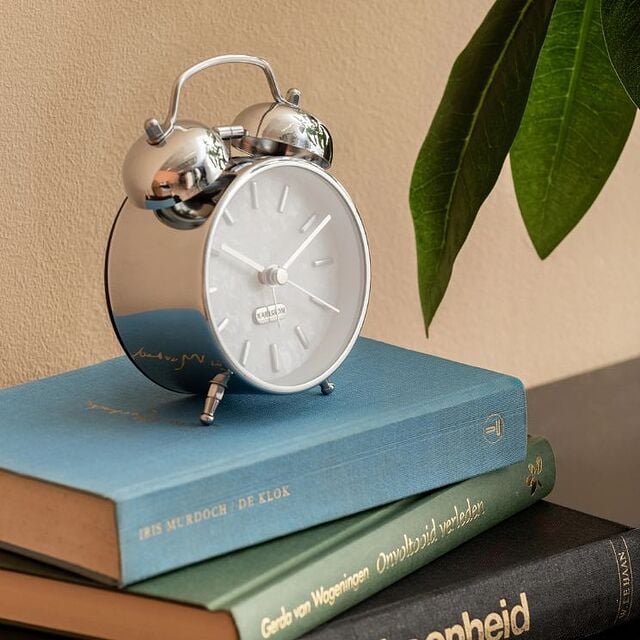
The mechanical alarm clock is a classic, often retro-style device featuring metal bells, powered by a spring or a battery-operated hammer mechanism. These alarms are renowned for their exceptionally loud sounds – frequently topping 80 dB, and even hitting 90 dB or more up close. That distinctive, intermittent metallic clang is truly a force to be reckoned with, capable of rousing even the most stubborn heavy sleeper.
A potential drawback of mechanical alarms is the audible ticking throughout the night, which can be a real sleep disruptor for some. What's more, the lack of volume control means the alarm always hits you with its full force – no gentle build-up here!
Electronic and quartz alarm clocks, on the other hand, offer significantly more flexibility. The ability to precisely adjust the volume level in multiple increments means you can tailor the alarm to your specific environment and sensitivity. Say goodbye to traditional ticking; their hands move smoothly (some even boast a silent sweep mechanism, ensuring undisturbed sleep) or are entirely replaced by a sleek digital display. Electronic models truly shine with their diverse range of alarm types, from a simple loud 'beep' to melodic sequences and gradually escalating signals.
When it comes to sheer volume, here's how they stack up:
Mechanical alarms typically feature a single, high noise level (often 80–90 dB) with no volume adjustment whatsoever,
Electronic models, however, allow you to select a level from approximately 60 to 85 dB, offering the flexibility to match your sensitivity and bedroom conditions.
So, which type is for whom? For those who sleep like a log, work irregular shifts, or consistently struggle to get out of bed, a mechanical alarm clock might be just what the doctor ordered. Here, the lack of subtlety is actually a blessing in disguise, as those metal bells generate a sound that truly pulls no punches and simply cannot be ignored.
Conversely, light sleepers or those sharing a bedroom with a partner or little ones will likely gravitate towards a quiet operating mechanism and adjustable volume. It's worth noting that the most effective loud alarm clocks often combine sound with vibrations – but we'll delve deeper into that in the next section.
How to Choose the Right Loud Alarm Clock for Your Needs – Practical Tips Before You Buy
The ultimate choice of alarm clock hinges on your lifestyle, habits, and home environment – not solely on the dB value. Before you hit the shops, take a moment to ponder a few key considerations.
Bedroom Noise Level
In a quiet home, an alarm clock with a volume of around 70–75 dB should do the trick. However, if your bedroom faces a bustling street, you have kids running around, or other noise sources, it's wise to consider a louder range of 80–85 dB – or even more, depending on your specific circumstances. Also, take a moment to check if the wall behind your bed might be muffling the sound (e.g., thick curtains, an upholstered headboard) – in such surroundings, the actual loudness you perceive will be lower than the manufacturer's stated value.
Distance from Your Bed
If you place your alarm clock 1–2 meters away from your bed, the actual loudness you perceive will be lower than the specified value (which typically refers to measurements taken from 1 meter or closer). Strategically placing your alarm further away from your bed significantly boosts your chances of getting up, as you'll have to physically get out of bed to silence it. If you're employing this tactic, opt for a model with a more powerful, distinct signal that won't get lost in translation, so to speak.
A word to the wise: features designed to force you out of bed should genuinely require you to physically leave it – this is one of the most potent weapons in the fight against morning grogginess.
Snooze Function – Pros and Cons
For some, hitting snooze every few minutes is practically a ritual. If you're a frequent snoozer, it's better to opt for an alarm clock with a slightly lower volume but a clear, repetitive signal, to avoid undue stress with each subsequent wake-up call. Conversely, the absence of an easy snooze option can actually boost an alarm's effectiveness by eliminating the irresistible pull of 'just five more minutes.' If you truly struggle to get out of bed, consider a product where silencing the alarm requires completing a task – like solving a math puzzle or physically moving to a device in another room.
Vibrations – The Underrated Weapon
An external vibrating pad tucked under your pillow can be a game-changer, often waking you more effectively than sound alone. Alarm clocks featuring under-pillow vibrations are particularly brilliant for deep sleepers, with models offering a vibrating pad proving far more potent than just a loud sound. The ideal alarm clock should engage multiple senses and compel you into action. For those who truly struggle with morning wake-ups, an effective alarm should combine an insistent loudness with vibrations and a restricted snooze function.
The ultimate wake-up call should ideally blend a very loud, variable-frequency sound with powerful vibrations and even physical tasks to complete. A truly effective alarm clock pulls out all the stops, combining a loud alarm, vibrations, escalating volume, and a limited snooze function all at once.
Extra Features Worth Considering
Backlit dial or display – so you can easily check the time in the dark without fumbling for your phone,
Silent sweep hand mechanism for peaceful sleep – if you prefer an analog alarm clock over a digital screen,
Multiple alarm modes – single, recurring, or on selected days of the week – perfect for those with irregular work schedules,
Ease of use – large buttons, clear markings, and simple alarm deactivation at the crack of dawn, when your motor skills might not be fully up to par,
Battery or mains power with battery backup – ensuring your alarm keeps ticking even during a power outage,
Some alarm clocks display the temperature and date, which can be handy in the morning when planning your outfit,
Models equipped with a radio allow you to wake up to music or news – a much more pleasant way to start the day for many.
Every brand brings something a little different to the table, so it's always a good idea to check the availability of specific features before you commit. Don't go chasing a one-size-fits-all solution – instead, pick what genuinely aligns with your lifestyle.
Loud Alarm Clocks and Hearing Safety
While brief exposure to 80–85 dB during wake-up isn't generally considered harmful for most people, it's wise to steer clear of leaving an extremely loud alarm blaring for extended periods every single day. Studies on alarm effectiveness reveal that even alarms with exceptionally high volume levels (95 dBA) aren't always more effective than well-chosen, moderately loud signals – proving that louder doesn't always equate to better. Consistent daily exposure to sounds above 90 dB can, over time, lead to hearing fatigue.
If you're consistently struggling to wake up, it might be worth taking a closer look at your sleep quality. Sometimes, the root cause of morning struggles isn't the alarm clock itself, but rather sleep deprivation or poor sleep quality. Let's be real: no gadget on the market can truly replace a healthy circadian rhythm.
A well-chosen loud alarm clock strikes a perfect balance between effective waking, psychological comfort, and safeguarding your hearing health. The goal isn't to have the loudest alarm possible; it's about finding one that works effectively with minimal discomfort. Pick a device that truly suits your environment, habits, and sensitivity – and don't be shy about experimenting with different settings until you hit upon your ideal morning signal. As you browse the available models in our store, look beyond just the decibel label. Consider the sound type, adjustability, and any extra interior design features that will help your alarm clock blend seamlessly into your bedroom decor. Sometimes, a small tweak – like moving the device a meter further from your bed or simply changing the sound – can make a world of difference, more so than merely doubling the volume.