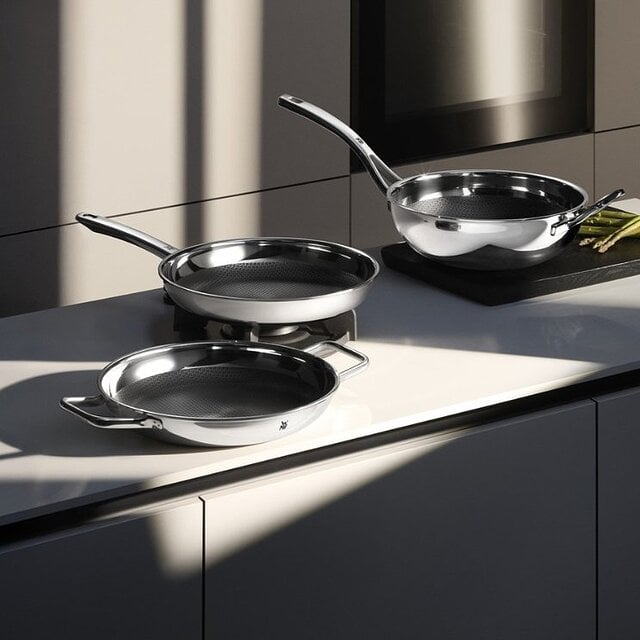
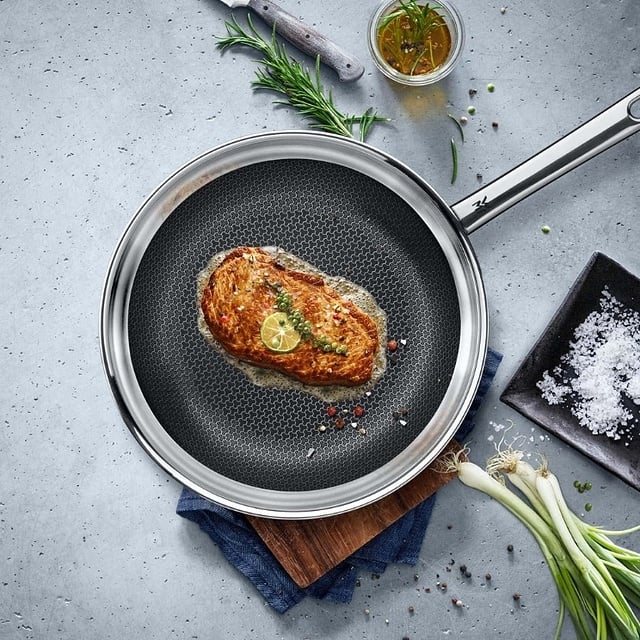
The frying pan is the heart of every kitchen, and the material it's made from affects not only the taste but also your health. From Teflon to ceramic to cast iron – find out which pan will be best for you and your culinary passions.
Which Frying Pan is the Healthiest? A Guide to Materials and Healthy Frying
Cooking is an art, and the kitchen is its heart. Among countless tools, the frying pan holds a special place. It's where the magic of flavor happens, but have you ever wondered how the material it's made from affects your health? In an era of growing ecological and health awareness, the question "which frying pan is the healthiest?" becomes crucial. Is Teflon safe? Are ceramic pans really the best choice? Or perhaps a return to tradition, with cast iron pans, is the key to healthy frying?
We've put together a comprehensive guide to clear up your doubts and help you choose a frying pan that will serve your health and culinary passions.
Which Frying Pan is the Healthiest? Why Your Choice Matters for Your Health
Each of us wants to eat healthily and deliciously. We often focus on the quality of ingredients, forgetting about the tools we use to prepare them. Meanwhile, the choice of the right frying pan is fundamental to our health. The material it's made from can influence what ends up on our plate.
First and foremost, there's a risk that substances from the pan can leach into food. This is especially true for pans with damaged coatings or those made from materials that react chemically with food, particularly at high temperatures. That's why it's so important to understand what compounds can be released and how to avoid them.
Some coatings, especially older generations, may have contained harmful compounds, such as PFOA (perfluorooctanoic acid) or PFOS (perfluorooctane sulfonate), which raised concerns about their impact on health. Modern technologies have significantly improved safety, but awareness of these risks is still important.
Additionally, the type of frying pan affects the minimization of fat used for frying. Pans with good non-stick properties allow you to prepare dishes with a minimal amount of oil, which is crucial for a light and healthy diet. By choosing a frying pan, you're investing not only in kitchen equipment but also in your well-being.
Which frying pan is the healthiest? The healthiest frying pans are those made from safe, stable materials: cast iron, ceramic, and titanium – they are resistant to high temperatures, neutral to food, and durable, so they don't release undesirable substances. However, frying technique and proper use are equally important. It is precisely the combination of the right material and proper operation that makes frying truly healthy.




Teflon Frying Pans: Are They Harmful? Debunking the Myths
Teflon frying pans have been a source of controversy for years. Many people wonder if they are safe for health. To clear up any doubts, it's worth taking a closer look at this material.
Teflon is the trade name for polytetrafluoroethylene (PTFE), a synthetic polymer with exceptional non-stick properties. For years, substances such as PFOA and PFOS were used in the production process of Teflon. These were the main source of health concerns, as studies showed their potential harm to the human body and the environment. However, modern Teflon frying pans produced by reputable manufacturers are free of PFOA and PFOS. Production processes have been changed, and these substances have been eliminated.
Advantages of Teflon frying pans:
- Non-stick: They allow frying with a minimal amount of fat, which is beneficial for health.
- Easy to clean: Food residues easily come off the surface.
- Quick heating: Efficient for everyday use.
Disadvantages of Teflon frying pans:
- Durability: The coating is susceptible to scratches and mechanical damage.
- Sensitivity to overheating: At extremely high temperatures, they can release harmful fumes (though rarely in home conditions).
- Need for replacement: A damaged Teflon frying pan should be replaced.
Are Teflon frying pans safe? They are safe when used according to the manufacturer's recommendations. The key is to avoid overheating the pan above 260°C (which is rarely achieved in home frying conditions) and to ensure that the coating is not damaged.
A scratched or damaged Teflon coating can release tiny particles which, although usually expelled from the body, are not desirable in the diet. That's why it's so important to use wooden or silicone tools.
Teflon frying pans are safe if we choose products from reputable brands, free of PFOA/PFOS, and ensure their proper use and care.


The Healthiest Frying Pans: An Overview of Materials and Coatings
If you're looking for an alternative to Teflon or simply want to explore other options, the market offers many types of frying pans that are considered healthy and safe. Let's take a closer look at them.
Cast Iron Frying Pans: Tradition and Health in One
Cast iron frying pans are a true classic, valued for generations. Made from natural material, they are incredibly durable and can last for decades. Their greatest advantage is even heat distribution and long heat retention, which makes dishes fry perfectly.
Care and seasoning: Cast iron pans require special care. Before first use, they should be seasoned, meaning coated with a thin layer of oil and baked at high temperature. This process should be repeated regularly. Washing should be done without strong detergents, preferably with warm water and a brush, and then the pan should be thoroughly dried and oiled to prevent rusting.
Advantages of cast iron frying pans:
- Very healthy: They do not release harmful substances and can enrich dishes with iron.
- Extremely durable: Properly cared for, they last for generations.
- Even heating: Ideal for long frying and stewing.
- Natural non-stick coating: After proper seasoning.
Disadvantages of cast iron frying pans:
- Weight: They are heavy, which can be cumbersome.
- Require care: Need for seasoning and proper washing.
- Slow to heat up: But they retain heat for a long time.
- Can rust: If not properly dried and oiled.
Are cast iron frying pans healthy? Cast iron pans are considered among the healthiest. They do not release any harmful substances; on the contrary, during cooking, they can release small amounts of iron into dishes, which is beneficial for people with iron deficiencies. After proper seasoning (i.e., creating a natural, non-stick coating from hardened fat), they become almost non-stick.




Ceramic Frying Pans: An Ecological Alternative?
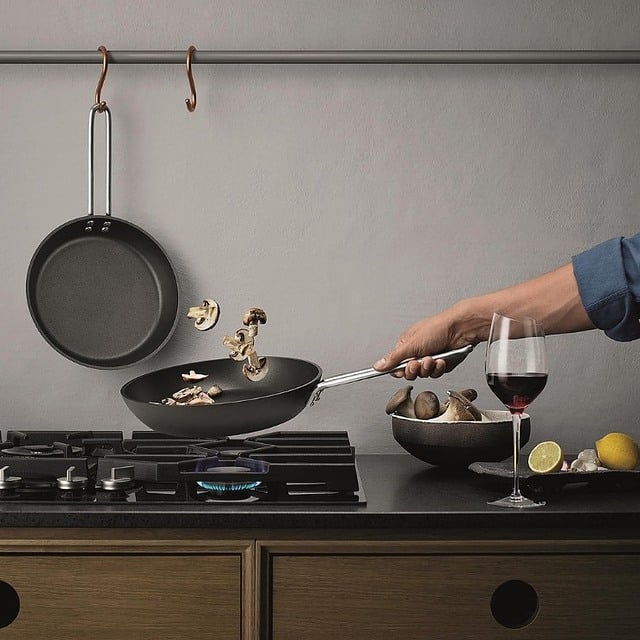
Ceramic frying pans have gained immense popularity as a healthy alternative to Teflon. Their coating is usually made from natural minerals, such as quartz sand, and is free of PTFE, PFOA, and other harmful substances.
Durability and use: The ceramic coating is non-stick, allowing for frying with a small amount of fat. However, it's important to remember that it is sensitive to mechanical damage – impacts or scratches can cause it to chip. It requires gentle handling and the use of wooden or silicone utensils.
Advantages of ceramic frying pans:
- Healthy and safe: Free of PTFE/PFOA, do not react with food.
- Resistant to high temperatures: Ideal for frying.
- Non-stick: Allow frying with a small amount of fat.
- Aesthetic appearance: Available in many colors.
Disadvantages of ceramic frying pans:
- Fragility of the coating: Susceptible to chipping and scratching.
- Durability of non-stick properties: Over time, non-stick properties may deteriorate.
- Require delicate care: Should not be overheated empty.
Are ceramic frying pans healthy? Yes, they are considered very safe. They do not react with food and are resistant to very high temperatures (up to 400°C) without releasing toxic fumes. This makes them ideal for quick frying at high temperatures.


Stainless Steel Frying Pans: Durability and Neutrality
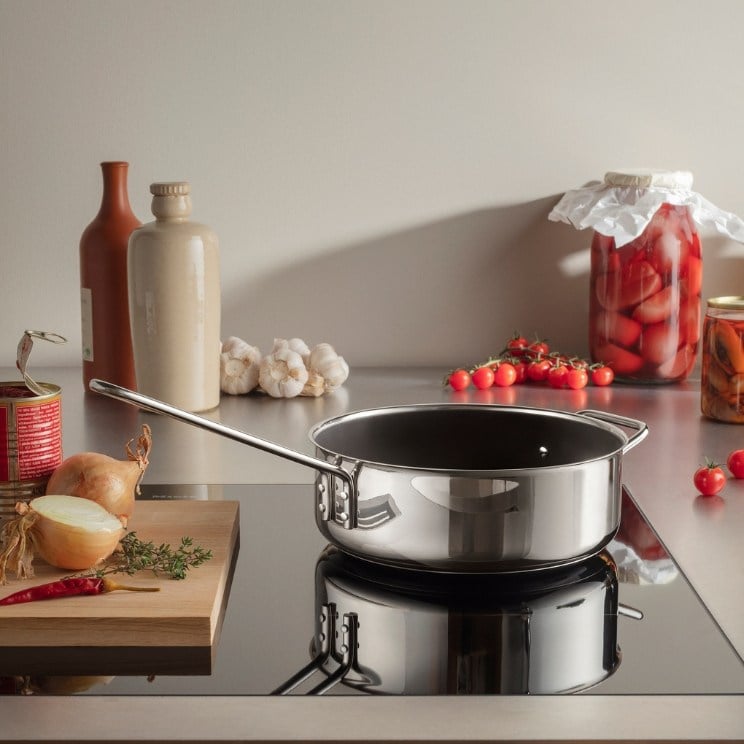
Stainless steel frying pans are another healthy and very durable choice. Stainless steel is a chemically neutral material, meaning it does not react with acids or other food ingredients, does not alter the taste of dishes, and does not release any harmful substances.
Frying on steel: Frying on a stainless steel pan requires a bit more skill and usually more fat than on non-stick pans. However, for many chefs, steel is synonymous with professionalism and control over the cooking process. They are ideal for caramelizing, searing meats, and preparing sauces.
Advantages of stainless steel frying pans:
- Exceptional durability: Resistant to scratches, mechanical damage, and corrosion.
- Chemical neutrality: Do not react with food, safe for health.
- Versatility: Can be used in the oven, on all types of cooktops.
- Easy to clean: Can be washed in the dishwasher.
Disadvantages of stainless steel frying pans:
- Tendency to stick: Require more fat and proper frying technique.
- Slower heating: Compared to aluminum.
- Can be heavy: Especially those with a thick bottom.
Are stainless steel frying pans healthy? Stainless steel pans are generally safe, and the migration of metals into food during normal use is minimal and harmless.




Titanium Frying Pans: Lightness and Resistance
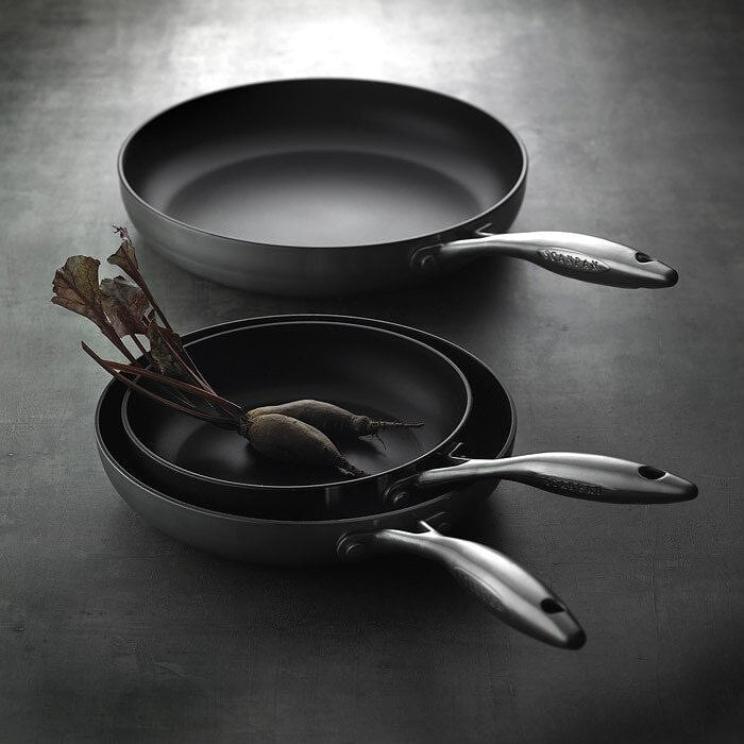
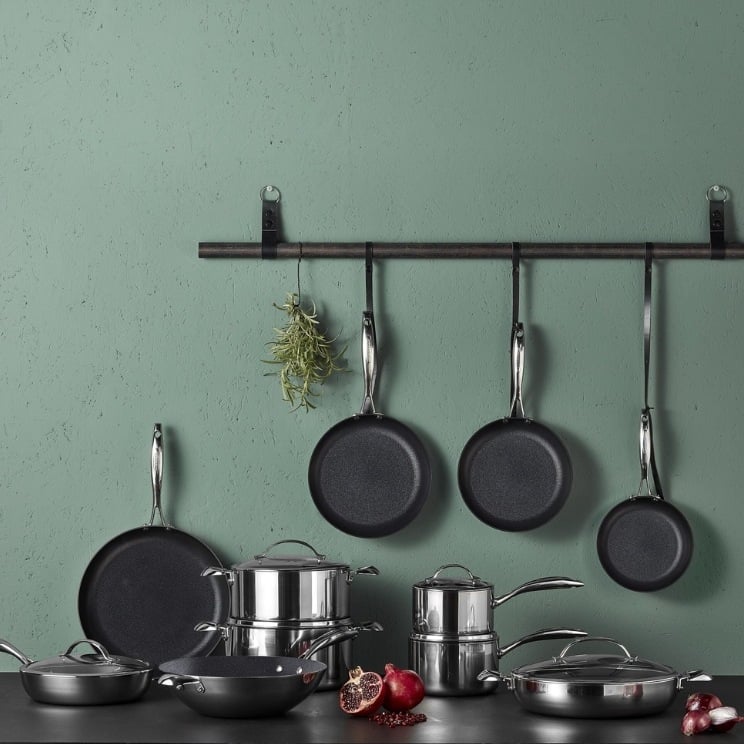
Titanium frying pans are a modern solution that combines the advantages of various materials. They are usually aluminum pans with a titanium-reinforced coating, which gives them exceptional durability and scratch resistance.
Advantages of titanium frying pans:
- Lightweight: Often lighter than cast iron or stainless steel.
- Durability: Very resistant to scratches and damage.
- Non-stick: Good non-stick properties, allowing for frying with a small amount of fat.
- Quick heating: Thanks to the aluminum core.
Disadvantages of titanium frying pans:
- Price: Usually more expensive than other types of frying pans.
- Coating durability: Although resistant, it is not eternal and may wear out over time.
Are titanium frying pans healthy? Yes, they are considered safe. The titanium coating is free of PFOA and PTFE, does not react with food, and is resistant to high temperatures. This means you can fry on them without worrying about releasing harmful substances.
Stone-Coated Frying Pans (Granite/Marble): Imitation of Nature?
Stone-coated frying pans, often called granite or marble, are usually aluminum pans covered with a layer imitating stone, enriched with mineral particles. They are promoted as a healthy alternative to Teflon because their coating is free of PFOA and PTFE.
Properties: They offer good heat conductivity and non-stick properties, allowing for frying with a small amount of fat. Their appearance often refers to natural materials, which adds to their aesthetics.
Advantages of stone-coated frying pans:
- Aesthetics: Attractive, natural look.
- Non-stick: Good non-stick properties.
- Safety: Free of PFOA/PTFE.
Disadvantages of stone-coated frying pans:
- Coating durability: Like ceramic, they can be susceptible to mechanical damage and lose non-stick properties over time.
- Composition: It's worth checking whether they actually contain minerals or if it's just an imitation.
Are stone-coated frying pans healthy? Stone-coated frying pans are relatively safe, although at very high temperatures or if the coating is scratched, undesirable substances may be released, so it's worth being careful.
Enamelled Frying Pans: A Return to Classics
Enamelled frying pans are steel or cast iron vessels covered with a layer of enamel – a glassy coating. Enamel is a material neutral to food, does not react chemically, and is very hygienic.
Advantages of enamelled frying pans:
- Hygiene: Easy to keep clean, do not absorb odors.
- Neutrality: Do not react with food, safe for health.
- Aesthetics: Available in many colors, add charm to the kitchen.
Disadvantages of enamelled frying pans:
- Fragility of enamel: The coating is susceptible to chipping from impacts.
- Sticking: May require more fat for frying.
Are enamelled frying pans healthy? Enamelled frying pans are healthy if the coating is intact and of good quality, while damaged enamel can release trace amounts of heavy metals.


How to Choose the Healthiest Frying Pan? Key Criteria
Deciding to buy a frying pan is not just a matter of aesthetics, but primarily functionality and health. To choose the "healthiest" one, it's worth considering a few key criteria:
- Type of dishes: Think about what you'll be using the pan for most often. For quick frying of eggs, a pan with a good non-stick coating will work well. For searing meats and long stewing, cast iron or steel will be ideal.
- Frequency of use: If the pan will be used daily, opt for durability and ease of care. Cast iron, stainless steel, or titanium pans will be a good choice.
- Heat source: Make sure the chosen pan is compatible with your cooktop (induction, gas, electric). Most modern pans are universal, but it's always worth checking.
- Care: Do you have the time and inclination for special care (as with cast iron), or do you prefer a pan that can simply be thrown in the dishwasher (like stainless steel)?
- Budget: Pan prices vary significantly depending on the material and manufacturer. Set your budget, but remember that investing in a good, healthy pan is an investment in your health.
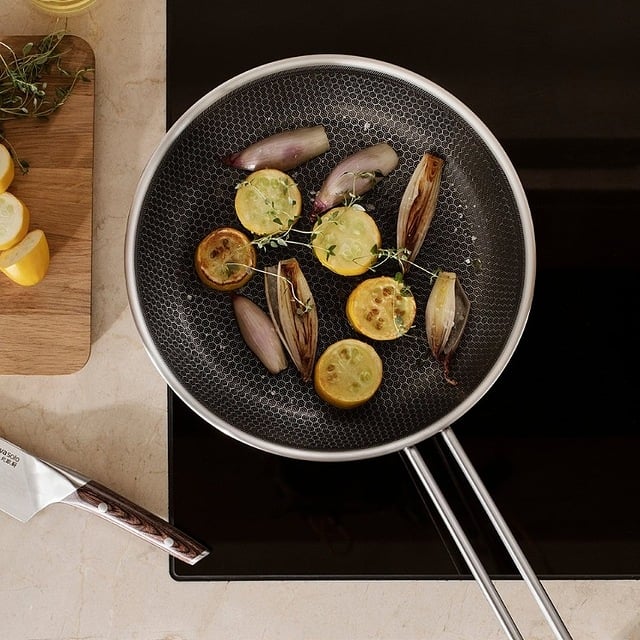


Healthy Frying: Regardless of Your Pan Choice
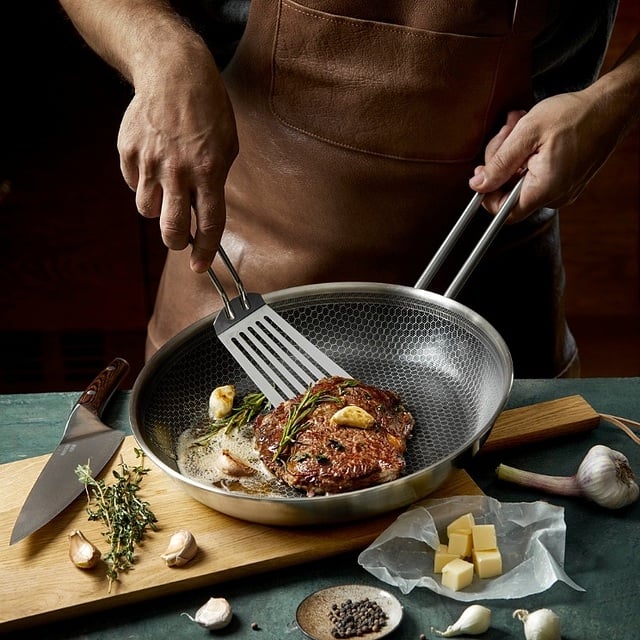
Even the best frying pan won't guarantee healthy frying if we don't follow basic rules. Regardless of which pan you choose, remember a few important things:
- Minimize fat: Try to use as little fat as possible. Choose healthy vegetable oils (e.g., rapeseed, olive oil, coconut oil) and avoid deep-frying. Pans with good non-stick coatings make this task easier.
- Appropriate temperature: Do not overheat the pan empty. Too high a temperature can lead to fat breakdown and the formation of harmful compounds. Always heat the pan gradually and adjust the temperature to the type of dish.
- Utensils: Use wooden, silicone, or plastic spatulas to avoid scratching the pan's coating, especially those with non-stick coatings.
- Care: Regular and proper cleaning of the pan is essential. Remove food residues, wash the pan after each use, and maintain it according to the manufacturer's recommendations. A clean pan is a healthy pan.
Healthy Frying and Fat: Why It Matters?
Choosing the right fat is just as important as deciding which frying pan is the healthiest. Not every oil retains its properties at high temperatures – that's why the fat should be chosen for both the type of dish and the pan material. For frying at higher temperatures, thermally stable fats such as refined rapeseed oil, avocado oil, or clarified butter work best, as they don't burn quickly. Delicate oils, such as extra virgin olive oil, should be used for quick sautéing or added at the end.
Some pans – e.g., Teflon, ceramic, and titanium – allow frying with less fat, which promotes healthy cooking techniques. Cast iron and stainless steel pans, on the other hand, require a bit of fat to prevent food from sticking, but they handle high temperatures wonderfully, which means many fats retain their properties on them.
The combination of the right pan and the right fat is the key to healthy frying – and the ultimate answer to the question, which frying pan is the healthiest in practice.


$73.17
Non-Scratch Kitchen accessories dark green with organiser 6 el.
Lekue
Dispatch within 10 working days
Which Frying Pan is the Healthiest? Good to Know
The best choice will be the pan that you use correctly and that suits your culinary habits – then frying will always be healthy. Below is a brief summary of each type:
- Teflon: Modern Teflon pans are safe (PFOA/PFOS-free) if not overheated or damaged. Ideal for frying with little fat.
- Cast Iron: Very healthy, durable, can enrich dishes with iron. Requires seasoning and proper care.
- Ceramic: Healthy, resistant to high temperatures, free of harmful substances. Sensitive to mechanical damage.
- Stainless Steel: Chemically neutral, extremely durable, versatile. Requires more fat for frying.
- Titanium: Lightweight, durable, scratch-resistant, non-stick, and safe. Often more expensive.
- Stone (granite/marble): Aesthetic, non-stick, safe (PFOA/PFOS-free). Coating can be susceptible to damage.
- Enamel: Hygienic, neutral to food. Susceptible to chipping.
In summary, there isn't one ideal frying pan for everyone, but cast iron, ceramic, and titanium pans are most often considered the healthiest – they are durable, health-neutral, and resistant to high temperatures. If you're looking for the most "chemically pure" choice, cast iron and ceramic come out on top. If you're looking for a combination of lightness and safety – a titanium pan is an excellent choice.
Summary: A Conscious Choice for a Healthy Kitchen
Choosing a frying pan is a decision that has a real impact on your health and the quality of the meals you prepare. We hope this guide has shed some light and helped you understand that there isn't one universally "healthiest frying pan." The key is a conscious choice, tailored to your needs, cooking style, and diligent use and care. By investing in a good frying pan and following healthy frying principles, you can enjoy delicious and safe meals every day. Remember, your kitchen is your kingdom – make sure it's equipped with tools that support your health and passion for cooking! May every dish be not only tasty but also healthy, and may you enjoy full energy and well-being. Choose wisely and cook with pleasure!