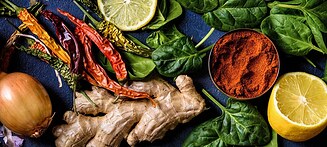
Spring cuisine is rich in flavours and colours, but fresh vegetables and fruit are not enough to prepare tasty and aromatic dishes on their own. Spices and herbs - they are the essence of exquisite dishes, and what is more, thanks to their magical power, they can turn even an ordinary dish into a real feast for the palate. Known for centuries, they have a range of health-promoting properties and a fragrance that stimulates the senses, which in itself improves mood and increases appetite. Find out how to grow herbs in your kitchen, and how to store spices to keep them fresh for longer. With the right choice of herbs and spices, your kitchen will soon be filled with an extraordinary aroma and your dishes will take on a whole new flavour.
An aromatic must-have. Which herbs and spices to choose?
What to grow in the kitchen in spring?
Herbs from your own pot
Fresh herbs are the basis for a healthy and aromatic kitchen. However, not everyone, especially the novice cook, remembers to reach for them. The best idea to always have fresh herbs on hand is to start a home pot culture in your kitchen. Home-growing is best started with the most essential types of herbs that are frequently used and not too demanding to grow. We can buy them as developed cuttings or start growing them from scratch by sowing seeds. See which herbs should find their way into every kitchen:
- Oregano - the aromatic leaves with their spicy flavour are famous as a must-have addition to pizza and classic spaghetti. As befits a spice associated with Italian cuisine, oregano loves strong sunlight and does not require frequent watering.
- Basil - the favourite spice of lovers of the popular Caprese salad. In a pot, it likes to grow, so it is advisable to sow it quite sparingly or to divide the seeds into several different pots.
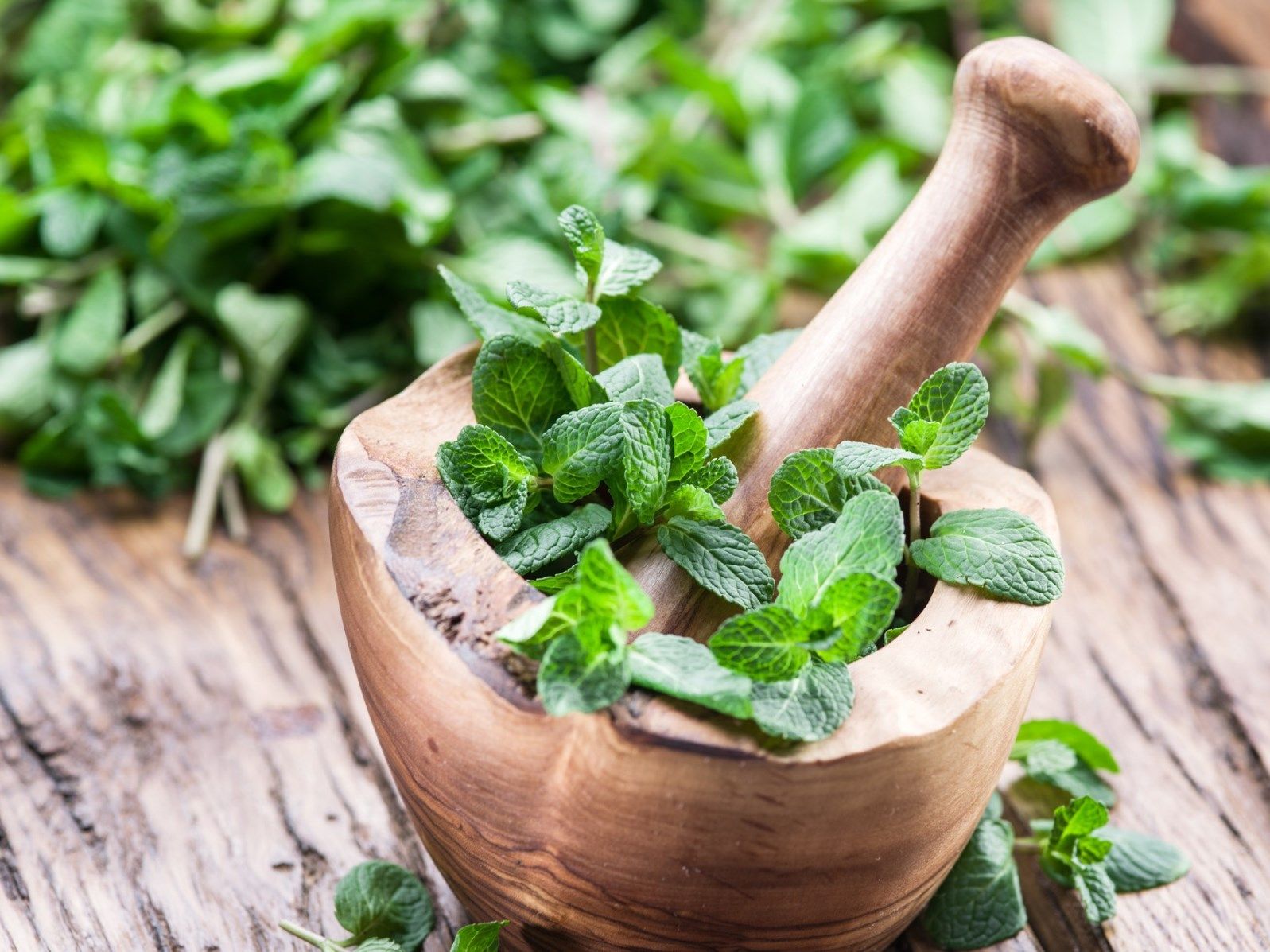
- Mint - an ideal addition to water and other refreshing drinks on hot days, it also makes a beautiful garnish for many dishes and desserts. It grows very quickly as long as you provide it with moist, fertile soil and a slightly shady spot in the kitchen.
- Rosemary - goes perfectly with eggs, spinach, chives, tomatoes and other springtime delicacies. It will also be a good addition to fish. When growing, it prefers soil with an alkaline reaction.
- Thyme - excellent for marinating, and also works well as an addition to stuffing. All you need to grow thyme is a pot with a diameter and depth of approx. 20 cm, which should be placed on a south-facing windowsill, if possible.
- Green parsley - is rich in A and B vitamins, beta-carotene, calcium, magnesium and fibre. It boosts immunity and improves complexion. It will be a valuable addition to spring soups, colourful salads, pasta dishes or a healthy green smoothie.
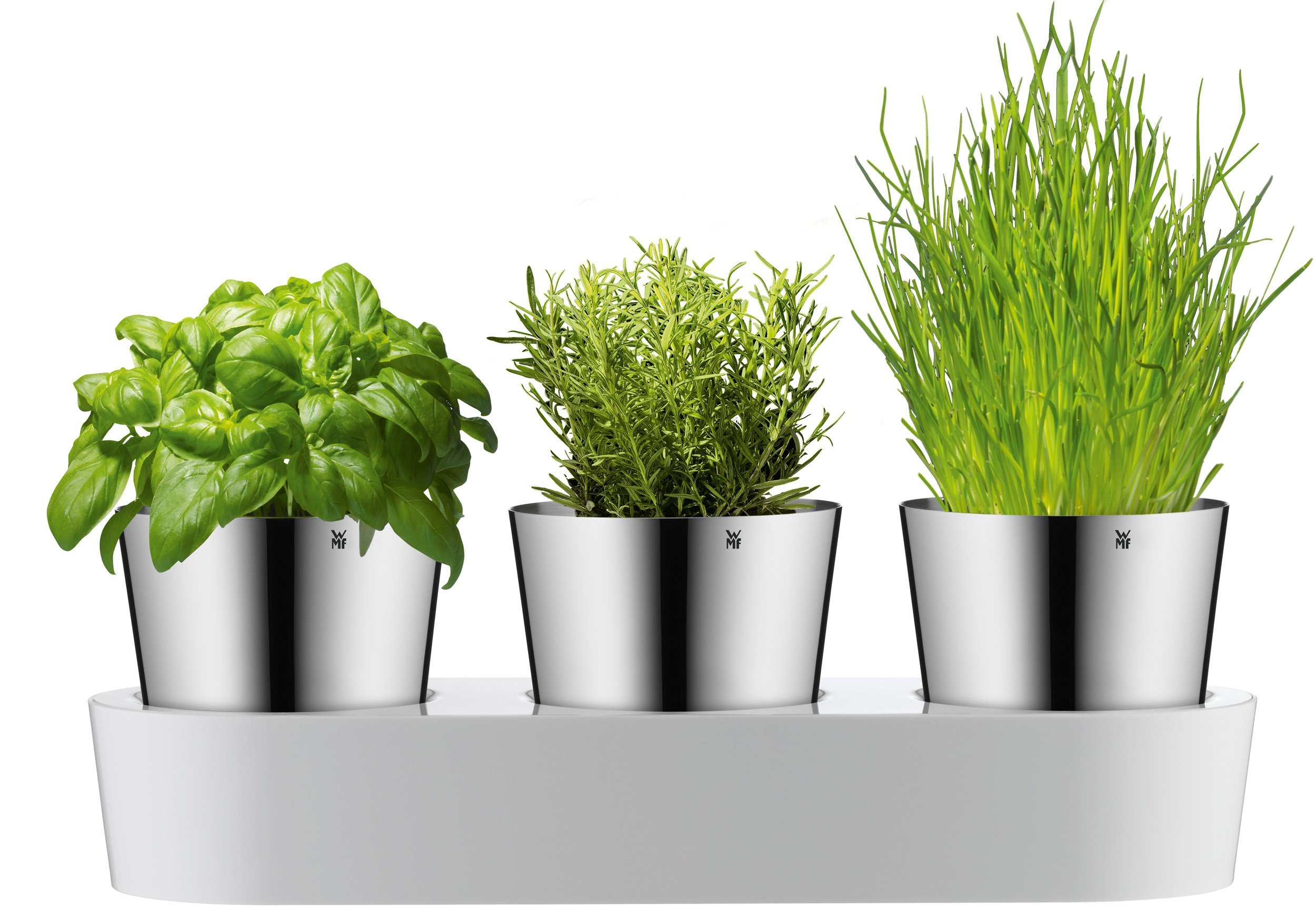
Herbs, like flowers, can have different growing requirements, so it is worth planting them in separate pots. Their choice should not be random. Remember that a well-composed set of pots together with a decorative stand can be an original decoration that adorns the kitchen windowsill or will be a fresh accent on the spring table.
Important!


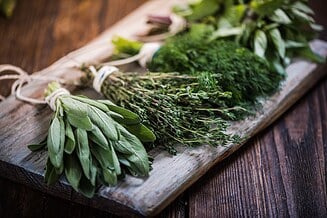
Accessories for chopping herbs (choppers, grinders, shakers)
How do you chop oregano or green parsley to get perfectly chopped and highly aromatic home-grown herbs ready to use in any dish? There are special herb chopping accessories for this, indispensable in any kitchen where homemakers strive to cook healthily and with taste.
- Herb choppers - professional choppers provide convenient and quick preparation of herbs for use in your favourite dish or salad. The cradle-shaped blade makes it easy to chop herbs into small, yet aesthetically pleasing pieces. Remember that the job of the chopper is not to crush fresh herbs, but to bring them to an aesthetically pleasing, uniform texture. To do this, it is a good idea to prepare the herbs for chopping by placing them on a large board or wooden base.
- Chopping spices - garlic, ginger, nutmeg - is a good idea to buy them whole, only to shred them into small pieces at home using a grater. Grinding the spices helps to release their even more intense flavour and aroma. A perfect solution for a small kitchen would be the compact 2-in-1 design, in which a second blade is placed under the handle of the grater to shred another type of spice. When choosing an herb gr ater, it is worth paying special attention to the comfort and safety of cutting, which will be ensured by non-slip tips.
- Herb shakers - combine herbs and spices to create original, tasty and enticingly fragrant combinations. The herb shaker allows you to cleverly compose spices and serve them on the table. Depending on your needs, you can purchase a container with fine or larger meshes. In addition to the herb shaker, it is also worth buying a dressing shaker to serve your favourite dressing in an elegant way and to enable you to pour it easily into a prepared salad.


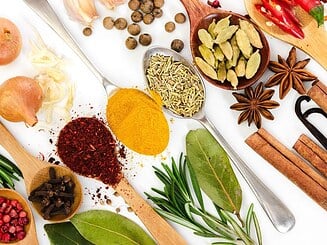
The quintessence of taste - freshly ground spices
Buying herbs in ready-to-use form is convenient, but even products from the best manufacturers cannot compare with the full flavour and aroma of freshly ground spices. A device that allows you to grind spices in the comfort of your own home is a salt, pepper and spice grinder. Traditionalists are sure to have something else - a kitchen mortar.
Which salt and pepper mill should you choose?
Manual and electric mills
The first decision to make before buying a salt or pepper mill is how it will be powered. What should you consider when thinking about choosing a spice mill?
- Comfort of use - manual mills require force and therefore grinding spices in this way can be tiring. Electric mills operate automatically but are slightly more expensive.
- Functionality - the full flavour and aroma can only be retained through slow grinding, which is unmatched by a manual grinder. An electric mill is the perfect solution for those who are pressed for time when preparing food. What is more, the battery-powered mill allows for precise adjustment of the grinding thickness.
- Design - the electric spice grinder is the perfect addition to a modern kitchen interior, based on current trends and using ingenious technological solutions. Rather than a fashionable gadget, the hand grinder is more reminiscent of accessories from grandma's kitchen, so it will go perfectly with retro-style interiors.
Types of grinding mechanism
Salt and pepper mills are equipped with two types of mechanisms: ceramic and steel. The basic rule of thumb for choosing them concerns the purpose of each. Pepper mills usually come with a steel mechanism - cheaper and more resistant to dulling. A ceramic mechanism can be used for both salt and pepper grinding, but not vice versa. This is because salt causes a process of corrosion, i.e. a slow deterioration of the steel casing. The ceramic mechanism is more expensive, but thanks to the fact that it does not cause crushing, it favours the preservation of the correct taste and aroma of the ground spices.
Housing type
Plastic, metal and wooden mills are available on the market. The type of housing depends on the individual buyer's preference, but it is advisable to read the pros and cons of each before making a final decision.
| Housing type | Advantages | Disadvantages |
|---|---|---|
| Plastic | - wide choice of colours, including original designs - designer, original look - lightweight and comfortable to use - easy to keep clean | - artificial material - relatively low product quality and durability |
| Metal (stainless steel) | - robust design - high strength and resistance - Fits into elegant interiors | - higher price - higher weight - Not suitable for retro-style interiors |
| Wooden | - high quality - traditional design - Environmentally friendly, natural material | - cannot be washed in the dishwasher - Requires impregnation to make it moisture-resistant |


What is a mortar for and how do I use it?
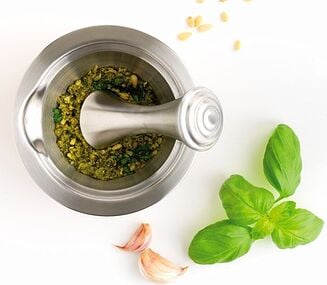
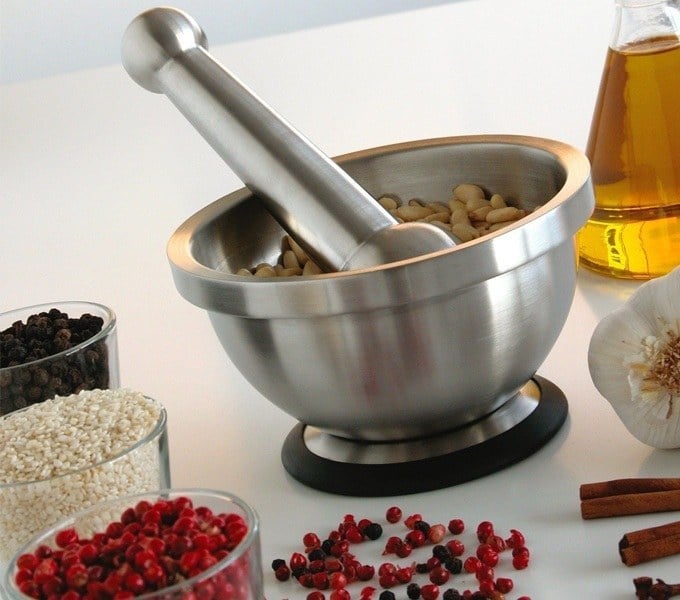
Contrary to what you may think, the kitchen mortar is not a relic of the past; moreover, it is still an accessory worth having in your home. Deeper mortars are used for crushing grains with a considerable degree of hardness. The shallower ones will be more convenient for grinding seeds and leaves, for example. When deciding on a mortar, it is best to invest in one made of stone or ceramic - it will be durable and keep the flavour of the spices intact. Metal mortars can easily react chemically with some crushed spices, while wooden ones absorb odours.


Keep things fresh and tidy for longer
What about freshly ground spices that we haven't used? Let's consider how to store spices so that they don't lose their unique flavour or aroma.
5 tried and tested ways to store herbs and spices
Well-stored spices should be:
- Sealed tightly. Types of spice containers: glass, ceramic or wooden? Strong light and the lack of airtight packaging cause spices to lose their flavour and aroma more quickly. This is why it is important to choose the right containers. Glass jars are an inexpensive and simple way to properly protect spices. Hermetically closed, they will present themselves aesthetically, and we will avoid the problem of salt or turmeric spilling out. Ceramic packaging additionally has a decorative function. They will be a perfect solution if we want to show off our spices by placing them in a visible place. They are also opaque, which protects spices removed from the depths of a cupboard or drawer from the harmful effects of daylight. Wood, on the other hand, works well with retro-style interiors, but bear in mind that it absorbs odours easily. That's why you should store the same spices in wooden containers every time.
- Organised. Spice cases and organisers. Standing, swivel, countertop and drawer. A large number of spices makes it easy to get lost. A spice organiser will keep things tidy and also help guests to find their way around the kitchen. A spice organiser will work especially well in a cupboard or drawer space, but an original stand, for example, can also be an interesting decoration. During the summer season, spices are very often used away from home. A practical case will make it easier to take them on a picnic or carry them into the garden when barbecuing with family or friends. When choosing a case, it is worth paying attention to the type of material it is made of, so that it can be easily cleaned when washing in the washing machine.
- Always at hand. Spice shelves. We already know what to store spices in, the next question is where to put them. Ideally, the entire aromatic arsenal should be in the same place and easily accessible when cooking. A great way to display nicely packaged spices is on a common shelf. You can place it directly on the kitchen counter or, if you are short of space, hang it on the wall. Remember, however, that for the spices to retain their potency, they should not be hung near a heat source, so for example a cooker or a sunny window.
- Available all year round. Herbal ice cubes - how to make them in 3 easy steps? An excellent place to store herbs, allowing them to stay fresh for a long time, is in the freezer. The way to prepare aromatic herb cubes for use in soup or sauce, even in the middle of winter, is trivially simple:
- Step 1 - wash your chosen herbs, pat dry with a paper towel and chop.
- Step 2 - add good-quality olive oil to the herbs to form a sticky paste.
- Step 3 - Place the paste thus prepared in an ice cube tray or wrap it in plastic wrap, then place it in the freezer.
And done!
Your dishes can be tasty, fragrant and healthy all year round! Spring is the perfect time to enrich your cooking with the aroma of fresh herbs.
Important!

$92.29
Helsinki Salt and Pepper Mills 11 cm with Stand, 3-piece set
Crushgrind
Dispatch within 2 working days