Fresh herbs in the kitchen are not just a pleasure, but a daily convenience – which is why we're increasingly looking for solutions to keep them always at hand. This guide is for everyone wondering which herb pots to choose for their kitchen to be practical, durable, and aesthetically pleasing all at once.
Herb Pots for the Kitchen – A Practical Guide for Home Cooks
If you love cooking at home and dream of having fresh basil, mint, or rosemary always at your fingertips – this article is for you.
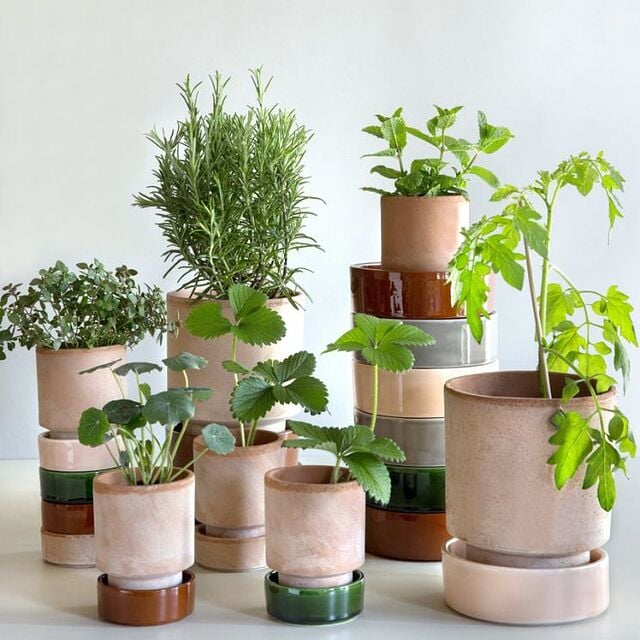
We want to help you choose the perfect herb pots for your kitchen – ones that not only look good but, more importantly, ensure healthy plant growth for many months. Here, you'll find concrete examples of solutions: self-watering pots from Veritable and Eva Solo, ceramic pots from Bergs Potter, and minimalist designs from Hubsch.
What you'll gain from reading on:
- a list of recommended herb varieties for any kitchen,
- practical tips on choosing pots (size, material, drainage),
- ready-made configurations for countertops, windowsills, and walls,
- ... and as a result: less wasted herbs and a more beautiful cooking space.
Why Have Herb Pots in Your Kitchen?
A home herb garden isn't just a decorative element – it's about real savings and better-tasting dishes every time you step up to the stove.
Fresh herbs, used right after cutting, retain 20-30% more volatile essential oils than their dried counterparts. These compounds are precisely what give them their intense aroma and depth of flavor. Think of basil for tomato sauce, mint for tea and lemonade, rosemary for roasted potatoes, thyme for roasts, or parsley for soups – all available year-round, even in January.
Herbs are incredibly valuable in the kitchen, enriching the flavor of dishes and introducing many health-benefiting ingredients. This means kitchen herb pots allow you to enjoy healthy ingredients daily. Herbs positively impact not only the taste of food but also the well-being of your household.
Practical benefits of growing herbs in the kitchen:
- no need to buy cut bunches that wilt after 2-3 days,
- fewer plastic packages from the supermarket,
- savings – a basil pot provides fresh seasoning for many weeks,
- reduction in food waste by even a dozen percent in households.
Studies also show that the presence of potted plants in the kitchen can lower cortisol levels. The scent of basil, mint, or lavender has a relaxing effect, making your cooking space more enjoyable.
Which Herbs Are Best Suited for Kitchen Pots?
Not all herbs have the same requirements – basil has different needs than rosemary, for example. Various herbs have different demands regarding pot depth, watering, and growing conditions, so it's worth matching your kitchen herb pots to the specific needs of each plant.
Easy-to-grow herbs for beginners (thrive in standard pots on a sunny windowsill):
| Herb | Requirements | Notes |
|---|---|---|
| Basil | Lots of light, moist soil | Likes warmth, sensitive to cold |
| Mint | Partial shade to sun, lots of water | Spreads vigorously |
| Chives | Moderate light and moisture | Very hardy |
| Parsley | 6-8h light, moist soil | Slow to germinate, but grows long |
| Oregano | Sunny spot, moderate watering | Compact growth |
| Marjoram | Warmth and sun, dry soil | Ideal for small pots |
Herbs like rosemary or mint require slightly larger containers than, for example, parsley.
Mediterranean herbs require deeper pots (15-18 cm deep), excellent drainage, and drier soil:
- Rosemary – deep root system, doesn't tolerate overwatering
- Thyme – prefers drier soil
- Sage – requires space and good ventilation
Herbs that are 'heavy drinkers' – basil and mint – are ideal candidates for self-watering pots. You can combine herbs with similar requirements in one pot (e.g., thyme + oregano + marjoram in a 40 cm rectangular pot), but it's better to plant more demanding basil separately.


What Makes a Good Herb Pot for the Kitchen?
A well-chosen pot prevents root rot, drying out, and allows herbs to grow for many months – not just a few weeks, as is often the case with store-bought pots. This keeps your plants in good shape for a long time.
Size
When choosing pots, follow this rule of thumb:
- Basil, mint, chives: diameter 10-14 cm, minimum depth 12 cm
- Rosemary, thyme, sage: deeper pots 15-18 cm
- Rectangular models for 3-5 plants: length 30-50 cm
Drainage
Mandatory drainage holes at the bottom of the pot, plus a layer of expanded clay aggregate or small pebbles (1-2 cm), are fundamental. Without this, 40-60% of herbs perish due to root rot. Pots made without holes can serve as decorative covers protecting your countertop.
Material
To make your choice easier, we've briefly summarized the most popular materials:
- Ceramic pots are durable and protect roots well, especially for those who prefer traditional materials.
- Ceramic, clay, and concrete are breathable, which prevents root rot and helps maintain a stable soil temperature.
- Ceramic and clay allow roots to breathe, while plastic is lighter and easier to clean.
- Plastic pots are more resistant to mechanical damage than ceramic or clay pots. Plastic doesn't breathe, but it's lightweight and easy to clean.
- Herb pots made of plastic can mimic the look of ceramic, rattan, or stone, enhancing their aesthetic appeal.
- Metal pots may require a plastic liner, and there's a risk of corrosion.
In summary, models made from natural materials are considered among the best for herb health.
Stability and Aesthetics
A wider base and appropriate weight (1-2 kg when filled) ensure that a tall rosemary plant won't topple over in a draft. Contemporary trends lean towards matte finishes in muted colors – white, grey, dusty green, terracotta – complementing countertops made of wood, conglomerate, or laminate.
Practicality in the kitchen also means ease of cleaning – a smooth surface without hard-to-reach nooks and crannies, and the ability to arrange them in a row on a standard 15-20 cm deep windowsill.
Self-Watering Herb Pots for the Kitchen (Veritable, Eva Solo)
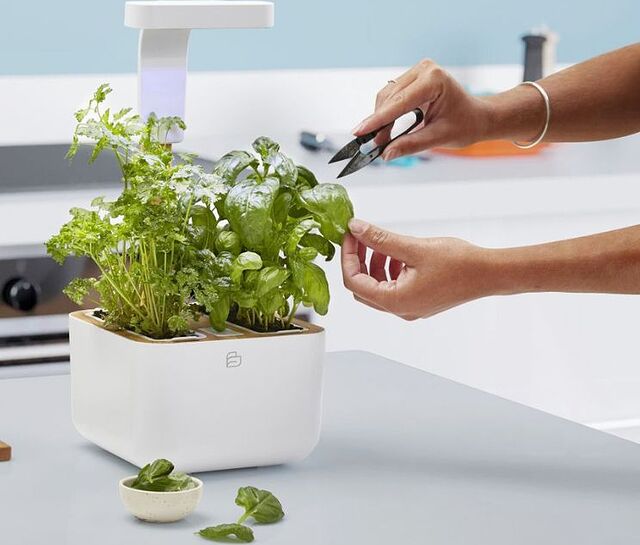
Self-watering pots are a brilliant solution for busy cooks, forgetful folks, and those who often go away for the weekend. The watering system works simply: a water reservoir delivers moisture to the soil via a wick or capillary system, depending on the plant's needs.
Veritable – Kitchen Gardens with LED Lighting
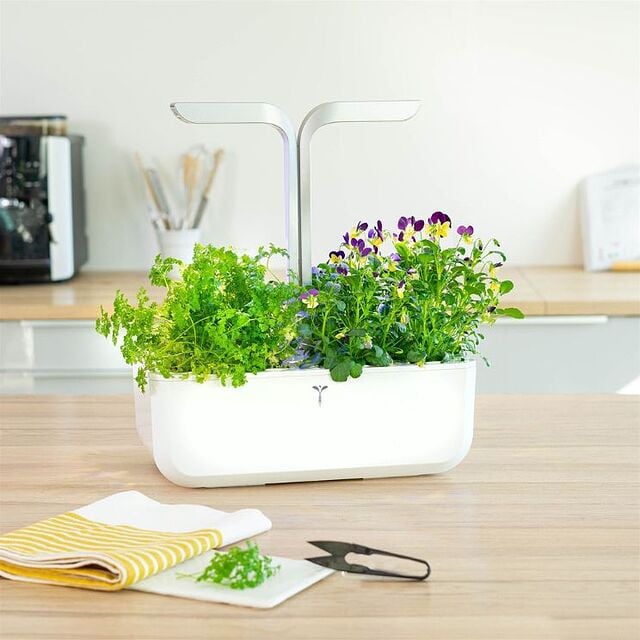
Veritable offers compact systems (approx. 38x15x40 cm) with built-in full-spectrum LED lighting (450-660 nm). This is an ideal solution for darker kitchens or north-facing windows. Automatic 16-hour light cycles support the growth of basil, coriander, and parsley all year round.
Benefits:
- Hydroponic system yields 5-10 times more herbs than traditional pots
- Plant survival rate of 95%
- Modern design suitable for kitchen islands
Eva Solo – Elegance and Simplicity
Eva Solo pots are single, elegant containers made of porcelain or stoneware (10-14 cm diameter) with a silicone base. The wick system draws water from a 0.5-1 liter reservoir, which lasts for 10-14 days.
Who is it for? For those who appreciate Scandinavian minimalism and are looking for an aesthetic solution for lofts and modern kitchens. Basil, chives, parsley, and mint thrive with regular watering. For rosemary or thyme – allow the soil to dry out slightly between reservoir refills.




Ceramic and Designer Herb Pots (Bergs Potter, Hubsch)
Some people are looking for not just functional, but also highly aesthetic pots that will become an integral part of their kitchen decor.
Bergs Potter – Danish Tradition
Bergs Potter offers traditional Danish ceramics available in glazed and unglazed finishes. Classic colors – antique rose, bottle green, sandy – are ideal for rustic and Scandinavian kitchens, allowing for a cohesive arrangement.
Advantages for herbs:
- Porous walls improve root aeration by 20-30% compared to plastic
- Draining excess moisture – less risk of rot
- Matching saucers protect surfaces
Hubsch – Nordic Minimalism
Hubsch pots feature a simple design in stoneware or metal, geometric forms, and muted colors in various shades and sizes. They fit perfectly into loft, minimalist, and modern kitchens.
Practical applications:
- Smaller pots for individual herbs (basil next to the cutting board)
- Larger sets for wide windowsills
- Bergs Potter or Hubsch covers as a decorative layer for a plastic pot with drainage
Herb Pots for the Kitchen Countertop
The kitchen countertop is the most convenient spot – plants stand exactly where you cook. This means you can have plants and herbs on your kitchen counter that you'll use right after cutting. Kitchen herb pots allow you to have plants always at hand on your countertop – it's a practical and decorative solution that enhances kitchen aesthetics and the well-being of your household. You can enjoy fresh herbs without stepping away from the hob.
On the kitchen countertop, these will work well:
- Low, stable ceramic or porcelain pots (10-14 cm diameter)
- Sets of 2-3 pots on a single tray
- Small Eva Solo self-watering pots for basil and coriander
Safety rules:
Don't place pots right next to a heat source – maintain a minimum distance of 20-30 cm from gas or induction hobs. Temperatures above 40°C stress herbs and can destroy them. Group 3-5 pots in one spot and use a metal or ceramic tray to protect your countertop from water.
Color matching: white or light grey pots for dark countertops, terracotta or olive for wooden and stone surfaces – this creates an aesthetic solution that complements your kitchen style.
Herb Pots for the Kitchen Windowsill
The windowsill above the kitchen counter is often the best spot for herbs – it gets the most natural light and offers easy access while cooking. On a standard 90-120 cm long windowsill, you can fit:
- 3-4 round pots with a 12 cm diameter
- 2 rectangular pots 40-45 cm long (each holding 3-5 plants)
Preferred windowsill solutions:
| Shape | Application | For which herbs |
|---|---|---|
| Long rectangular | Several varieties in a row | Basil, oregano, marjoram, chives |
| Round deeper | Single plants | Rosemary, lavender |
| Identical sets | Cohesive row | Any – for visual effect |
Material: lightweight yet stable plastic or ceramic. Pots should have drainage holes and a saucer to avoid wetting the windowsill – especially if it's made of MDF or veneer.
On a south-facing window, it's worth providing shade on the hottest days. For a north-facing window – consider Veritable models with additional LED lighting. Avoid a haphazard mix of different containers – sets of identical Bergs Potter or Hubsch pots create a cohesive, professional look.


Hanging and Wall-Mounted Herb Pots in the Kitchen
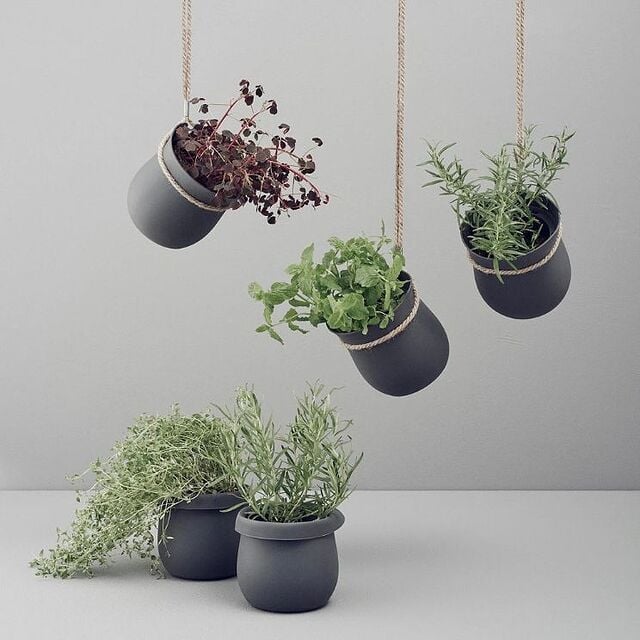
In a small space, it's worth utilizing the walls – hanging pots above the countertop or by the window allow you to have more herbs without taking up valuable workspace. Wall-mounted herbs don't occupy counter space, yet remain within arm's reach.
Types of solutions:
- Metal or wooden rails with hanging pots
- Ceramic wall pockets
- Lightweight covers on leather or cotton straps
Hanging pots should be smaller (8-10 cm diameter) and lighter – especially when mounted on plasterboard walls. They are ideal for oregano, thyme, and marjoram, which have compact growth and shallower root systems.
Practical considerations:
- Secure mounting (min. 30 cm from heat and steam sources)
- Easy to remove for watering and pruning
- Covers in a single color for a cohesive look
For sprawling mint or basil, it's better to plant them in larger pots on the countertop or windowsill – these herbs are not designed for small, hanging containers.
Herb Pots for Limited Kitchen Space
Limited kitchen space doesn't mean you have to give up on having fresh herbs at your fingertips. On the contrary – well-chosen herb pots are the ideal solution for those who value a practical herb garden even in the smallest kitchen. Thanks to a wide selection of pots in various sizes and colors, you can create an aesthetic solution that not only enhances the flavor of your dishes but also complements your kitchen's style.
In a small kitchen, hanging herb pots work wonderfully, allowing you to utilize vertical space above the kitchen counter or by the window. This is a way to have fresh herbs always at hand, without occupying precious kitchen counter space. You can choose pots made of plastic, ceramic, or metal – each of these materials has its advantages and allows you to match the pots to your kitchen's style and individual needs.
Compact kitchen herb pots are available in various sizes – from small containers for single herb varieties to sets of several pots on one tray. This allows you to grow basil, mint, rosemary, thyme, or oregano even in very limited space. It's worth considering self-watering pots, which simplify plant care and allow you to enjoy fresh herbs all year round, without the need for daily watering.
Kitchen herb pots in limited space are also a decorative element that can transform the look of any kitchen. By choosing pots in various colors and styles – from modern to classic – you can easily match them to your interior. Additionally, pots made from durable materials are easy to clean and resistant to mechanical damage, which is especially important in a heavily used kitchen.




Common Mistakes When Choosing and Using Herb Pots
Many people lose their herbs after just a few weeks simply because the pot wasn't suited to the plants' needs. Here are the mistakes to avoid:
Pot-related mistakes:
- Lack of drainage holes – basil roots rot in 2-4 weeks
- Insufficient depth for rosemary (needs min. 15 cm)
- Dark containers in a south-facing window – soil heats up to 35°C and kills 50% of herbs
- Pots without saucers that don't absorb moisture from the countertop
Care mistakes:
- 'Little by little' watering into a decorative cover without pouring out excess
- Repotting store-bought herbs without loosening compacted soil and adding a drainage layer
- Planting too densely – maintain a minimum 10 cm spacing in a 40 cm pot
Rules to remember:
- Every growing pot must have drainage holes
- Match the size to the root system
- Regularly prune herbs – this stimulates growth
- Rotate pots weekly for even sun exposure
Summary: How to Assemble the Perfect Herb Pot Set for Your Kitchen?
Choose 3-5 basic herbs (basil, mint, thyme, oregano, chives), select appropriate types of pots for them, and place them in the brightest spot in your kitchen.
Ready-made starter configuration:
- Self-watering Veritable garden on the countertop (basil, coriander, parsley)
- 2 ceramic Bergs Potter pots on the windowsill (rosemary, thyme)
- Small hanging Hubsch set with oregano and marjoram above the countertop
You can choose pots in a single style or mix different brands – the important thing is that each meets the basic requirements: appropriate size, drainage, and stability. The wide selection of available models allows them to be adapted to any interior.
Investing in good kitchen herb pots pays off in less wasted fresh herbs from the store, better-tasting daily dishes enriched with flavors from your own garden, and a more cozy, 'lively' kitchen.
Start with one small set today – even a single pot of basil on your balcony or countertop will change your cooking. Then gradually expand your kitchen herb garden according to your needs and interior style. Fresh herbs at home are not a luxury – they are an incredibly valuable convenience for anyone who cooks.