Wall Clocks
Wall clocks have come a long way to become a staple in interior design. Over the centuries, they've become increasingly functional, eventually finding their permanent place in homes, train stations, hotels, offices, restaurants... Today's wall clocks must meet the demands of functionality, quality, and design. While their mechanisms operate on similar principles, it's the design that truly offers a wide canvas for creativity.
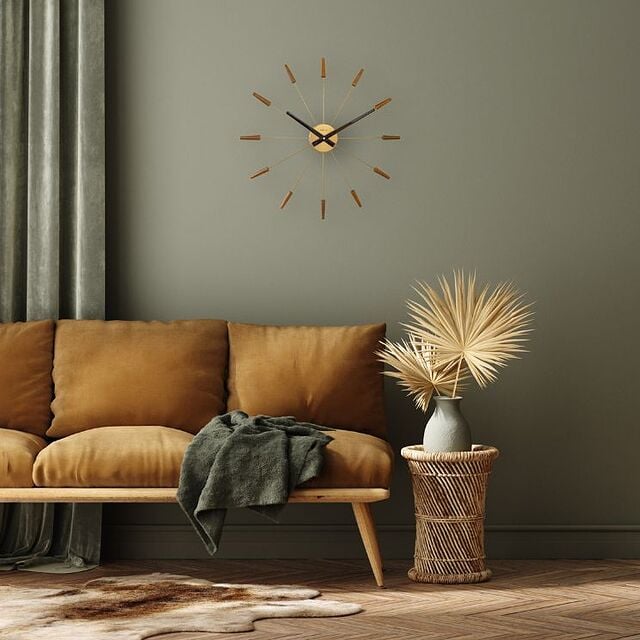
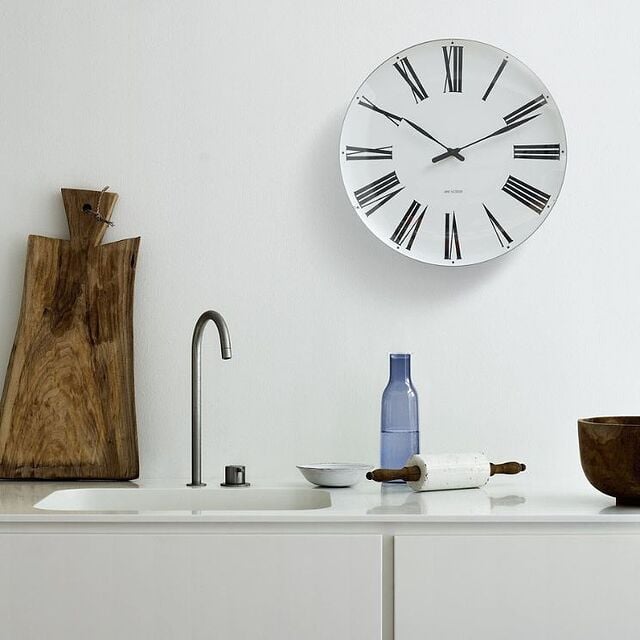
Modern wall clocks are a perfect fit for those who appreciate original interior design solutions. Their counterparts are retro clocks – styled to look old, exuding the charm of bygone eras. Pendulum clocks and cuckoo clocks are also considered classics of the genre. Station clocks have become a category all their own, taking the hearts of vintage style enthusiasts by storm.
1044 products


Trends, new products and ideas.




Wall Clocks: How to Choose the Perfect Model to Transform Your Interior and Set its Rhythm?
Do you ever find yourself caught in the daily hustle, chasing deadlines, and forgetting how precious time truly is? Time to breathe, time for coffee, time spent with loved ones. A wall clock hanging in your home is more than just a mechanism ticking away the minutes. It's a conscious choice that influences the ambiance of your interior and even your well-being.
This guide is for anyone furnishing a new home or looking to refresh their interior decor. You'll learn how to choose a wall clock that perfectly matches the style, function, and size of your room.
If you're seeking inspiration on how to infuse character into your space with just one element, you've come to the right place. We'll help you shift from viewing a clock as a mere necessity to seeing it as a central decorative focal point. A wall clock also makes an excellent gift for various occasions, blending functionality with a decorative flair. Our products are characterized by the highest quality craftsmanship. You'll discover how to select the right size, material, and mechanism, ensuring your new clock not only keeps time precisely but also becomes a true reflection of your personal style.
Wall Clocks in FormAdore's Offer
Think about it: you walk into your living room, and your eyes are immediately drawn to the wall. What do you see there? Is it a random, uninspired object, or perhaps a true work of art that harmoniously completes the entire arrangement? Wall clocks are among the most underrated decorative accessories. They seamlessly blend the practical with the aesthetic.
In our assortment, you'll find a wide selection of products:
- classic wall clocks
- modern wall clocks
- retro clocks
- station clocks
- pendulum clocks
- cuckoo clocks
Also, check out our ranking of top models for 2026. And if you're looking for a kitchen clock, read this guide.
Which Wall Clock Mechanism to Choose: Silent or Ticking?
This is one of the most frequently asked questions. Many people, especially those sensitive to sounds, dread an irritating, loud ticking. The choice of mechanism is crucial for the acoustic comfort in your home.
Quartz Mechanism: The Silent Hero of Your Bedroom
Most modern wall clocks are equipped with a quartz mechanism. Wall clocks with quartz movements are popular due to their reliability and precise operation. We divide them into two main types:
Stepping Mechanism (ticking): The second hand moves in distinct steps, producing the characteristic "tick-tock" sound.
Smooth Movement (silent): The second hand glides smoothly and silently. This solution is often referred to as "silent sweep" or "non-ticking".
When to choose a silent mechanism?
Bedroom: Absolute silence is key for a restful night's sleep. There's nothing worse than a loud ticking in the middle of the night. If you're looking for the perfect bedroom companion that helps you wake up without disturbing your slumber, also check out our alarm clocks.
Office/Study: In a workspace, you need maximum concentration. A silent clock eliminates potential distractions.
Living Room: If you value peace and relaxation, a smooth-movement mechanism will provide comfortable quiet.
When is ticking an advantage?
For some, the ticking of a clock is a soothing element, introducing a sense of rhythm and order. Clocks with a distinct tick work wonderfully in spacious hallways or kitchens, where other sounds (cooking, conversations) effectively drown them out.
A Large Wall Clock as a Focal Point? How to Choose the Right Size and Proportions.
A wall clock is not just a practical accessory, but first and foremost a decorative element that can truly dominate a space. To achieve that "wow" factor, you need to pay close attention to the right proportions.
What to look out for?
Wall clocks should be placed at an appropriate height to be visible from various points in the room.
It's generally not recommended to hang a clock above entrance doors, as this can disrupt the symmetry of the interior.
Ideally, a clock should occupy about 2/3 of the width of the furniture it hangs above (e.g., a dresser, sofa) or the empty wall space. A clock that's too small on a large wall can look lost and fail to fulfill its decorative purpose.
Size matters:
Large clocks (over 60 cm in diameter): Perfect for spacious living rooms, lofts, and dining areas. They become the main accent and don't need additional embellishments around them.
Large wall clocks catch the eye and are easy to read from a greater distance.
Medium clocks (30-50 cm): Versatile, suitable for most rooms. They look great alongside other wall decorations, such as a photo gallery. In this context, it's worth considering photo frames to create a cohesive composition with the clock.
Small clocks (under 30 cm): Designed for smaller rooms like bathrooms, narrow hallways, or as part of a larger, eclectic wall composition.
Clocks in small rooms should have a diameter of 35 to 40 cm.
Modern Wall Clocks for Every Interior: Materials and Styles
The material a clock is made from dictates its character and the style it will bring to your home.
Industrial and Loft Style: Rawness and Functionality
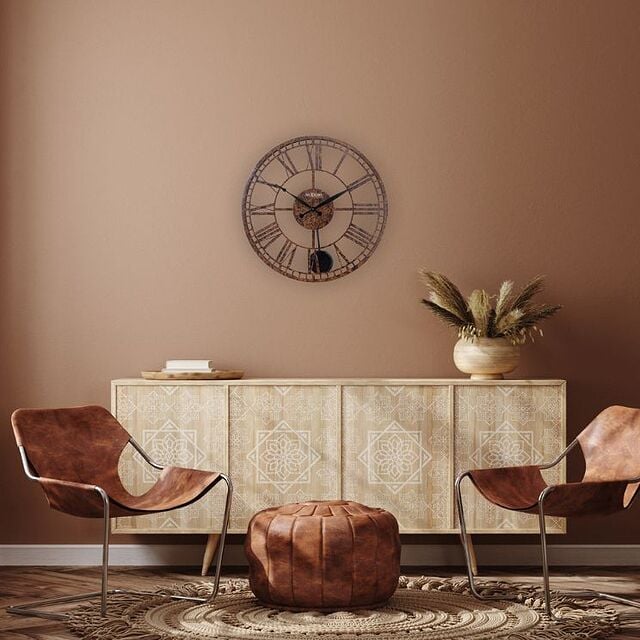
Industrial interiors adore raw materials and visible mechanisms. Industrial-style wall clocks are perfect for these spaces, serving as both practical and decorative elements.
Material: Metal (black, copper, aged), concrete, wood with visible grain.
Characteristics: Large, often openwork dials, Roman numerals or their complete absence (minimalism), visible gears. Such a clock is a prominent, strong accent that underscores the loft's character, but can also create a striking contrast in more subdued or modern arrangements.
Scandinavian and Boho Style: Warmth and Naturalness
Scandinavian-style wall clocks prioritize light colors, simplicity, and natural materials, fitting perfectly into minimalist arrangements.
Material: Light wood (oak, ash), bamboo, cork.
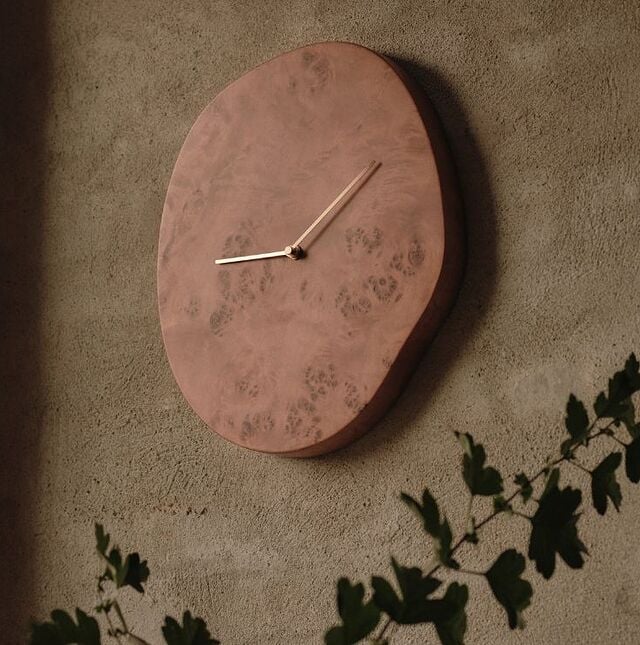
Characteristics: Simple, round forms, light dials, delicate hands. Choosing the right colors, especially light shades, allows the clock to harmoniously blend with the interior and emphasize its cozy character. A clock in this style is meant to be a subtle, warm addition that doesn't overwhelm.
Glamour and Art Deco Style: Elegance and Sparkle
If you appreciate luxury, sophistication, and an elegant style, choose a clock that is a piece of jewelry for your wall in itself.
Material: Glass, mirrored surfaces, metal in gold or silver tones.
Characteristics: Styled as luxurious and decorative interior elements, glamour and Art Deco wall clocks stand out with unusual shapes (e.g., sunburst, geometric patterns), ornate numerals, and shimmering details. Such a model can be an elegant decorative accent and pairs beautifully with other shiny elements, like mirrors, creating a cohesive, luxurious arrangement.
Clocks in the Kitchen and Beyond: How to Match a Clock to the Room's Function?
The placement of a clock should be dictated not only by aesthetics but also by functionality.
Kitchen Clock: Durability and Readability
The kitchen is the heart of the home, but also a place with humidity, steam, and fluctuating temperatures. Kitchen clocks should be not only aesthetic but, above all, functional to facilitate daily tasks and ensure ease of use.
Requirements: Moisture resistance, easy to clean (smooth dial), high readability (every second counts when cooking!).
Recommended models: Clocks with clear numerals, often with additional functions like a timer. If you're looking for a model specifically designed for this room, check out the kitchen clock category.
Living Room Clock: Representation and Design
In the living room, the clock serves a representative function. This is where you can indulge in the largest, most designer, and boldest models, and a large clock will be an excellent choice if it's also meant to be a decorative feature. A living room clock should be an extension of your personality.
Children's Room Clock: Education and Color
A clock in a child's room is a fantastic way to teach them how to tell time.
Requirements: Colorful, friendly dials, clear hour and minute markings. It's worth paying attention to the rich variety of colors in wall clocks – the right color choice can not only make the interior more attractive but also support a child's development and harmonize with other elements of the room's decor. An absolutely silent mechanism is essential to avoid disturbing sleep and learning.
Timeless Charm and Retro Clocks: The Perfect Way to Create a Vintage Arrangement
Some clocks are not just objects, but true carriers of history and tradition. Among them, you'll find a wide selection of classic wall clocks, including vintage-style and vintage models that perfectly complement retro, loft, or industrial arrangements.
Characteristic features of classic wall clocks include elements like pendulums, Roman numerals, and natural materials. Our offer also includes square models that combine functionality with an elegant look and suit various interior styles.
The best wall clocks include quartz, minimalist modern, loft, and classic retro models.
Cuckoo Clock: A Return to Roots
The cuckoo clock is a classic that is experiencing a renaissance. Contemporary models often blend traditional mechanisms with modern, minimalist design.
Characteristics: They bring an element of fun and nostalgia into the home. Ideal for those who appreciate unique, artisanal details.
Where does it fit? Surprisingly, modern cuckoo clocks look fantastic in minimalist interiors, serving as an intriguing contrast.
Dial Numerals: Arabic, Roman, or Minimalism?
The choice of how hours are marked is another element that determines a clock's style and readability. The readability of a clock face is ensured by contrasting hands and clear numerals, which is crucial for its functionality. Advanced clocks may feature electronic date displays, temperature readings, or LED backlighting.
Arabic Numerals (1, 2, 3...)
Advantages: Most universal and easiest to read. Ideal for kitchens, offices, and children's rooms. They suit modern and Scandinavian styles.
Roman Numerals (I, II, III...)
Advantages: Add elegance, gravitas, and a classic character. They work wonderfully in retro, glamour, or classic arrangements.
No Numerals (Minimalism)
Advantages: Most decorative and abstract. The clock becomes a pure geometric form.
Disadvantages: Less functional. Requires some getting used to. Ideal for living rooms where the clock primarily serves an ornamental purpose.
Expert tip: If the clock is meant for quick time-telling (e.g., in the kitchen), opt for clear Arabic numerals. If it's intended to be a work of art, go for minimalism or Roman numerals.