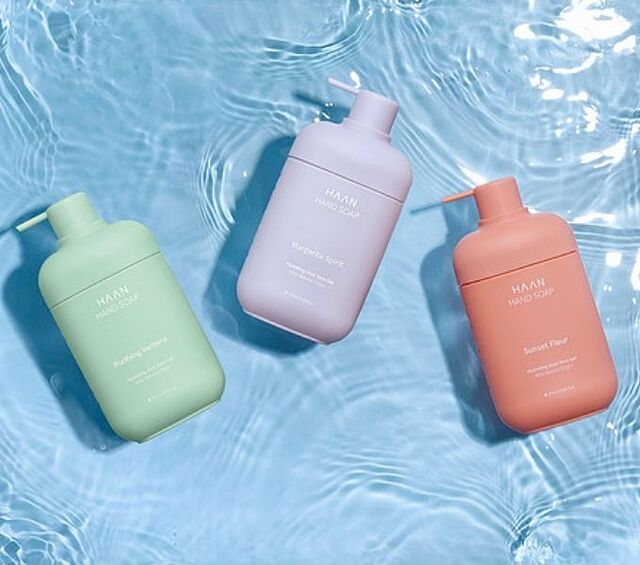
Oh, where are those beautiful times when there was one plain bar of soap for everything, and you didn't have to worry about a thing? Now, every soap vies for our attention, shimmering with colours and shapes, crying out "choose me!". But not with us! Let's find the soap that truly suits us best.
How Does Soap Work?
We could bombard you with clever phrases like how soaps are salts of metals and higher fatty acids, that they belong to surfactants, have both hydrophilic and hydrophobic properties, and form spherical structures called micelles when added to water. But who needs that?
What's important for us is that soap binds dispersed dirt and germs into a single mass. Our skin is covered with a protective fatty layer, which on one hand protects, and on the other, attracts viruses and germs. Washing skin with water alone isn't enough, because it doesn't have the ability to combine with fat, while soap does! Soap has an unusual structure because, on one hand, it likes water and dissolves in it, and on the other, it likes fat and combines with it, which facilitates the removal of dirt. When you think about it, soap is an incredibly cunning product and deserves a round of applause!


Bar or Liquid – That is the Question!
Even the biggest soap novice has probably noticed that soaps have divided into two camps: liquid soaps and bar soaps. So, what now?
Pros and Cons of Bar Soap:
- Contains no water – has a longer shelf life than liquid soap.
- Usually has a short ingredient list, without many artificial additives.
- Contains more oil than water, so it cleans the skin better.
- It's more eco-friendly, as it doesn't require plastic packaging.
- It's less hygienic than liquid soap. Bacteria multiply more easily.
- Leaves residue on the washbasin or soap dish.
Pros and Cons of Liquid Soap:
- More hygienic than bar soap and easier to carry without getting your hands dirty.
- You can buy a dispenser and refill it with liquid. This saves plastic and money.
- Nice display – liquid soap can be poured into an elegant dispenser.
- Available in many scents and colours.
- Harder to take travelling, as it might leak or puncture.
Soap Dispensers and Soap Dishes


The Great-Grandfather of Modern Soap
The great-great-grandfather of soap is over 5000 years old. But back then, it was only used for cleaning wounds and doing laundry. In the early 20th century, German chemist Fritz Gunther developed the modern version of soap, but it was so corrosive that it was only suitable for industrial use. It wasn't until the 1930s that a breakthrough came and a soap was created that not only didn't burn the skin but also cleaned it gently – phew!

Natural Soaps
Natural soaps are those that contain no chemicals, have a simple composition, and natural additives. Avoid soaps with added preservatives, artificial colourings, SLS, SLES, polyethylene glycols, parabens, or mineral oils. The simpler the ingredients, the better for our skin!
Natural soaps are divided into sodium (harder) and potassium (softer) varieties. Within these soaps, we can distinguish different types:
SULPHUR SOAP – not for everyday use, it can dry out the skin. It has strong antibacterial and cleansing properties. It also helps in treating skin inflammations.
BLACK SOAP – owes its colour to, among other things, black olive paste. It works well for skin problems. It resembles an enzymatic peel. Soothes skin irritations, smooths, and has anti-wrinkle effects.
ALEPPO SOAP – also known as laurel soap, contains olive oil and laurel oil. It is recommended for allergy sufferers and people with delicate skin. It has moisturising properties. It can also be used as a shampoo.
GREY SOAP – our well-known soft potassium soap. It contains no colourants or fragrances, hence its characteristic colour. It is recommended for oily, acne-prone, and allergic skin.
Do It Yourself!