Did you know that a good pressure cooker opens up unlimited culinary perspectives? Used skilfully, it can become your ticket to a world of extraordinary culinary delights. It is worth finding out more about its history, how it works and what the best manufacturers have to offer!
The history of fast cooking...
Denis Papin, the father of the pressure cooker
It may come as a surprise to learn that the origins of the pressure cooker can be traced back to 1679, when the French physicist and inventor Denis Papin developed the first leak-proof pot with a safety valve in which high pressure was generated during cooking. The scientist probably did not anticipate what an epoch-making discovery he had made. This pot, which the inventor called a "bone softener", became not only the prototype for the kitchen pressure cooker but also for the autoclave, a device used, among other things, to sterilise surgical instruments and medicines.
What's more, Papin's work on this invention led to the development of a steam engine, powered by steam escaping under pressure. Who would have thought that from a pressure cooker was so close to a steamship? Quite quickly, Papin's innovative idea gained widespread acceptance and pressure cookers, long known as 'Papin's kettles', became a permanent fixture in kitchens around the world.
Get cooking with a pressure cooker!

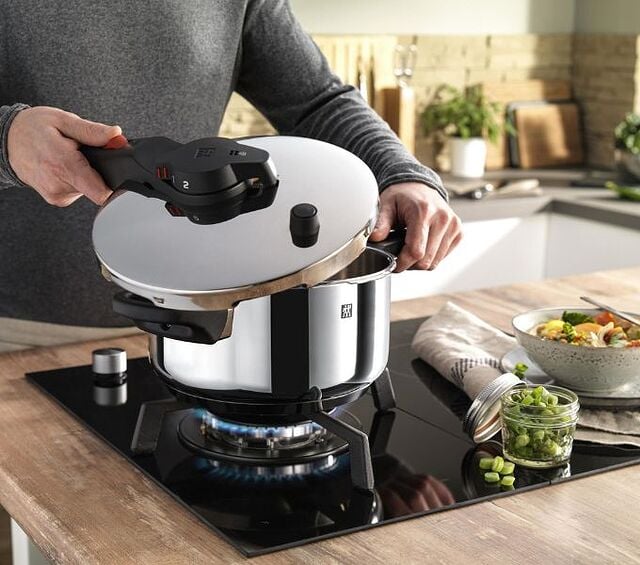
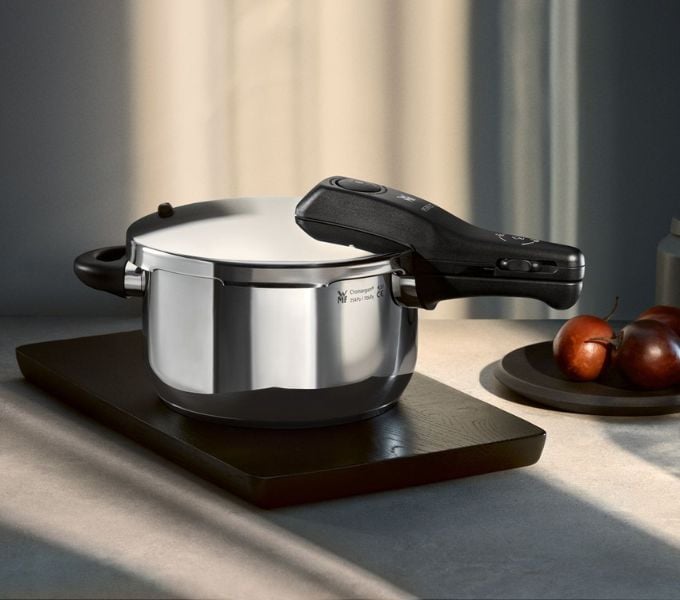


How does a pressure cooker work?
Airtight cooking
The principle of the pressure cooker is quite mysterious to many. The average knowledge is limited to the fact that cooking in such a pot takes place in an environment with increased pressure. What exactly does the pressure cooking process involve?
Thanks to the hermetic nature of the pot, the steam created by heating the water causes the pressure inside the pot to rise to 1.6 - 2 atmospheres. This pressure increases the boiling point of the water to 112-120°C. This is where the whole secret of cooking speed lies. By comparison, under high alpine conditions, where the boiling point of the water at reduced pressure is around 80-90°C, it can take several hours to cook potatoes, whereas in a pressure cooker, it takes 6 minutes!
Pressure cooker design
The complete leak-tightness of the pressure cooker is ensured by its unique design. The pot's lid, which has a special seal, is closed by interlocking or pressure springs. During cooking, it is pressed tightly against the pot flange by the steam pressing against it from the inside, ensuring that the pot is completely airtight. However, if excess steam could not escape, the pressure would build up in the cooker after a while, so much so that it would burst.
For this reason, every pressure cooker has a regulating valve through which the steam escapes. This usually takes the form of a metal rod which blocks the steam outlet, located in the casing on the lid of the pressure cooker. When a certain amount of pressure is exceeded, the bar is lifted upwards, unlocking the opening through which excess steam escapes. When the pressure inside decreases sufficiently, the opening is blocked again by the barb. In this way, a constant pressure value is maintained in the cooker, so that the entire cooking process takes place evenly.
Safety valve
Quick, healthy and convenient. Advantages of cooking in a pressure cooker
The dizzying speed of cooking
The consequence of the airtightness of pressure cookers is above all the speed of the cooking process. Cooking time can be reduced by up to 70%! Thanks to this, the food being cooked, which is exposed to heat and water for a shorter time, retains valuable trace elements and vitamins, which are not washed away as they would be during a lengthy cooking process in a normal pot. What is particularly important when cooking vegetables - the colour of the food is not altered either.
The tightness of the pressure cooker also allows you to get the full flavour and aroma of your food. When cooking in a normal pot, a lot of flavour and aromatic substances escape with the steam. A pressure cooker, on the other hand, retains all the substances responsible for the flavour of your food by releasing only small amounts of steam.
Saving energy ... and flavours
The energy savings of up to 50% which cooking in a pressure cooker allows us to make are also important. This is because the cooking process is not only shorter but also requires less energy since the cooker does not lose heat through unnecessary steam escaping. In addition, cooking in a pressure cooker saves both the kitchen and the entire home from the accumulation of unpleasant cooking smells, for example from cooking beans or cabbage.
When using a pressure cooker, you can also forget what a burnt dish is. Burning is simply not possible because there is always water in the cookware. This makes this type of cookware easy to clean.
Additional advantages
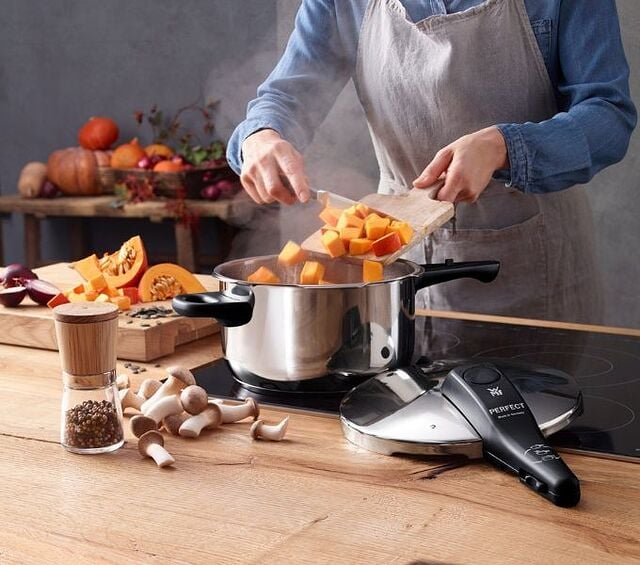
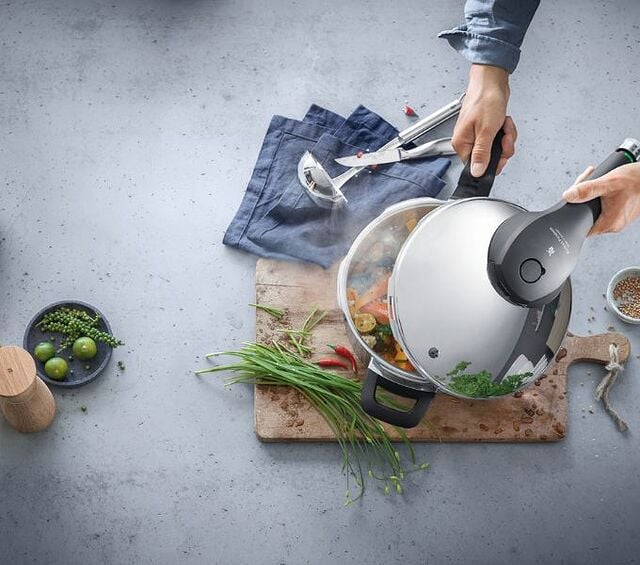
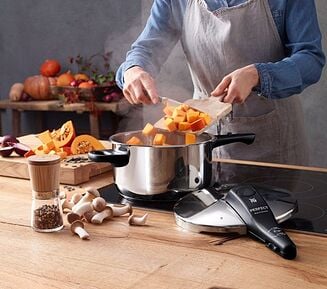


The secrets of pressure cooking
As with any art, the art of cooking in a pressure cooker also requires the knowledge of certain rules. There must be liquid in the pot at all times, so make sure you pour in the right amount. Today, pressure cookers allow us to prepare food in two ways:
- boiling and simmering in water or broth
- steaming with special insets.
The amount of water is important!
In the first case, when cooking or stewing food, the amount of water or broth should be no less than two cups and no more than 2/3 of the pot's volume. For steaming, on the other hand, about 6 cups of water should be poured in. When preparing foods that swell during cooking, the pot should only be half full. To avoid overcooking, precise timing is essential, so it is always a good idea to have a timer handy.
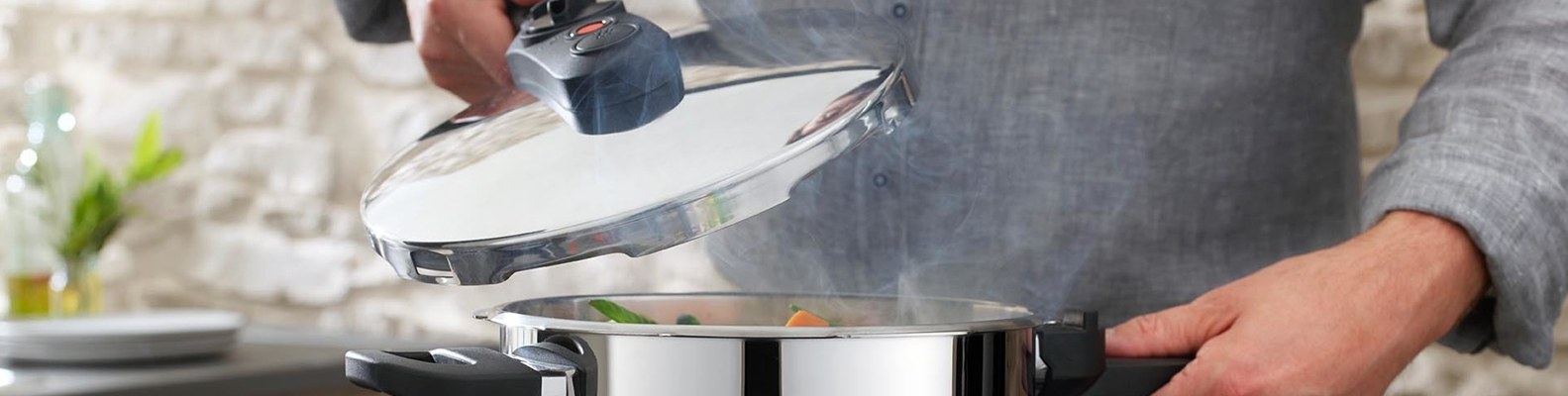
Special care should be taken when opening the lid. You should not remove the lid immediately, but rather let off steam which has built up inside the pot after it has been cooked, so that the pressure inside and outside is equalised.
What can I cook in a pressure cooker?
Many new users of this type of cooker often wonder what to use their purchase for. Well, for practically everything! Pressure cookers work best for cooking vegetables and meats. They can also be used to make soups or stews.
Some examples? Ribs in mushroom sauce - 10 minutes, steamed fish - 6 minutes, beef broth - 20 minutes, stuffed cabbage - 25 minutes, asparagus - 5 minutes, duck with peaches - 30 minutes. The range of uses for such a dish is virtually unlimited!
Many possibilities


In the realm of perfect pressure cookers
In addition to the gentle and quick cooking modes, pressure cookers from the Vitavit Premium series also offer us the steam function. There is no pressure build-up in the pot, so you can easily remove the lid while cooking to stir the food or add spices.
Fissler has not only ensured the functionality and top quality of its pressure cookers but also its elegant design. Made of polished stainless steel and plastic, they impress with their modern lines and streamlined shapes. With their meticulously detailed pots, lids, handles and gauges, Fissler pressure cookers boast a star status in their category. This was recognised by the highest design authorities when they awarded the Vitavit Premium and Vitavit Comfort pressure cookers the prestigious Red Dot Award for Product Design 2009. The jury praised the innovative design approach and the incorporation of modern ergonomic principles into the design. The verdict was reasoned as follows:
"The pressure cookers in this series set new standards in design and ease of use. (.) Their modern, reduced style adapts elements typical of this type of cookware, such as the main control valve, and interprets them in an innovative way. I don't think anything more needs to be added."

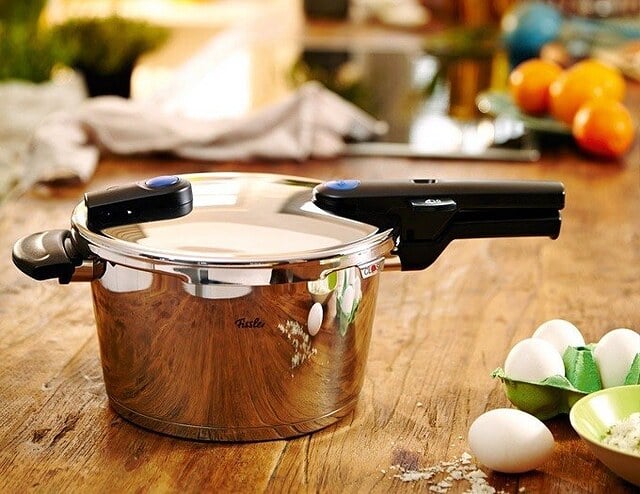
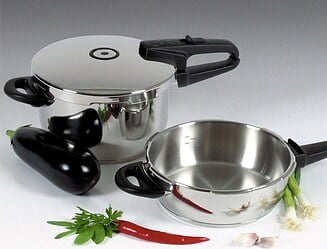
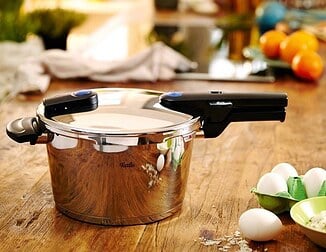
Modern and beautiful pressure cookers