You can brew them, drink them, add them to your favourite dishes, use them for beauty treatments… What are we talking about? Aromatic herbs, of course! Not only do they enhance the flavour of many dishes and help us take care of our skin, but they also make a beautiful and incredibly fragrant decoration.
What's hidden in herbs? A few words about their properties.
Fresh, fragrant potted herbs are one of the essential elements in every kitchen. If you're wondering which potted herbs to choose, first check the properties of individual plants. For example, basil, containing vitamins A, B, and C, has a beneficial effect on the digestive and nervous systems. Lemon balm, on the other hand, has a calming effect, helping with headaches and abdominal cramps. Parsley contains twice as much vitamin C as a lemon and, in addition to its antiseptic properties, aids digestion and strengthens eyesight thanks to its vitamin A content. Mint has a positive effect on the digestive system and helps reduce stomach pain and bloating. Chives stimulate appetite and intestinal peristalsis, and also contain essential minerals. Thyme, on the other hand, has antibacterial properties and can be used for sore throats, while oregano positively affects the immune system, helps fight illnesses, and supports the digestive system. There are many more properties and benefits of herbs for the kitchen – when choosing, it's best to follow individual needs and taste preferences. The most important thing is that, once grown, they become a permanent addition to your prepared dishes. It's also worth investing in a herb brewing mug and regularly drinking infusions – they will certainly do wonders for your health.




Herbs from around the world's kitchens
When preparing a dish that isn't from traditional British cuisine, it's a good idea to match the herbs to the flavours of the country of origin. Italian cuisine is primarily associated with aromatic basil – it's an excellent addition to pasta and tomato dishes. Marjoram would also work a treat here. Coriander is a perfect complement to Chinese, Indian, or Spanish dishes, while Mexican coriander goes well with Thai and Vietnamese cuisine. Curry leaves are mainly used in Indian cooking. For German dishes, parsley, marjoram, or thyme are best suited.
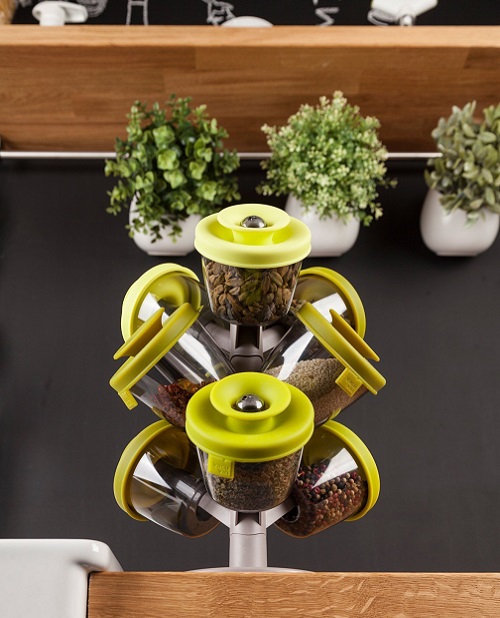
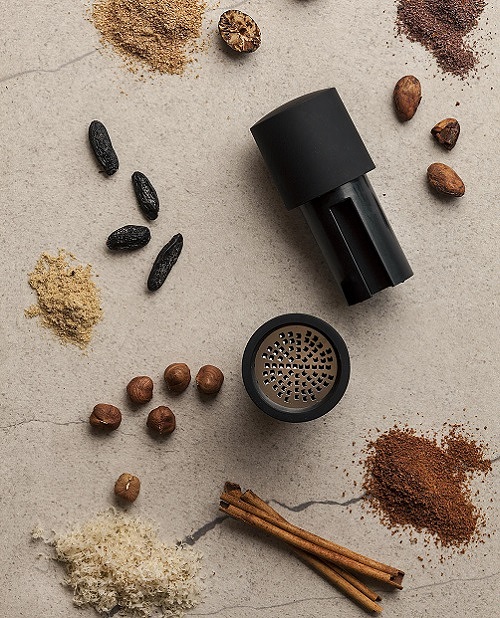
And which herbs go well with regional Polish dishes? These are primarily parsley, lovage, dill, chives, and savory. When choosing potted herbs, it's worth investing in special herb scissors and herb choppers, which will help you quickly chop your favourite leaves and bring out their unique flavour. Mortars and pestles for spices can also come in handy – they will allow you to prepare aromatic, herbal compositions that you can store in stylish spice jars.


Which soil is best for herbs?
Herbs can grow in almost any average soil. However, it's worth paying special attention to the substrate for even faster plant growth. It's important that the soil isn't waterlogged and heavy. The vast majority of green plants prefer easily warming, permeable soil. When choosing soil for herbs, it's also good to match it to the specific species, as each has its own preferences. For example, marjoram and oregano grow best in dry, permeable, and well-sunlit soil. Basil, on the other hand, thrives in moist, nutrient-rich soil. Good mint growth is ensured by humus-rich, moist, and permeable soil, while lavender feels best in dry, infertile, calcareous soil. As you can see, each herbaceous plant is different, and the choice of appropriate soil can vary depending on which herbs you want in your home herb garden. A good choice might be universal garden soil, potting mix for houseplants, or one for growing vegetables. You can also sprinkle drainage, such as expanded clay pellets, at the bottom of the pots.


How to care for plants?
Herb pot – which one to choose?
When choosing pots for herbs, it's worth considering where they will be placed. Herb pots for the kitchen will differ from those for the terrace or balcony. Clay pots are one of the better choices – the soil for herbs doesn't dry out as much in them as in plastic ones. Ceramic pots for kitchen herbs also enjoy a good reputation. In addition to standing pots, you can opt for a hanging version – it not only makes a beautiful decoration but also saves space in the kitchen. If you want to place your herbs on the terrace, choose heavier pots – this way they won't topple over in the wind.
For balcony pots, those with hanging hooks, resistant to moisture, radiation, or frost, will prove best. Large wooden crates are a good choice for herbs meant to grow outdoors – you can plant several species with similar requirements in one pot. Additionally, herbs planted this way look exceptional!
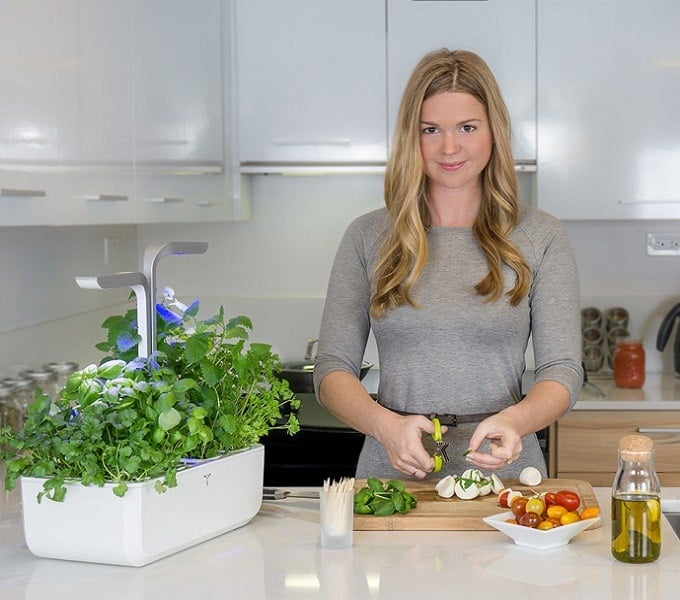
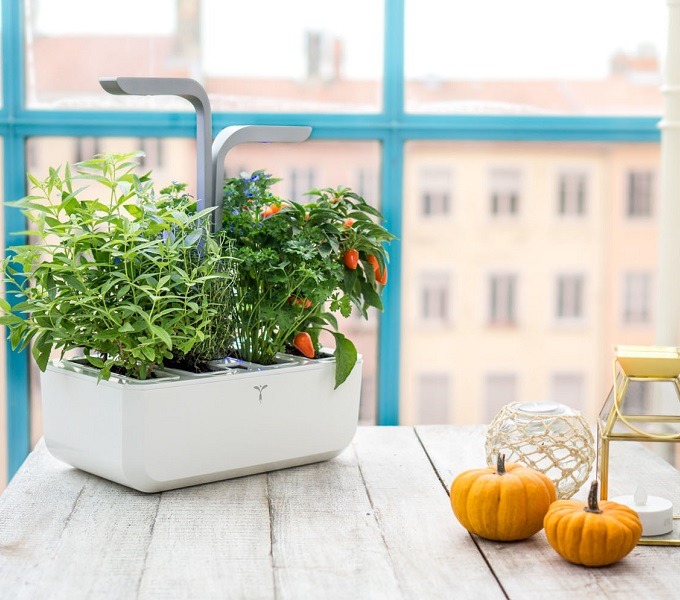


When choosing a pot for herbs, it's worth noting whether it has bottom holes. These are very important – water should not stand in the pot after watering. Pots can also be a stylish interior decoration, so it's worth checking out their different variants and designs – for example, white pots will suit most interiors.


Herb garden – in the kitchen or on the terrace?
Growing herbs both indoors and having a herb garden on the terrace have their advocates. There's no definitive answer as to which option is better. However, it's worth noting that when placing pots in the kitchen, you have them at your fingertips all the time while cooking. Herbs indoors should be placed in a well-sunlit spot, preferably on a kitchen windowsill. It's also important that the herbaceous plants have enough space to grow.
For a terrace herb garden, herbs should be placed in a spot where the pot is not at risk of toppling over. Pay special attention to the conditions there and check how many hours of sunlight the plants will receive daily. Take good care of your herbs, water them regularly, and watch them grow day by day, so you can enrich your dishes or fill your herb mug with an aromatic infusion! A pot with beautifully growing herbs can also make a wonderful gift for mum, grandma or a teacher.




Herb garden for the busy – smart mini gardens
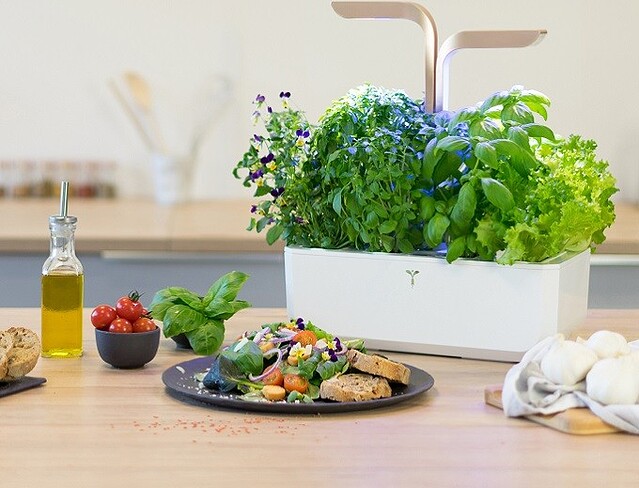
Smart mini gardens are gaining increasing interest among lovers of herbaceous plants. This is an ideal choice for busy people who don't have time to regularly tend to their herb garden. Mini gardens combine self-watering pots for herbs, an LED lamp, and ecological, natural inserts – these can be basil inserts or seed inserts. Pots with an irrigation system provide herbs with access to essential minerals and rapid growth. The lamp, in turn, emits light waves and adjusts the light intensity to the sunlight. A mini garden is a modern solution that ensures your kitchen will never run out of aromatic kitchen herbs, giving your dishes a unique flavour. With your own herb garden, you can pick them whenever you fancy. Mini gardens are also a perfect option for all the forgetful ones – the pots will remember to water the plants themselves!
Potted herbs are an excellent complement to almost any dish, and what's more – they give the kitchen interior a unique character. Find the ones you like best
and create a home herb garden, and their wonderful aroma will accompany you forever!