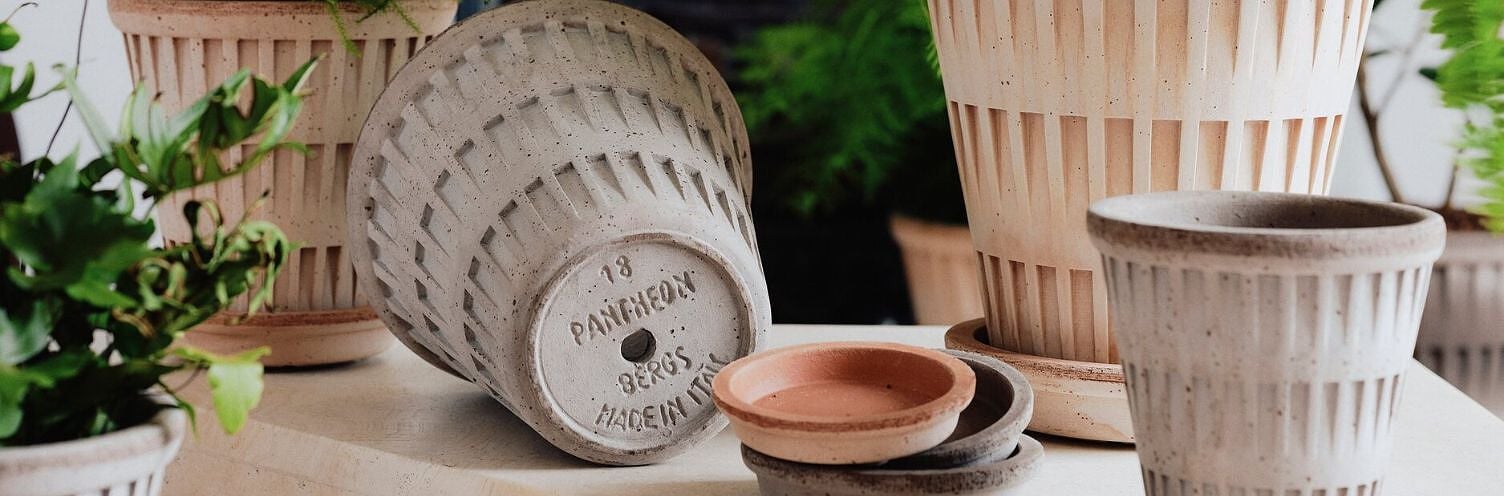
Choosing the right pot is one of the first decisions every houseplant owner makes. Do pots need holes in the bottom? What's the difference between a pot and a cachepot? And why is drainage so crucial for plant health? In this guide, you'll find answers to all your questions about drainage holes, decorative cachepots, and the practical aspects of growing plants at home.
Does a Pot Need Drainage Holes? A Quick Answer for Shoppers
For most houseplants, a pot with drainage holes at the bottom is the best choice. It's the simplest and safest solution, perfect for both beginners and seasoned plant enthusiasts.
Why are drainage holes so important?
- Draining excess water after watering prevents root rot.
- Excess water flows into the saucer instead of pooling around the root system.
- Easier care – less risk of overwatering your plant.
- Better air circulation in the soil supports healthy plant growth.
When does a pot without holes make sense?
There are situations where a container without holes can be a good choice. This applies to self-watering systems with a double bottom, hydroponics, and controlled conditions for moisture-loving plants. Some plants, like fittonias or ferns, might tolerate such solutions, but they demand more attention when watering.
Quick Decision Checklist:
- If it's your first plant – choose a pot with drainage.
- If you want that 'Instagram-worthy' cachepot look – pair a pot with holes with a decorative cachepot.
- If you're short on time for plant care – opt for a pot with holes and a saucer.
- If you plan longer trips – consider a self-watering system.
Pot vs. Cachepot – What's the Difference and What Should You Buy for Your Home?
In home decor stores, customers often confuse pots with cachepots. It's understandable – both containers look similar but serve entirely different functions.
Features of a growing pot:
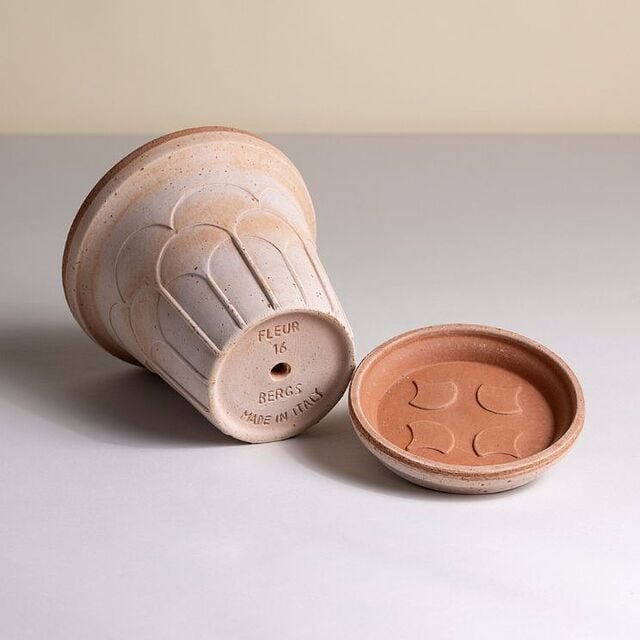
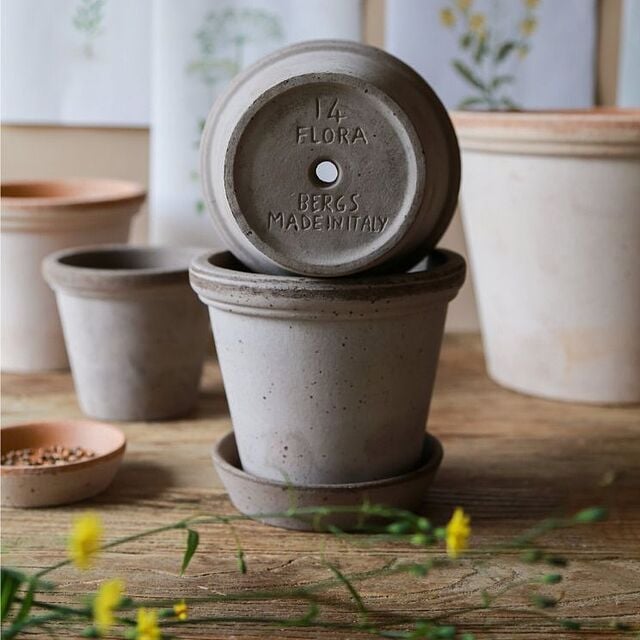
- Has 1 to 8 drainage holes at the bottom of the pot.
- Designed for direct planting of plants.
- Usually lighter – made of plastic or technical ceramic.
- Often the one the plant arrives in from the nursery or garden center.
- May require a saucer to collect excess water.
Features of a decorative cachepot:
- Solid bottom with no holes.
- Serves a decorative and protective function for furniture and windowsills.
- Wide range of colors, textures, and styles – from boho to minimalism and industrial.
- Protects surfaces from moisture and soil spills.
- Allows for easy arrangement changes without repotting plants.
Practical applications at home:
- The plant stays in a plastic pot with holes and is placed inside a ceramic cachepot on an MDF dresser.
- On a windowsill above a radiator, a cachepot protects the plant from overheating and safeguards the sill.
- On a living room shelf, a decorative cachepot complements the interior style.
How to tell the difference between a pot and a cachepot in a store?
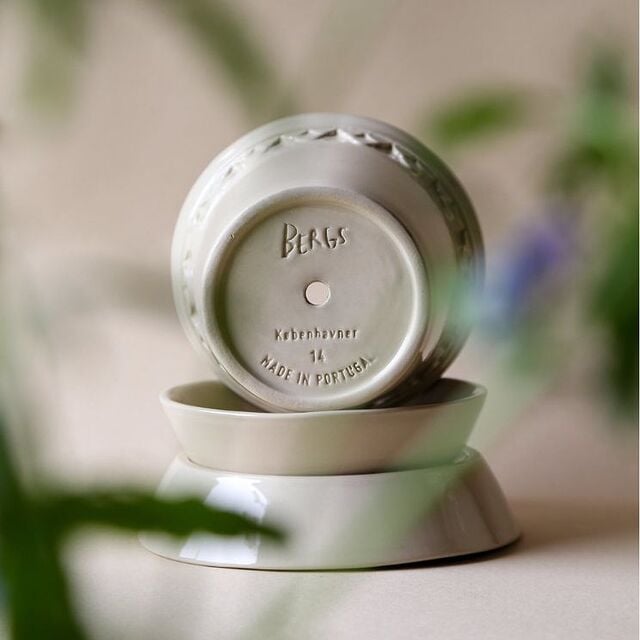
- Check the bottom – if there are holes, it's a growing pot.
- Ask the salesperson about drainage holes if you can't see the bottom.
- Pay attention to weight and finish – decorative cachepots are often heavier and more ornate.
Want to infuse your decor with a boho vibe? Then you'll love this article: Boho Style Pots – What Material and Shape to Choose?




Why are Drainage Holes So Important for Houseplants?
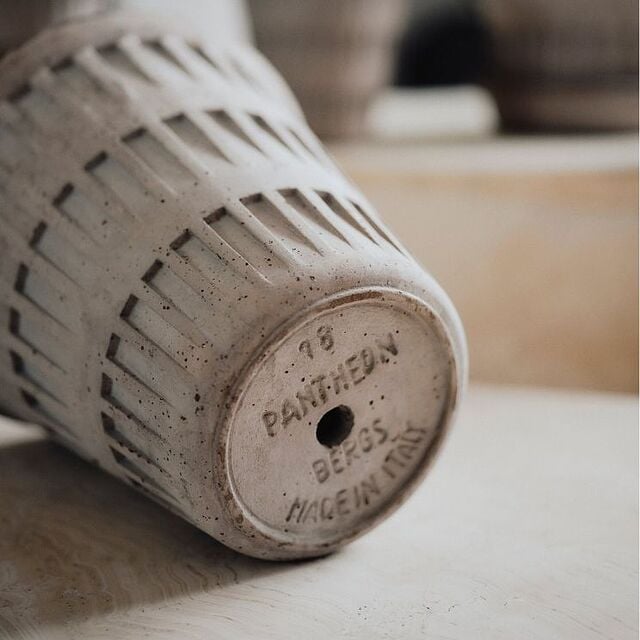
In nature, excess water always has somewhere to go – it soaks into the soil, runs down slopes, or evaporates. Indoors, the only escape route for water is through the drainage holes in each pot – or its absence, which leads to problems.
Functions of drainage holes:
- Draining excess water after watering – plant roots don't sit in water.
- Oxygen supply to the root zone – essential for proper development.
- Reduced risk of fungal diseases, mold, and root rot.
- Ability to flush the substrate of accumulated mineral salts.
- Easier moisture control – you can see how much water flows through.
Typical symptoms of overwatering in a pot without drainage:
- Yellowing leaves, especially from the bottom of the plant.
- Soft, limp stems.
- An unpleasant, musty smell from the soil.
- Wet soil with the plant simultaneously wilting.
- White or gray mold on the soil surface.
Practical rule of thumb: It's better to slightly underwater than to overwater. A Ficus or Monstera indoors in winter, when the heating is on full blast, needs significantly less water than in summer. In a pot with holes, it's easier to avoid overwatering because excess water simply drains away.
Plants with thick, fleshy roots – succulents, cacti, snake plants – particularly need efficient water drainage. In their case, even a short period of standing moisture can lead to irreversible damage to the root system.
Pots Without Holes – When Do They Make Sense and How to Use Them Safely?
Pots without holes are primarily a decorative element and require more attention when watering. However, this doesn't mean they should be avoided entirely – you just need to know how to use them.
Situations where a container without holes can be a good choice:
- As a cachepot for a nursery pot – the plant grows inside in a pot with drainage.
- A shallow bowl for orchid arrangements or plant compositions.
- A container in a self-watering system with a double bottom.
- Minimalist decoration in the living room for artificial plants or dried bouquets.
Why shouldn't you plant directly into a pot without drainage?
Putting soil directly into a heavy, ceramic pot without drainage, sitting on a wooden floor, carries risks. Stagnant water at the bottom of the pot leads to root rot. Repotting such a plant is difficult due to its weight. And any spills can damage the floor.
How to safely use a pot without holes – a 4-step guide:
- Pour a thin layer of expanded clay (leca) at the bottom – it creates a buffer zone.
- Limit watering – smaller amounts of water, but given less frequently.
- Regularly check moisture with your finger or a meter – to a depth of 2-3 cm.
- Every few weeks, check if water is accumulating at the bottom.
Some moisture-loving plants – ferns, fittonias – might manage in such containers. The condition: conscious care, light and permeable soil, and constant monitoring of air and soil moisture.
Decorative Cachepots – How to Combine Aesthetics with Good Drainage?
Cachepots are one of the simplest ways to match plants to your interior style without risking their health. You gain full control over growing conditions and simultaneously achieve a beautiful visual effect.
Rules for using cachepots:
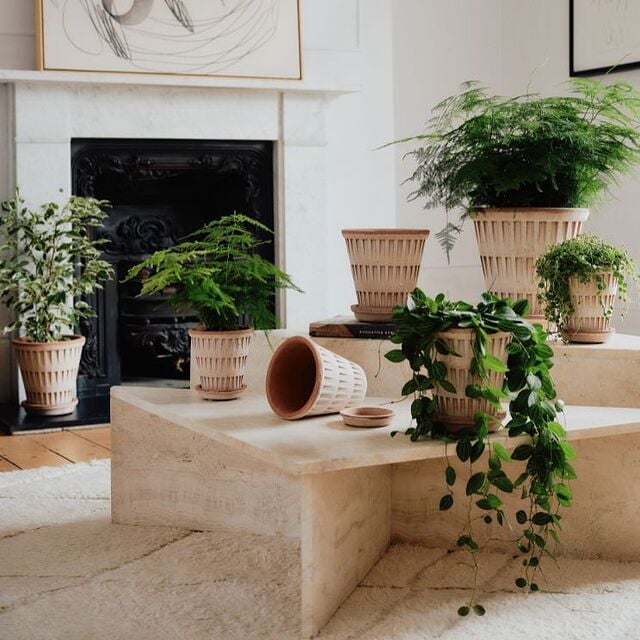
- The plant should always be in a pot with drainage inside the cachepot.
- The cachepot should be 1–2 cm wider than the growing pot.
- Maintain a distance between the bottom of the pot and the bottom of the cachepot – e.g., with a layer of expanded clay or a saucer.
- Regularly check that water isn't accumulating in the cachepot.
Proper watering with a cachepot:
Water the plant in the sink or bathtub. Wait 10–20 minutes for excess water to drain through the holes. Only then place the pot back into the cachepot. It's simple, but it ensures proper conditions for the roots.
Arrangement tips:
- Light, matte cachepots for small, darker interiors – they brighten the space.
- Dark, glossy cachepots for large living rooms with plenty of natural light.
- Metallic finishes for modern offices and minimalist bedrooms.
Practical examples:
- Monstera in a light ceramic cachepot on the living room floor.
- A small plant in a metallic cachepot on a desk.
- A set of cachepots for herbs in the kitchen – consistent color scheme, different sizes.


Hydroponics and Self-Watering Systems – The Exception to the Drainage Hole Rule
Some modern solutions intentionally lack traditional drainage holes at the bottom. This isn't a design flaw – it's a well-thought-out plant cultivation system.
Structure of a typical self-watering system, e.g., Squarely:
- Outer cachepot without holes – acts as a reservoir.
- Inner insert with substrate and drainage.
- Water reservoir at the bottom of the structure.
- Water level indicator – tells you when to refill.
What interiors are these solutions suitable for?
- Offices where no one has time for daily plant checks.
- Homes of people who travel frequently for business or pleasure.
- Balconies with difficult access to water.
- Spaces where aesthetics and low maintenance are priorities.
Important: Even in self-watering systems, permeable substrate and air access to the roots are crucial. The choice of the right insert and substrate matters for healthy plant growth.
This solution is for people who want to invest in a specific system – it's not just an ordinary decorative cachepot without drainage, but a well-engineered design ensuring optimal conditions.
Want to learn more about self-watering pots? Read our article: What is a Self-Watering Pot and How Does It Work?


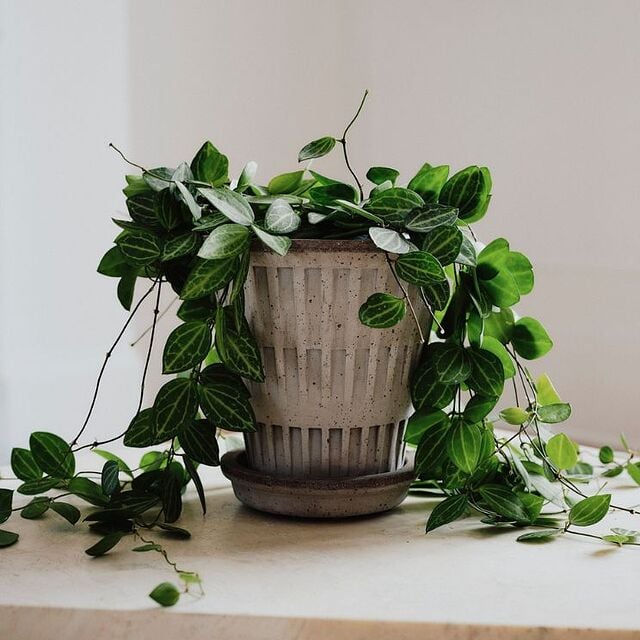


Drainage in a Pot – What For, What From, and How to Do It?
Drainage is a simple layer at the bottom of a pot that acts as a buffer zone for excess water. It doesn't require specialized knowledge and significantly improves plant growing conditions.
The purpose of drainage in a nutshell:
- Protects the root system from waterlogging.
- Improves soil aeration.
- Stabilizes larger plants in tall pots.
- Facilitates water flow through drainage holes.
When is drainage particularly important?
- Tall pots in the living room – water can accumulate at the bottom.
- Large floor plants with extensive root systems.
- Heavy ceramic pots on a terrace exposed to rain.
- Plants prone to overwatering: succulents, cacti, ZZ plants.
Thickness of the drainage layer:
- Small pots on the windowsill (up to 15 cm): a thin layer of 1–3 cm.
- Medium pots (15–30 cm): a layer of 3–5 cm.
- Large floor containers in living rooms and halls: up to 10 cm.
However, care should be taken not to make the drainage layer too thick – it shouldn't occupy more than 1/4 of the container's height. Drainage won't replace drainage holes, but it works in conjunction with them. In containers without holes, a layer separating the drainage from the substrate only partially reduces the risk of overwatering.
Materials for Drainage: Expanded Clay, Gravel, Broken Ceramics
Customers often ask "what to put at the bottom of a pot" – the answer is simpler than it seems. Permeability is more important than the specific type of material.
Expanded clay (Leca):
- Light, porous balls of fired clay.
- Resistant to fungi and mold.
- Reusable – can be rinsed and used again.
- Available in various sizes – fine for smaller containers, coarse for large pots.
- A good solution for homes, as it doesn't weigh down shelves and windowsills.
Gravel and small pebbles:
- Heavier, more stable than expanded clay.
- Good for floor pots where extra weight stabilizes the plant.
- Beware of overloading shelves and narrow ledges – ordinary pebbles can significantly increase weight.
- Easily accessible and inexpensive.
Broken ceramics or porcelain:
- A way to recycle old dishes and pots.
- Requires smoothing sharp edges or selecting pieces that won't cut roots.
- Good permeability and durability.
- A free solution if you have old dishes.
Practical tip: The drainage layer should cover the entire bottom of the pot and extend slightly above the level of the holes. For most plants, coarse sand mixed with expanded clay or perlite alone as a lighter alternative will suffice.
How to Create Drainage Step-by-Step When Repotting?
This guide is aimed at someone buying a new pot for their home and planning their first repotting in spring. Creating drainage is really simple.
6-step guide:
- Choose a pot with one or more holes – make sure they are clear.
- Cover large holes with a piece of mesh, paper, or a coffee filter – this prevents the drainage material and soil from falling out.
- Pour a layer of expanded clay or other drainage material at the bottom.
- Add some substrate – permeable soil mix with perlite or coarse sand.
- Place the plant at the appropriate height – the top of the root ball should be 1–2 cm below the pot's rim.
- Fill with soil around the root ball, gently tamping it down.
After repotting: Water the plant thoroughly and allow excess water to drain onto the saucer or into the cachepot. After a few minutes, pour out any accumulated water – this is crucial to prevent root rot.
Tip for kitchen herbs: In small herb pots, the drainage can be thinner. The soil dries out faster due to heat from the stove and ventilation.
Mini-pots (5–6 cm): For very young plants, there isn't always room for a full drainage layer. In such cases, you can opt for a very permeable substrate without an additional layer of pebbles.




How to Choose the Ideal Pot with Drainage for a Specific Plant and Interior?
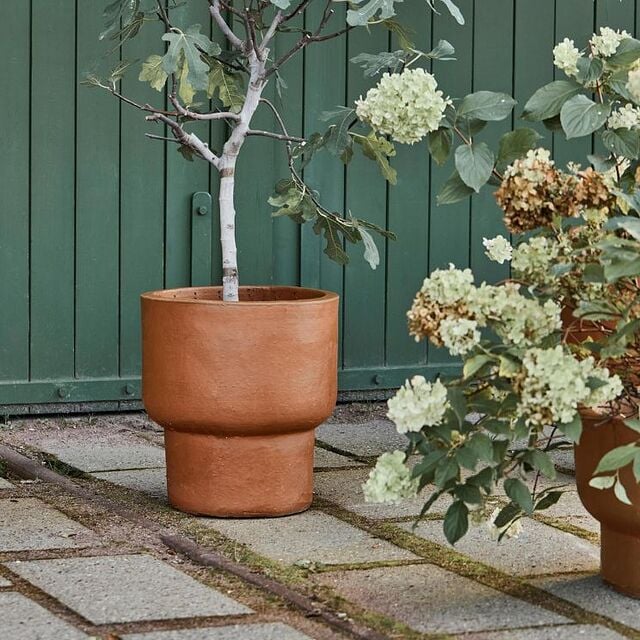
Choosing a pot is a blend of the plant's needs and the room's style. Living room, bedroom, kitchen, or home office – each space has its own requirements.
Technical considerations:
- Pot diameter 1–3 cm larger than the root ball – too large a pot risks overwatering.
- Height matched to the plant's habit – tall pots for palms, shorter for sprawling plants.
- Presence of several small or one larger hole – both solutions work, clarity is key.
- For large container sizes, it's worth checking stability and weight.
Pot materials:
| Material | Advantages | Best Use |
| Plastic | Light, inexpensive, easy to clean | Shelves, hanging planters, windowsills |
| Glazed Ceramic | Decorative, stable, diverse | Floor, low tables |
| Terracotta | Porous, breathable, natural | Plants that like to dry out, cacti |
Examples of "plant + pot" pairings:
- Monstera in a tall pot with drainage in the living room.
- Herbs in small, perforated kitchen pots.
- Succulents in shallow pots with several small holes on a sunny windowsill.
- Ficus in a heavy ceramic pot on the hall floor.
Arrangement tip: When combining several pots with drainage into one composition on a shelf, opt for different heights but a consistent color scheme. A shared tray or long cachepot visually ties the whole thing together and protects furniture from moisture.
Plants Particularly Sensitive to Lack of Drainage
Some species tolerate temporary overwatering better, while others react very quickly with root rot. Choosing the right pot is crucial here.
Plants that absolutely require pots with holes:
- Succulents and cacti – they store water in leaves and stems; excess in the soil kills them.
- Snake plants (Sansevieria) – thick, fleshy roots rot with stagnant water.
- ZZ plants (Zamioculcas) – bulbous roots sensitive to moisture.
- Plants with bulbous or thick roots that store nutrients.
Popular houseplants that prefer drainage:
- Ficus (lyrata, elastica, benjamina) – especially in winter with heating.
- Monsteras – large root system needs oxygen.
- Dracaenas – sensitive to standing water.
- Philodendron – although it likes moisture, it requires proper drainage.
For these plants, it's especially important to avoid direct contact of roots with standing water at the bottom of the pot. Plastic pots with holes and a saucer are a safe bet.
Plants That Better Tolerate Containers Without Holes
Even plants that tolerate more moisture still need oxygen in the root zone. This is an important distinction – "tolerate" doesn't mean "prefer."
Plants that like consistently slightly moist soil:
- Indoor ferns – their natural environment is a moist forest floor, so watering globes work great for them.
- Some Calatheas – require appropriate air and soil humidity.
- Fittonias – delicate-leaved flowers that prefer moisture.
- Some orchids in special arrangements – e.g., in glass vases with moss.
Suitable conditions for these plants:
- Partial shade or diffused light.
- Higher air humidity.
- Cooler rooms – e.g., a bathroom with a window, a shaded hallway.
For these species, you can consider a container without holes, but only with a thick drainage layer and very careful watering. In their case, the amount of water needed is less than for plants with good drainage.
For beginners: Nevertheless, it's safer to stick with pots with drainage, even for moisture-loving plants. It's easier to control their growth and avoid overwatering.




How to Save a Plant Potted in a Pot Without Holes?
A common scenario: you buy a beautiful plant potted in a nice, solid container. After a few weeks, it starts to wither. What to do?
Diagnosing the problem:
- Check soil moisture with your finger to a depth of 3–4 cm.
- Smell the soil – a musty, unpleasant odor is a sign of rot.
- Assess the roots – brown, soft roots = rot.
- Observe the leaves – yellowing from the bottom and shedding is an alarm.
Quick rescue actions:
- Immediately reduce watering – do not add more water.
- Gently remove the plant from the pot – be careful with the roots.
- Dry excess wet soil – you can wrap the root ball in newspapers.
- Remove rotten roots – clean cut with a sharp tool.
- Repot into a pot with holes – new, permeable soil mix.
- Add a thin layer of drainage to the bottom of the new pot.
After repotting: Water very sparingly for several weeks. The plant needs time and proper conditions – not excess water – to rebuild its root system. Healthy conditions in the new pot will allow it to recover.
Can You Drill Holes in an Existing Pot?
Many homeowners have already bought beautiful pots without holes and wonder if they can modify them. The answer: it depends on the material and the value of the pot.
General safety rules:
- Perform work on a stable surface, preferably outdoors.
- Use the appropriate drill bit – for ceramic, concrete, or metal.
- Drilling at lower speeds reduces the risk of cracking.
- Moisten the drilling area with water – it cools and reduces friction.
What is easy to drill?
- Plastic – the simplest material, low risk of damage.
- Light ceramic cachepots – moderate risk.
- Thick, heavy ceramic pots – high risk of cracking.
If the pot is expensive or sentimental: It's safer to use it as a cachepot. Place the plant in a plastic pot with drainage inside the decorative pot – you get the visual effect without risking damage to a valuable decor item.
Drill-free alternative: Use an inner pot with drainage placed inside a decorative pot without holes. This simple solution is available in many sizes on the market.
Does a Pot Need Drainage Holes? Summary and Practical Shopping Tips
For most houseplants, a pot should have holes at the bottom. It's the safest and easiest solution for plant care, regardless of your experience level.
Key takeaways:
- Drainage holes protect against overwatering and ensure good conditions for roots.
- A drainage layer improves conditions in the root zone but doesn't replace holes.
- Cachepots primarily serve a decorative function – the plant should be inside in a pot with drainage.
- Proper drainage is the foundation for healthy houseplant growth.
When to choose what:
| Situation | Best Choice |
| Beginner | Pot with drainage + saucer |
| Most plants | Pot with drainage |
| Interior aesthetics | Pot with drainage + decorative cachepot |
| Frequent travel | Self-watering or hydroponic system |
| Advanced grower | Container without holes with drainage (selected species only) |
Shopping tip: Before choosing a pot, consider its placement in your home. Assess light, access to water for watering, and the type of floor or furniture under the pot. Match the form – a pot with drainage and a saucer will work almost anywhere, and a cachepot will add character.
Consciously combining functional pots with aesthetic cachepots is the best strategy. Your plants will grow healthily, and your interior will gain a cohesive, polished look. Remember – you need to care for the plant's health just as much as the beauty of the arrangement.